More Alike Than Different
'The war taught me that all life is worth protecting. The human body is a beautiful feat of engineering, millions of years in the making.'
The first 15 years of my life were overshadowed by war. I was born in Lebanon and just a year later civil war broke out, carving my hometown into a deadly patchwork of neighborhoods controlled by rival factions.
There were bright moments — hiking in the mountains and climbing rich fruit trees. But the war never cared about my plans. School was often interrupted by violence, and I had to navigate streets dotted with landmines just to get there.

I will never forget when the war ended. Entire neighborhoods that had been off limits were suddenly open. I met people I’d been taught to fear — “the other.” But we were all just humans, with the same needs, the same hopes for our kids and the same desire to live in peace and prosperity. Breaking the circle of violence starts with understanding and accepting our differences.
It’s a worldview I try to pass on to my own children, here in the Adirondacks, 35 years later.
The war taught me that all life is worth protecting. The human body is a beautiful feat of engineering, millions of years in the making. I saw medicine as the best way to honor our shared humanity.
I’ve always followed my instincts. And after medical school, they led me to the United States, the pinnacle of clinical innovation. I’ve been lucky to practice medicine across the region for 15 years, making a home and raising a family in the mountains around Plattsburgh.
We spend time hiking and skiing in the Adirondacks or visiting Montreal to expose our boys to different cultures, rich with art, language and sport.
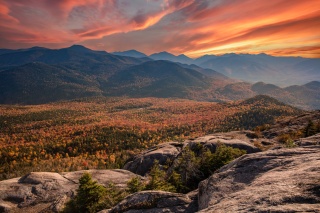
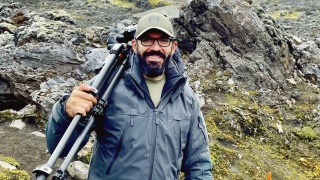
I feel most at peace in the mountains with my camera. It reminds me of the peaceful times in my youth — hiking in the mountains of Lebanon.
Paul El Azoury, MD, is a nephrologist and Medical Director at Champlain Valley Physicians Hospital. He has been with us since 2010.