A Safe Place to Heal
How Medical Respite helped one Vermonter rebuild his life.
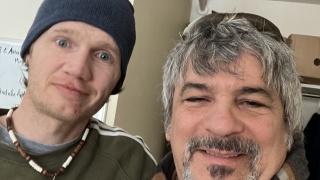
When Jayme Richland (pictured above, left) arrived at University of Vermont Health – UVM Medical Center last year, he was in real danger. A worsening wound on the bottom of his foot had become severely infected. “If I’d waited many more days, it could’ve gone to the bone,” he says. “It could’ve been amputated.”
Jayme spent nearly a month in the hospital. He needed three surgeries in the first week to remove infected tissue and stop the infection from spreading. As he slowly got stronger, another crisis emerged: He was facing eviction. Without stable housing, there was no safe way to manage the portable wound‑vac device he needed almost 24/7. He also required strong antibiotics and regular dressing changes to keep the infection from coming back.
Situations like Jayme’s are exactly why University of Vermont Health – Home Health & Hospice created its Medical Respite Program. It gives people experiencing homelessness a safe place to heal after a hospital stay. The program also reduces long inpatient stays for people who are medically ready to leave the hospital but cannot recover safely on the street or in a shelter.
Jayme was the program’s first participant. Home Health & Hospice partnered with UVM Medical Center and Champlain Place, a low-barrier shelter run by Chaplain Valley Office of Economic Opportunity (CVOEO), to create a stable environment where he could recover. With their help, Jayme moved into a clean room where nurses visited him three days a week. They changed his dressings, monitored his healing, and helped him learn how to manage his wound‑vac.
They also provided something he didn’t expect: accountability, encouragement and emotional support. The team asked how he was feeling, encouraged him through setbacks and helped him build routines that supported his recovery. “They were always checking in with me, making sure I was okay mentally and physically,” he says.
This is a place where people can heal — emotionally, physically and in their spirit.
“When our nurses come three days a week, it’s not just to change bandages. It’s someone showing up to listen, to support you and help you succeed,” says Lazar (pictured above, right).
Champlain Place provided the safe environment Jayme needed. Staff helped him access regular meals, stay organized and build a daily routine.
“Home health care is always a partnership between patients, their providers and our clinicians,” says April Plante, RN, director of Adult Home Health Services for Home Health & Hospice. “Medical respite extends that partnership by adding the safe, temporary housing people need to heal safely.”
Tiffany Rich, director at Champlain Place, says that stability opens the door to broader support. “While people are here receiving medical care, we can also help them with case management and take steps toward more permanent housing.”
For CVOEO executive director Paul Dragon, the program shows what’s possible when systems work together. "Homelessness is a complicated, systemic issue. Unless we intentionally integrate systems of care — medical, housing, mental health, substance use, even developmental — we won’t resolve the issue,” he says. “The Medical Respite Program is a big step forward in bringing the housing and medical worlds together in a meaningful way.”
Looking Ahead
Today, Jayme is healing. His wound continues to improve. He has maintained sobriety and is reconnecting with family. He talks about rebuilding strength, relearning how to walk and taking steps toward greater independence.
Jayme’s story is just one example of how medical respite can change the trajectory of someone’s life. As more people face complex health needs and housing instability, programs like this can offer a vital bridge between crisis and recovery — one person, and one healing space, at a time.
Tune In
Hear from experts with decades of experience providing care and support to individuals experiencing housing insecurity, including Dr. Lincoln Heath of Community Health Centers of Burlington, veteran case worker and community resource coordinator Chris Lazar, and registered nurse and Medical Respite Program Director April Plante, RN, about the need and impact of Home Health’s Medical Respite Program, which is aimed at addressing gaps in care and support for individuals struggling with housing insecurity.