Care at Home, Peace of Mind
Remote monitoring helps catch problems early for both patients and providers.
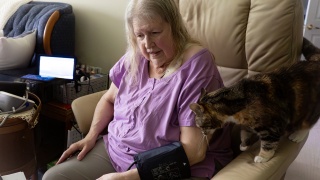
Laurel Schoop scratches Biddy’s head. The cat purrs beside her on the sofa as a small monitor nearby lights up and beeps.
“Oxygen level at 94%,” an automated voice announces from the tablet on the coffee table. Schoop slips a small oximeter from her finger. It connects via Bluetooth to the tablet and sends the reading.
Biddy casually glances at the device, then settles back into more head scratches, unconcerned so long as lap time continues.
Thanks to University of Vermont Health – Home Health & Hospice, both can rest easy.
Schoop is enrolled in the Remote Patient Monitoring Program, along with home visits one to two times a week. Every day, she takes her own vitals – blood pressure, pulse and blood oxygen level – using automated devices provided by Home Health & Hospice. The devices are easy to use and send data to the tablet, which transmits it wirelessly to remote patient monitoring staff at Home Health & Hospice. The data also flows into Schoop’s electronic medical record.
If anything looks concerning, Home Health & Hospice staff alert her doctor.
Schoop has a long history of high blood pressure and heart disease. She recently underwent a valve replacement after doctors discovered potentially life-threatening fluid buildup around her heart and in her lungs. After leaving the hospital, she enrolled in the program to better monitor her health at home.
“Instead of a doctor getting a patient’s vitals once every three months at an office visit, remote monitoring can provide vital-signs data between doctor visits and home health visits to help track the effects of prescribed treatments,” says Jaimie McKenzie, RN, remote patient monitor nurse coordinator at Home Health & Hospice.
That data helps providers make faster, more informed decisions. It can also reduce emergency department visits, McKenzie says. When remote patient monitoring nurses receive abnormal results, they contact the patient to evaluate and can also notify the patient’s doctor if needed.
Patients feel safer and have less anxiety knowing that a nurse is keeping an eye on them.
The program is most often recommended for patients with chronic disease, especially serious cardiac or pulmonary conditions, or those with a history of hospitalizations.
Ask your provider if Home Health & Hospice Remote Patient Monitoring is right for you.