What Do You Say to Someone Diagnosed Cancer?
Many of us struggle to find the right words.
A few years ago, a close friend was diagnosed with breast cancer, and I didn’t call her for longer than I want to admit.
It wasn’t that I didn’t care. I cared enormously. I was just afraid I’d say the wrong thing. Should I ask how she was feeling? Tell her it was going to be fine? Bring it up at all?
I rehearsed the conversation so many times that, before I knew it, weeks had passed.
It turns out I’m not that unusual. Few of us get through life untouched by cancer – whether as a patient, survivor or loved one. Yet many of us freeze when someone we care about receives a difficult diagnosis.
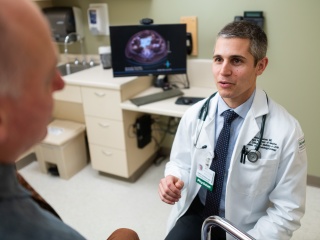
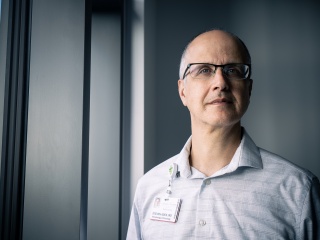
I asked Alissa Thomas, MD, division chief of neuro-oncology at University of Vermont Health – UVM Medical Center, about that reaction. She treats patients with brain tumors, which means she has some version of the hardest conversations in medicine nearly every day.
Her answer confirmed what I’d feared: The worst option isn’t a clumsy platitude; it’s silence.
A very small but very tangible offer is easier to say yes to, and it is more likely to be impactful than a very open-ended ‘call me if you need anything.’
“Acknowledging that somebody is going through something difficult carries a lot of meaning,” Dr. Thomas says. “When you don’t say anything – that’s probably harder for your loved one to understand when they’re already grappling with a lot of uncertainty.”
The nature of your relationship also matters a great deal. Reaching out may feel natural when you are close to someone and they have shared their diagnosis with you, but with a more distant relationship — or when you have only heard about it secondhand — it may be better to give them space and let them decide whether to bring it up.
What to say when someone is diagnosed with cancer
Dr. Thomas knows personally how it feels to hear such life-changing news. When she was in college, her father was diagnosed with glioblastoma, an aggressive form of brain tumor.
“I sat on the other side of the table, in that position of feeling like the world is falling apart and not even knowing where to start,” she says. “It’s not a stretch to empathize and to imagine where patients and families might be.”
Drawing on that experience and more than two decades as a neuro-oncologist, Dr. Thomas says that people often get stuck because they make assumptions about how someone is feeling or what they need.
“Approaching with curiosity and not assumption, and asking and not telling, tends to be really valuable,” she says. “Not ‘You must feel terrible,’ because they may be having a good day, all things considered.” all things considered.”
How to support a friend with cancer
It’s also important to resist the urge to become a cancer expert.
In the age of online information and social media, a cancer diagnosis turns everyone nearby into a specialist. Someone shares a clinical trial, diet or “groundbreaking” article.
“You have to see this doctor. You have to go to this place. You have to try this remedy,” Dr. Thomas says. “That is very well intended, but I think can often be overwhelming for somebody who is navigating a challenging diagnosis.”
Instead of offering advice, she suggests asking questions.
How’s treatment going? How are you feeling about your care team? Is there anything you’d like help researching? If your friend asks for help, help. The difference is being invited into the process, rather than assuming they want guidance.
Practical ways to help someone with cancer.
Then there’s the comment we all default to: “Let me know if there’s anything I can do.”
Dr. Thomas suggests being more specific.
“‘Hey, I’m running to the store, do you need milk?’ ‘Can I drive you to your appointment on Thursday?’ ‘Can I grab your kid from school tomorrow?’” Dr. Thomas says. “A very small but very tangible offer is easier to say yes to, and it is more likely to be impactful than a very open-ended, ‘Call me if you need anything.’”
The same idea applies beyond errands and appointments: Don’t let cancer become the only thing you see when you look at someone.
Practical help matters, but so does preserving some sense of normalcy. The jokes, routines and chats that made up your relationship before the diagnosis still matter.
I wish I’d understood that years ago. I was so focused on finding the right thing to say that I missed the obvious. She was my friend. It wasn’t my job to make cancer less frightening or to offer wisdom. I just had to call.