Lymphedema Therapy
Lymphedema Therapy at UVM Health
Lymphedema is swelling that occurs when your lymphatic system doesn’t drain fluid properly, leading to fluid build-up. Most often, lymphedema occurs in the arms and legs but can occur in other parts of the body as well.
At University of Vermont Health, our lymphedema specialists help you manage symptoms and control swelling. We always take the time to talk to you, explain the next steps and answer your questions. You can feel confident that our team understands your unique needs and has your best outcome in mind.

Why Choose UVM Health?
As one of the region’s leading rehabilitation programs, we offer:
- Specialized experts: Our team includes physicians, physical therapists and occupational therapists specializing in lymphedema care. We stay up to date on the latest techniques, so you always receive leading-edge treatment.
- Collaborative treatment: Your care team may also include a hematologist or oncologist (cancer specialist). We work closely with these specialists, as well as your primary care clinician, to bring you comprehensive, coordinated treatment.
- Access to care: We offer rehabilitation services in multiple locations throughout Vermont and northern New York. No matter where you live, you have easy access to expert care.
Types of Lymphedema
There are two types of lymphedema: primary and secondary. Primary lymphedema is caused by inherited conditions in which lymph vessels, tissues or organs do not develop properly.
Secondary lymphedema can be caused by the removal of lymph nodes due to cancer, radiation to the lymph nodes, chronic venous insufficiency, or an injury or obstruction to the lymphatic system. Secondary lymphedema may develop months or even years after treatment.
Symptoms of lymphedema may develop in one body part, such as your leg or arm, or multiple parts of your body, including your trunk. Swelling may develop slowly or build very quickly. You may also experience:
- Difficulty moving affected areas
- Feelings of heaviness of fullness in affected parts of your body
- Occasional pain
- Sensations of your skin stretching in affected areas
What to Expect
At your first visit, you will meet with a physical therapist or occupational therapist specializing in lymphedema treatment. They will evaluate you and ask about your symptoms, goals and health history. They will then create a treatment plan to control your swelling and reduce your symptoms.
Your care plan is tailored to your needs. Generally, lymphedema treatment may include:
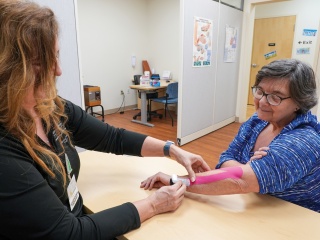
- Compression bandages: To reduce swelling
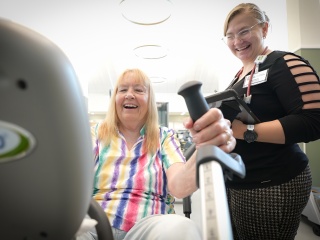
- Exercises: To help lymph fluid flow more efficiently
- Manual lymphatic drainage: A specialized form of massage to help drain lymph fluid
- Skin care: To reduce your risk of injury or infection, which can worsen swelling
Most people need several treatments to reduce initial swelling. After a few weeks, you may learn to manage lymphedema at home with periodic follow-up visits to monitor symptoms.
Awards & Certifications
Lymphedema Association of North America
Our team includes therapists with CLT-LANA certification. This certification signifies demonstrated expertise, leadership and advanced study in the field of lymphology.
Locations near you
Share your location to see nearby providers and availability
111 Colchester Avenue
Main Campus, East Pavilion, Level 3
Burlington, VT 05401-1473
78 Park Street
Elizabethtown, NY 12932
111 Colchester Avenue
Main Campus, Main Pavillion, Level 2
Burlington, VT 05401
790 College Parkway
Colchester, VT 05446-3007
790 College Parkway
Rehab 2
Colchester, VT 05446-3007
101 Adirondack Drive
Suite 1
Ticonderoga, NY 12883
1311 Barre Montpelier Road
Berlin, VT 05602
187 Park Street
Malone, NY 12593
156 Main Street
Montpelier, VT 05602
244 Granger Road
Berlin, VT 05602