Why One New Nurse Chose Hospice
Through a first-of-its-kind residency, Lila Cilwik found her calling.
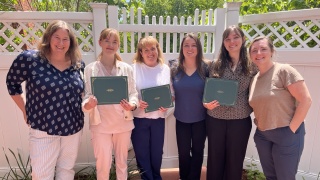
Most newly licensed nurses begin their careers in hospitals. Lila Cilwik, BSN, RN, (above, second from left) took a different path, choosing hospice care right out of nursing school.
For many nurses, hospice is a specialty they enter later in their careers, after gaining experience in other settings. Through the Hospice Nurse Residency Program at University of Vermont Health – Home Health & Hospice, Cilwik was able to begin that work from day one, supported by specialized training and mentorship. Today, she serves patients and families throughout Grand Isle County as a hospice nurse case manager.
During National Hospice and Palliative Care Month, we spoke with Cilwik about what drew her to hospice, what surprised her most about the work and what she has learned during her first year as a nurse.
Why did you choose hospice?
Cilwik: I volunteered with hospice during nursing school, and those were some of the experiences that stayed with me the most. I loved hearing people's stories and getting to know patients and families over time.
I knew I wanted to work in a setting where I could build those relationships and be part of a patient's journey. When I discovered the hospice residency program, it felt like exactly what I had been looking for.
What surprised you most about hospice care?
Cilwik: Before I started, I thought hospice was mostly for people in the last few days or weeks of life.
What surprised me was how broad the field really is. Many patients receive hospice care for months. That gives us time to build relationships, manage symptoms and understand what's most important to patients and families. I didn't realize how much of a difference that extra time could make.
How did your family's experience with hospice influence your career choice?
Cilwik: My grandfather received hospice care, and that experience stayed with me. I saw how supported he was, and how supported my grandmother was through every step of the process.
Looking back, I think that's where my interest in hospice really began. I remember thinking that if I could provide that kind of support to other families someday, it would be an incredible honor.
Did choosing hospice right out of nursing school ever feel risky?
Cilwik: It definitely felt different from what many of my classmates were doing. Most were heading into hospital residency programs.
But when I shadowed a hospice nurse before accepting the position, it felt like a dream job. There was so much to learn and a lot of independence, but I was excited by the opportunity to build relationships with patients and families while continuing to learn every day.
How did the residency program help you transition from nursing school to practice?
Cilwik: My preceptor, Sarah Carter, was a huge part of my first year. She taught me so much about hospice nursing and patient care. Watching how she connected with patients and families had a big impact on me.
We talked through difficult situations, challenging conversations and the day-to-day realities of the job. Having that support made it possible to build confidence while still feeling safe to learn.
Hospice nurses often work independently. How did you prepare for that responsibility?
Cilwik: It was intimidating at first. You're walking into people's homes. You're making assessments. You're helping families navigate some really difficult situations.
The residency helped me trust myself. It taught me that working independently doesn't mean working alone. I always have a team I can call, and that support makes a huge difference.
How do you define success as a hospice nurse?
Cilwik: Success is helping someone remain comfortable and experience a peaceful death.
It also means helping families understand what to expect and making sure they feel supported throughout the process. A big part of hospice nursing is education. When families feel prepared and know they're not facing everything alone, that's success too.
What would you say to nursing students who may not be considering hospice as a first career step?
Cilwik: Keep an open mind.
I don't think I fully understood what hospice nursing looked like until I experienced it myself. There's so much more to it than people realize.
It's a field where you can build strong clinical skills, form meaningful relationships and learn something new every day. For me, it ended up being exactly the right fit.
Many people associate hospice with loss. What do you wish they understood about the work?
Cilwik: I think people are often surprised when I tell them that many of the moments we witness are uplifting and inspiring.
Of course there are difficult days. But we also see incredible strength, resilience and love. Families come together. People reflect on what matters most. It can be a very meaningful time, and it's a privilege to be part of it.