Hospice: Not Just for the Final Few Days
Experts say families miss out on months of practical benefits like pain relief and emotional support — especially in Vermont and New York.
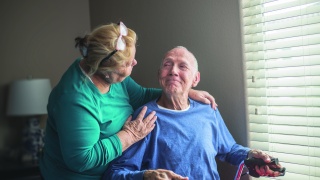
Weighing their options after a terminal diagnosis, Lincoln and Vickie initially didn’t consider hospice. It wasn’t something they’d discussed earlier in Lincoln’s journey, or something many healthcare providers had called to their attention.
“What brought him to hospice was the cancer and the non-curative nature of the cancer,” Vickie recalls.
Besides stopping aggressive treatment, Lincoln and Vickie wondered exactly what accepting hospice meant.
They’re not alone. For many, hospice remains something of a puzzle. And in Vermont and northern New York, it’s underutilized.
In 2023 (the latest year available), 47% of Vermont’s Medicare decedents (residents who had Medicare at the time of death) used their hospice benefit during their last year of life. In New York, it was 29% — the lowest rate in the nation.
Advocates say that’s a missed opportunity.
“If there’s one myth I wish I could dispel … it is that hospice is just about brink-of-death care,” says Annie Meredith-Mitchell, MSN, RN, CHPN, director of Hospice and Palliative Care at University of Vermont Health – Home Health & Hospice. “We really, really, really want to help people live their best life.”
A Change in Focus
Meredith-Mitchell points out that “care for people who are seriously ill is often focused on ‘What's the next treatment? Where do we get our lab work done? Who do I need to see next?’ Instead, hospice care gives you the time and intention to focus on who and what matters to you.”
“People often think of hospice as giving up,” says Jim Budis, registered nurse with Home Health & Hospice. “But really, it’s about actively making a decision to focus your care on quality of life — for you and your loved ones.”
Hospice provides a full spectrum of support: Nurses, doctors, social workers, aides, chaplains, volunteers, registered dieticians, as well as physical, occupational and speech therapists.
“Nursing focuses on the physical care of the person — managing pain, shortness of breath, nausea and vomiting, but of course, nursing touches on the emotional and spiritual too,” Budis explains. “Social work focuses on the emotional response to illness and patients and families. Chaplains focus on the spiritual needs.”
These services are covered by Medicare, Medicaid, private insurance or charitable care, if needed.
“The one thing we always focus on is the patient’s quality of life.” - Jim Budis, RN
That means different things to different people. “It could look like a patient who wants to spend their last several months watching their grandchildren grow up,” Meredith-Mitchell says “Or maybe they want to see their kids open their Christmas presents. Maybe the goal of the family is wanting to see the patient who always loved the beach go to the beach one last time.”
Since opting for hospice January 2024, Lincoln has found comfort in small moments. “I'm going through it one day at a time, hour, one step at a time — and savoring each,” he says. “Savor every chance you have.”
A Whole-Person Approach
Hospice care is personalized to each individual and their values.
But it’s support not just for the patient. “We support their whole caregiving unit — family, friends, loved ones — whoever that includes,” says Budis.
“There’s someone who will just sit with you while you’re filling out paperwork. How great is that, when you don’t want to for a thousand reasons — let alone the burden that presents, but also what it represents,” Vickie says.
She and Lincoln have been married 28 years. From the first hospice visit, she knew they’d made the right decision. “Knowing someone got it, with minimal explanation, was a comfort,” Vickie recalls. “You immediately understand that people immediately understand your circumstances.”
Opening More Doors
New federal legislation aims to begin demystifying hospice and help more patients and families benefit sooner. The proposed federal End-of-life Access to Supportive and Essential care (EASE) Act of 2025 would require nonprofit hospitals to inform eligible patients about how hospice could benefit them. It specifically aims to increase access in rural and underserved areas — like much of Vermont and upstate New York. In 2023, the median length of stay for Vermont hospice patients was 23 days, compared to 15 days in New York and 18 days nationwide. At Home Health & Hospice, the median was just 10 days.
“Having people access their hospice benefit for at least three months is where we start to see some of the benefits,” Meredith-Mitchell says. “There’s energy at the federal level to help people connect the dots sooner.”
Budis adds, “You may not need a lot of our services in the beginning. But if you wake up short of breath, you don’t need to call 911. You call us. We’ll come to help you and we’ll focus on you being as comfortable as possible and keeping you home and out of the hospital, if that is your goal.”
And for many, it is.
“We have a patient who built his home in 1962 and has lived there since,” Budis says. “His primary goal is to die at home, with his family around him. Until then, we’re there to support as high a quality of life as possible.”
The Time to Ask Is Sooner
Hospice enrollment nationwide rose in 2022 for the first time since before the pandemic, with about 1.72 million Medicare beneficiaries receiving care. Still, more than half of terminally ill Americans never use the benefit — often because they don’t know what it includes, or think they need to be days from death.
In reality, earlier access allows for more meaningful support.
“We sometimes have patients do surprising things while on hospice care because they realize they suddenly have the energy to make things happen that they never imagined would happen before,” Budis observes.
Vickie urges other families not to wait:
“It’s bittersweet because when somebody is within six months of death … all of a sudden, doors are opening in ways that you’ve never experienced before. If (hospice) is available to you, then do it. Why would you not?”