UVM Health Builds Pipeline for Paramedics
Program addresses rural EMS staffing crisis.
A paramedic training program serving organizations and communities across University of Vermont Health is expanding access emergency medical education — and — advanced first responder care in Vermont and northern New York.
Supported by state and federal funding, the system-wide program builds on efforts launched in 2018 at University of Vermont Health–Elizabethtown Community Hospital. It addresses a longstanding challenge in rural health care: the shortage off paramedic and emergency medical technicians. Before the program’s launch two years ago, Vermont had just one paramedic training pipeline. Expanding access to affordable, high-quality education is critical as rural communities nationwide face a growing crisis in emergency medical services.
“In many cases, people can be stabilized and taken to the emergency room and we’re not doing these high-level interventions and administering complicated medications,” says Sarah Lamb, lead instructor for the program’s Burlington-based classroom. “Sometimes, patients don’t have that time — and it’s not a quick, 10-minute drive to the hospital. By intervening quickly, we can improve patients’ outcomes.”
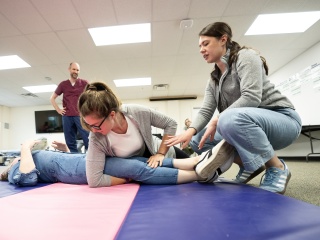
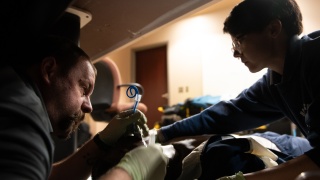
The curriculum includes immersive lab sessions, cadaver labs and one-on-one clinical time with EMS-trained physicians — experiences Lamb calls “game changers.”
“These are invaluable learning experiences,” she says. “Training on mannequins just doesn’t prepare you and getting one-on-one time with EMS- and ED-trained physicians on things like patient assessments and handoffs — that’s just really unique.”
The program currently enrolls 28 students, with a 100% post-graduation placement rate for graduates within a 45-minute drive of each graduate’s home. In May, it earned the final stage of a muti-year accreditation process, meeting benchmarks for retention, quality and other measures of performance.
“Our goal is to have paramedic-level care available for everyone throughout our region,” says Joshua LaDuke, the program’s director. “Without that option, people in an emergency get life-stabilization care from first responders. The ability of the paramedic to recognize the need for more advanced care, begin treatment while transporting and get patients to the correct level of hospital care is the difference.”
Instructor of the Year
Lamb, a paramedic with more than a decade of experience at EMS agencies across the region, began her career in 2010 as a volunteering EMT while in college. She initially planned to pursue graduate school for GIS mapping, but instead enrolled in paramedic school at Oregon Health Sciences University in Portland, Oregon.
She went on to work in EMS agencies serving both urban and rural communities before returning to Vermont, where she became a training officer at Richmond Rescue. Lamb now serves as a full-time paramedic and leading the health system’s paramedic training efforts in Vermont.
She also with Essex Rescue and other EMS agencies, helping train volunteers and employees and develop paramedic training programs. Lamb has taught at Vermont State University’s paramedic training program and was named EMS Educator of the Year by Vermont Department of Health earlier this year.
The department says her impact on EMS education is immeasurable,
“Medicine and education were two fields I never had any interest in until I got into paramedicine,” says Lamb. “I love training with people and sharing my knowledge and the mistakes that I have made over time. The field is dedicated entirely to giving back to our community, and I love working with people who love to do that.”
Longstanding Efforts
Efforts to address the shortage of paramedics and emergency medical first responders began before the COVID-19 pandemic. In late 2018, Elizabethtown Community Hospital launched a Paramedic Training Program accredited by the New York State Department of Health.
It was the first of its kind in the region, offering advanced medical training in academic, clinical and field settings. The 18-month program is a collaboration between the hospital and zones of health care organizations and EMS agencies in New York and Vermont.
Students receive hands-on clinical training at 15 regional health care organizations and 30 EMS agencies. Graduates earn Advanced Life Support certification and are eligible to sit for the New York State paramedic certification exam.
“Paramedics are critical to providing pre-hospital emergency health care services, especially in rural communities where the closest hospital may be an hour away,” says Bruce Barry, the program’s director. “Skilled medical providers are needed now more than ever. The North County, like rural regions across the nation, continues to face a longstanding and mounting shortage of paramedics. By ‘growing our own,’ we can ensure our communities have access to safe, high-quality life-saving emergency medical first response care.”
At the time the hospital’s program was launched, only 113 certified paramedics served a five-county region that is home to more than 300,000 year-round residents and covers approximately 6,500 square miles. Since 2018, the program has graduated 39 certified paramedics, all of whom now serve in emergency response agencies across the region.