
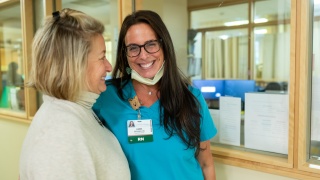
Our team works together with a single shared goal: to provide coordinated, compassionate and expert care that supports your whole health — body, mind and spirit.
You are never alone on your cancer journey. From your first referral through treatment and recovery, an entire team of experts works together to support you, answer questions and guide you every step of the way.
Your care team is personalized based on your diagnosis, needs and preferences — bringing together specialists who collaborate to provide seamless, compassionate care.
Referral
Your cancer care journey begins when your referring provider starts the referral process.
An intake coordinator gathers important information — such as medical records — and helps arrange any initial tests, procedures or consultations needed before your first appointment.
Depending on your cancer type, you may be partnered with a nurse navigator. This dedicated resource serves as your educator, advocate and guide, helping you and your family understand your diagnosis, coordinate appointments and access support services.
Initial Testing & Diagnosis
If you need a biopsy or a surgical procedure, you may meet with an interventional radiologist or surgeon early in your care.
A radiologist reviews and interprets your imaging scans and a pathologist will determine your biopsy results to help your care team understand your condition and plan next steps.
Some patients take part in a one-time multidisciplinary clinic visit — a meeting with a team of cancer experts who work together to make recommendations tailored to your diagnosis.
If a clinical trial may benefit you, research staff will discuss options and guide you through the enrollment process.
Treatment
Your primary cancer specialist who oversees chemotherapy, immunotherapy, targeted therapy and other medical treatments.
The specialist who leads your radiation therapy team and follows you throughout your radiation treatments.
A surgeon with specialized expertise in treating cancers may be involved in various stages of your treatment plan, depending on the type of cancer you have.
Nurse practitioners and physician assistants work closely with your physician to deliver care, manage your symptoms and side effects of treatment, answer questions and monitor your progress.
Physicians who are advancing their training in cancer care may be part of your treatment team, always working under the supervision of attending physicians who are cancer specialists.
Your main point of contact for treatment-related questions and concerns, providing education, support and day-to-day care.
A licensed social worker helps coordinate support for emotional health, work-related concerns, financial questions and communication with your medical team.
Your scheduler works with you to set up appointments and organize your treatment calendar.
Additional Team Members
Behavioral health specialists are available for you and your immediate family members to help manage the emotional impact of a cancer diagnosis.
Our genetic counselors work with patients and families to assess inherited cancer risk, explain genetic testing options and results and guide informed decisions about screening, prevention and treatment.
The friendly team who greets you, checks you in and helps ensure your insurance and visit information is up to date.
Medical assistants collect vital signs and information and help guide you through each visit.
Volunteers — easily spotted in green vests — are here to answer questions, offer a warm welcome and provide additional support in common areas.
If nutrition support would benefit you, a registered dietitian can help you make changes that support your health during and after treatment.
These specialists operate the linear accelerator machines that deliver your radiation treatments, ensuring precision, comfort and safety.
Physical, occupational and speech therapists — and other survivorship specialists — support your recovery, mobility and quality of life during treatment and beyond.
Clinical Trials
The UVM Cancer Center supports more than 100 active clinical trials focused on prevention, screening, treatment, supportive care and survivorship.
