Cholesterol Treatment Guidelines
Overview
The goal in treating cholesterol is to lower your risk of having a heart attack or a stroke.
The following guidelines are from the American College of Cardiology and the American Heart Association.
The two main types of treatment are:
- Heart-healthy lifestyle.
- Medicines.
The way you choose to lower your risk will depend on how high your risk for heart attack and stroke is. It will also depend on how you feel about taking medicines. Your doctor can help you know your risk. Your doctor can help you balance the benefits and risks of your treatment options.
Heart-healthy lifestyle
A heart-healthy lifestyle is always important, even if you take medicines to lower your risk.
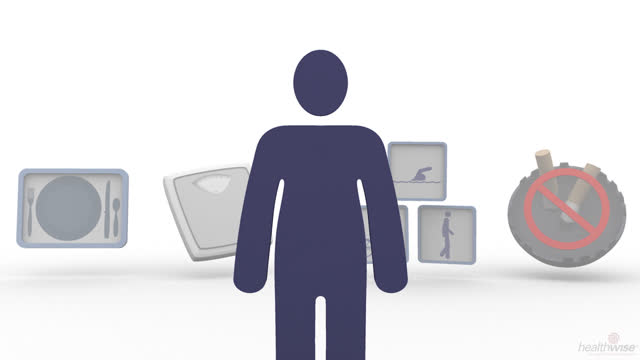
To be heart-healthy:
- Eat heart-healthy foods.
- Stay at a weight that's healthy for you. Talk to your doctor if you need help losing weight.
- Be active on most days of the week.
- Don't smoke or vape.
- Manage other health problems.
Statins
You and your doctor can work together to understand what treatment is best for you. Your doctor may recommend that you take statins if the benefits outweigh the risks.
Statins strongly recommended: Your doctor is likely to strongly recommend statins if you:
- Have coronary artery disease.
- Have peripheral arterial disease.
- Had a heart attack.
- Had a stroke.
Statins recommended: Your doctor is likely to recommend statins if:
- Your LDL cholesterol is 190 mg/dL or above.
- You have diabetes and you are age 40 to 75.
- Your 10-year risk of heart attack or stroke is 7.5% or above and you are age 40 to 75. There are different tools your doctor can use to calculate a risk score for you.
Statins not as clearly recommended: For some people, it's not as clear if they would benefit from a statin.
When deciding about medicines, you and your doctor may think about:
- Your family history of early coronary artery disease. Early coronary artery disease means you have a male family member who was diagnosed before age 55 or a female family member who was diagnosed before age 65.
- A high LDL cholesterol test result. This is if your LDL cholesterol is 160 mg/dL or higher.
- Results of tests such as C-reactive protein, coronary calcium scan, or ankle-brachial index. These results help your doctor determine your overall health and risk.
- Your lifetime risk score of heart attack and stroke.
Other medicines
Your doctor may talk with you about also taking a cholesterol absorption inhibitor or a PCSK9-inhibitor. These medicines can also reduce the risk of heart attack and stroke for some people. These medicines may be taken along with a statin.
Credits
Current as of: October 2, 2025
Author: Ignite Healthwise, LLC Staff
Clinical Review Board
All Ignite Healthwise, LLC education is reviewed by a team that includes physicians, nurses, advanced practitioners, registered dieticians, and other healthcare professionals.