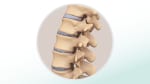
Degenerative Disc Disease
What is degenerative disc disease?
Degenerative disc disease isn't really a disease. It's a term used to describe the normal changes in your spinal discs as you age. Spinal discs are small, spongy discs that separate the bones (vertebrae) that make up the spine. The discs act as shock absorbers for the spine. They let your spine flex, bend, and twist.
Degenerative disc disease can take place in one or more places along the spine. It most often occurs in the discs in the lower back and the neck.
The changes in the discs can cause back and neck pain. They can also lead to osteoarthritis, a herniated disc, or spinal stenosis.
What causes it?
As we age, our spinal discs break down, or degenerate. This breakdown causes the symptoms of degenerative disc disease in some people.
When the discs break down, they can lose fluid and dry out, and their outer layers can have tiny cracks or tears. This leads to less padding and less space between the bones in the spine. The body reacts to this by making bony growths on the spine called bone spurs. These spurs can press on the spinal nerve roots or spinal cord. This can cause pain and can affect how well the nerves work.
These changes in the discs are more likely to occur if you smoke, do heavy physical work (such as repeated heavy lifting), or are very overweight. A sudden injury may also cause changes to occur.
What are the symptoms?
Many people with degenerative disc disease have no pain. But others have severe pain or other symptoms that limit their activities. Some of the most common symptoms are:
- Pain in the back or neck. Where the pain occurs depends on which discs are affected.
- Pain that gets worse when you move, such as when you bend over, reach up, or twist.
- Pain that may occur in the rear end (buttocks), arm, or leg if a nerve is pinched.
- Numbness or tingling in your arm or leg.
The pain may start after a major injury (such as from a car crash), a minor injury (such as a fall from a low height), or a normal motion (such as bending over to pick something up). It may also start gradually for no known reason and get worse over time.
How is it diagnosed?
A doctor can often diagnose degenerative disc disease while doing a physical exam. If your exam shows no signs of a serious condition, imaging tests (such as an X-ray) aren't likely to help your doctor find the cause of your symptoms.
Sometimes degenerative disc disease is found when an X-ray is taken for another reason, such as an injury or other health problem. But even if the doctor finds degenerative disc disease, that doesn't always mean that you will have symptoms.
How is degenerative disc disease treated?
Self-care may be all you need to relieve pain caused by disc changes. This may include using ice or heat and taking over-the-counter medicines.
If you develop health problems such as osteoarthritis, a herniated disc, or spinal stenosis, you may need other treatments. These include physical therapy and exercises for strengthening and stretching the back. Your doctor may prescribe medicines. In some cases, surgery may be recommended. It usually involves removing the damaged disc. In some cases, the bone is then permanently joined (fused) to protect the spinal cord. In rare cases, an artificial disc may be used to replace the disc that is removed.
Credits
Current as of: July 24, 2025
Author: Ignite Healthwise, LLC Staff
Clinical Review Board
All Ignite Healthwise, LLC education is reviewed by a team that includes physicians, nurses, advanced practitioners, registered dieticians, and other healthcare professionals.