Login to MyChart

Help us elevate and expand our care, make breakthroughs in biomedical science and improve community health and wellness.

Donate today

Search UVM Health

Healthwise

HIV Viral Load Test

Test Overview

A viral load test measures how much HIV is in the blood. It's first measured when you're diagnosed with HIV. This serves as the baseline. Future measurements are compared with it. With treatment, the viral load should go down. Within a few months, there should be very little virus in your blood.

Why It Is Done

A viral load test is done to watch for changes in an HIV infection. Your doctor uses it to see how well your treatment is working. This information helps guide your treatment options.

A goal of treatment is to reach an undetectable viral load. This means that the amount of the virus is too low for the test to detect. When the virus is undetectable, you cannot pass HIV to other people through sex.

How To Prepare

In general, there's nothing you have to do before this test, unless your doctor tells you to.

How It Is Done

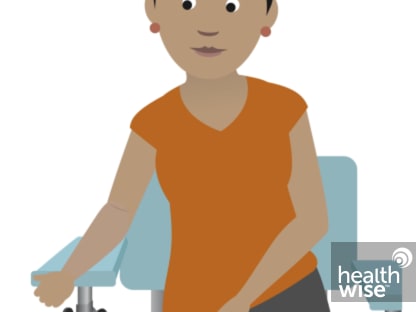
A health professional uses a needle to take a blood sample, usually from the arm.

Watch

How It Feels

When a blood sample is taken, you may feel nothing at all from the needle. Or you might feel a quick sting or pinch.

Risks

There is very little chance of having a problem from this test. When a blood sample is taken, a small bruise may form at the site.

Results

Each lab has a different range for what's normal. Your lab report should show the range that your lab uses for each test.

Viral load results are reported as the number of HIV copies in a milliliter (copies/mL) of blood. Each virus is called a "copy," because HIV reproduces by making copies of itself (replicating).

HIV viral load

Normal:

HIV is not detected (undetectable) in the blood.

Abnormal:

HIV is detected in the blood. Your doctor will compare your current measurement with previous values.

If the viral load drops, it means that the infection is being suppressed or controlled.

If no HIV copies are found, this does not mean that you don't have HIV anymore. It means that the amount of HIV in the blood was too low for the test to detect.

Credits

Current as of: September 25, 2025

Author: Ignite Healthwise, LLC Staff
Clinical Review Board
All Ignite Healthwise, LLC education is reviewed by a team that includes physicians, nurses, advanced practitioners, registered dieticians, and other healthcare professionals.

Current as of: September 25, 2025

Author: Ignite Healthwise, LLC Staff

Clinical Review Board
All Ignite Healthwise, LLC education is reviewed by a team that includes physicians, nurses, advanced practitioners, registered dieticians, and other healthcare professionals.

This information does not replace the advice of a doctor. Ignite Healthwise, LLC, disclaims any warranty or liability for your use of this information. Your use of this information means that you agree to the Terms of Use. Learn how we develop our content.

© 2024-2026 Ignite Healthwise, LLC.

This information does not replace the advice of a doctor. Ignite Healthwise, LLC, disclaims any warranty or liability for your use of this information. Your use of this information means that you agree to the Terms of Use. Learn how we develop our content.

844-UVM-HEALTH

Give to a Healthier Future

Help us elevate and expand our care, make breakthroughs in biomedical science and improve community health and wellness.

Healthier communities. Healthiest lives. Together.

University of Vermont Medical Center

111 Colchester Ave
Burlington, VT 05401

802-847-0000

Golisano Children's Hospital

111 Colchester Ave
Burlington, VT 05401

802-847-0000

Central Vermont Medical Center

130 Fisher Road
Berlin, VT 05602

802-371-4100

Champlain Valley Physicians Hospital

75 Beekman Street
Plattsburgh, NY 12901

518-561-2000

Elizabethtown Community Hospital

75 Park Street
Elizabethtown, NY 12932

518-873-6377

Alice Hyde Medical Center

133 Park Street
Malone, NY 12953

518-483-3000

Porter Medical Center

115 Porter Drive
Middlebury, VT 05753

802-388-4701

Home Health & Hospice

1110 Prim Road
Colchester, VT 05446

802-658-1900

© 2026 University of Vermont Health
Jump back to top