C-Peptide Test
Test Overview
A C-peptide test measures the level of this peptide in the blood. It is generally found in amounts equal to insulin. This is because insulin and C-peptide are linked when first made by the pancreas. Insulin helps the body use and control the amount of sugar (glucose) in the blood. Insulin allows glucose to enter body cells where it is used for energy. The level of C-peptide in the blood can show how much insulin is being made by the pancreas. C-peptide does not affect the blood sugar level in the body.
A C-peptide test can be done when it is not clear whether type 1 diabetes or type 2 diabetes is present. A person whose pancreas does not make any insulin (type 1 diabetes) has a low level of insulin and C-peptide. A person with type 2 diabetes can have a normal or high level of C-peptide.
A C-peptide test can also help find the cause of low blood sugar (hypoglycemia). Possible causes of low blood sugar are excessive use of medicine to treat diabetes or a noncancerous growth (tumor) in the pancreas (insulinoma). Because artificial insulin does not have C-peptide, a person with a low blood sugar level from taking too much insulin will have a low C-peptide level but a high level of insulin. An insulinoma causes the pancreas to release too much insulin, which causes blood sugar levels to drop (hypoglycemia). A person with an insulinoma will have a high level of C-peptide in the blood when they have a high level of insulin.
Why It Is Done
A C-peptide test is done to:
- Help tell the difference between type 1 diabetes and type 2 diabetes.
- Find the cause of low blood sugar (hypoglycemia).
How To Prepare
Your doctor will give you instructions about eating and drinking before this test.
Insulin and some oral medicines used to treat type 2 diabetes can change the test results. Your doctor may ask you to stop these medicines before your blood test.
How It Is Done
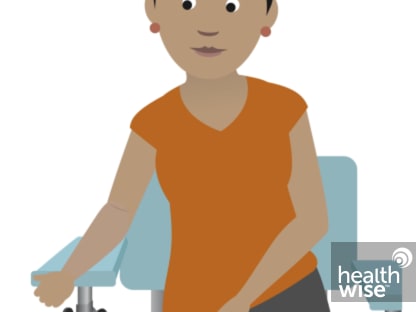
A health professional uses a needle to take a blood sample, usually from the arm.
Watch

How It Feels
When a blood sample is taken, you may feel nothing at all from the needle. Or you might feel a quick sting or pinch.
Risks
There is very little chance of having a problem from this test. When a blood sample is taken, a small bruise may form at the site.
Results
Normal
Each lab has a different range for what's normal. Your lab report should show the range that your lab uses for each test. The normal range is just a guide. Your doctor will also look at your results based on your age, health, and other factors. A value that isn't in the normal range may still be normal for you.
High values
- High levels of both C-peptide and blood glucose are found in people with type 2 diabetes or insulin resistance (such as from Cushing's syndrome).
- A high level of C-peptide with a low blood glucose level may mean that an insulin-producing tumor of the pancreas (insulinoma) is present. Or it may mean that the use of certain medicines such as sulfonylureas (for example, glyburide) is causing the high level.
- If C-peptide levels are high after an insulinoma is taken out, it may mean that the tumor has returned or that the tumor has spread to other parts of the body (metastasized).
Low values
- Low levels of both C-peptide and blood glucose are found in liver disease, a severe infection, Addison's disease, or insulin therapy.
- A low level of C-peptide with a high blood glucose level is found in people with type 1 diabetes.
- Complete removal of the pancreas (pancreatectomy) causes a C-peptide level so low it can't be measured. The blood glucose level will be high, and insulin will be needed in order for the person to survive.
Credits
Current as of: July 7, 2025
Author: Ignite Healthwise, LLC Staff
Clinical Review Board
All Ignite Healthwise, LLC education is reviewed by a team that includes physicians, nurses, advanced practitioners, registered dieticians, and other healthcare professionals.
Current as of: July 7, 2025
Author: Ignite Healthwise, LLC Staff
Clinical Review Board
All Ignite Healthwise, LLC education is reviewed by a team that includes physicians, nurses, advanced practitioners, registered dieticians, and other healthcare professionals.