Heat Rash
Condition Basics
What is heat rash?
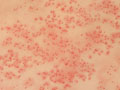
Heat rash (prickly heat) is a red or pink rash usually found on body areas covered by clothing. Heat rash is most common in babies, but it may affect adults in hot, humid climates.
What causes it?
Heat rash can develop when the sweat ducts become blocked and swell.
In babies, heat rash can be caused by well-meaning parents who dress their baby too warmly, but it can happen to any baby in very hot weather. A baby should be dressed as an adult would be to be comfortable at the same temperature and activity level. Babies' hands and feet may feel cool to your touch but that does not mean they need to be dressed too warmly in hot weather.
What are the symptoms?
Heat rash looks like dots or tiny pimples. In young children, heat rash can appear on the head, neck, and shoulders. It often leads to discomfort and itching. The rash areas can get irritated by clothing or scratching.
How is heat rash diagnosed?
Heat rash can usually be identified by its appearance. The rash looks like dots or tiny pimples. It usually doesn't require medical attention. But if it doesn't go away after 3 or 4 days, if it appears to be getting worse, or if your child develops a fever, contact your doctor right away.
How is it treated?
Most heat rashes heal on their own. The following steps can help relieve symptoms.
- Start by removing or loosening your baby's clothing.
- Move your child to a cool, shady spot.
- Let the skin air-dry instead of using towels.
- Avoid ointments or other lotions.
These can irritate the skin.
After the rash is gone, gradually expose your child to warmer temperatures so that their skin can acclimate.
How can you help prevent it?
The following tips can help prevent heat rash.
- Dress your child in as few clothes as possible during hot weather.
- Keep the skin cool and dry.
- Keep the sleeping area cool.
Credits
Current as of: October 3, 2025
Author: Ignite Healthwise, LLC Staff
Clinical Review Board
All Ignite Healthwise, LLC education is reviewed by a team that includes physicians, nurses, advanced practitioners, registered dieticians, and other healthcare professionals.
Current as of: October 3, 2025
Author: Ignite Healthwise, LLC Staff
Clinical Review Board
All Ignite Healthwise, LLC education is reviewed by a team that includes physicians, nurses, advanced practitioners, registered dieticians, and other healthcare professionals.