Appendicitis
Conditions Basics
What is appendicitis?
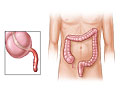
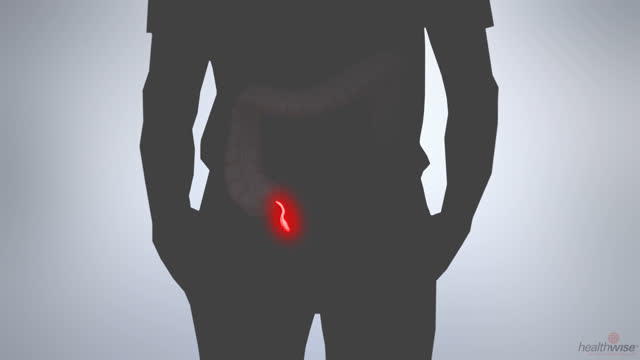
Appendicitis is an infection and inflammation of the appendix, a small sac shaped like a finger that is attached to the large intestine. Appendicitis is one of the causes of serious belly pain. Without treatment, the appendix may burst and cause infection throughout the belly. This can be very serious.
What causes it?
It's often not clear why someone gets appendicitis. In some cases, it can be caused by a hard piece of stool blocking the opening to the appendix. Then bacteria can grow in the appendix and cause an infection.
What are the symptoms?
The main symptom of appendicitis is belly pain. Many people feel the first pain near the belly button. Then it moves to the lower right side of the belly. But the pain can be in different parts of your belly or even on your side or back. The pain may get worse if you move, walk, or cough.
You may also have a fever or nausea and vomiting.
In some cases, appendicitis doesn't cause any symptoms except for belly pain. The pain in your belly may be different than any pain you have had before. Sometimes the only symptom is that you feel sick and the belly pain is hard to describe.
If you have moderate belly pain that does not go away after 4 hours, call your doctor. If you have severe belly pain, call your doctor right away.
If you think you could have appendicitis, you need to see a doctor.
How is it diagnosed?
Appendicitis can be hard to diagnose. Your doctor will do a physical exam and ask you questions about what symptoms you have, when they started, and what was happening before the pain began. You also may have blood and urine tests to look for signs of infection. In some cases, you may need a CT scan or an ultrasound of your belly.
Even though tests can't always show for certain that you have appendicitis, your symptoms may lead your doctor to strongly suspect that you have it.
How is appendicitis treated?
Appendicitis is usually treated with surgery to remove the appendix. Some cases can be treated with antibiotics. In those cases, there's still a chance that the appendix will need to be removed later.
If you need surgery, your doctor may make a cut (incision) in your belly. Or the doctor may use a tool called a laparoscope to remove your appendix through a few small cuts.
If you aren't treated in time, your appendix can burst. This can cause serious problems. It's best to take out the appendix before it bursts.
If your appendix does burst, surgery may be harder to do. You may also need other treatment.
Credits
Current as of: October 1, 2025
Author: Ignite Healthwise, LLC Staff
Clinical Review Board
All Ignite Healthwise, LLC education is reviewed by a team that includes physicians, nurses, advanced practitioners, registered dieticians, and other healthcare professionals.
Current as of: October 1, 2025
Author: Ignite Healthwise, LLC Staff
Clinical Review Board
All Ignite Healthwise, LLC education is reviewed by a team that includes physicians, nurses, advanced practitioners, registered dieticians, and other healthcare professionals.