Login to MyChart

Help us elevate and expand our care, make breakthroughs in biomedical science and improve community health and wellness.

Donate today

Search UVM Health

Healthwise

Simple Prostatectomy for Benign Prostatic Hyperplasia

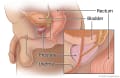
Simple prostatectomy is the surgical removal of the prostate. This surgery removes much of the prostate, but it may or may not remove all of the prostate. It may be done as an open surgery, a laparoscopic surgery, or as a laparoscopic surgery with robotic assistance.

Simple prostatectomy is not done very often for benign enlargement of the prostate. It may be recommended if:

  • You have a very large prostate.
  • You have bladder diverticula (pouches in the wall of the bladder) or bladder stones.
  • Transurethral resection of the prostate (TURP) is not possible for another reason.

What To Expect

You will likely stay in the hospital for 1 or more days after surgery. A catheter is left in your bladder to drain your urine for 1 to 2 weeks. Most people can go back to their usual routine in about 2 weeks and fully recover in 4 weeks.

Learn more

Watch

Why It Is Done

Simple prostatectomy usually is used for people who want surgery to treat their benign prostatic hyperplasia (BPH) symptoms and who have very enlarged prostates.

How Well It Works

Simple prostatectomy almost always improves symptoms.

Risks

The risks of simple prostatectomy include:

  • The possible need for a blood transfusion.
  • Ejaculation of semen into the bladder instead of out through the penis (retrograde ejaculation). This is not harmful, but it can affect fertility. Talk with your doctor to learn more.
  • An inability to have sexual intercourse because of erection problems.
  • A strong urge to urinate, which can also cause leaking of urine. This usually gets better within weeks or months.
  • Complete or partial inability to hold back urine (incontinence).
  • Urinary tract infection (UTI). This can happen if you are not able to fully empty your bladder. Germs can build up in the urine, which can lead to an infection in the urinary tract.

Credits

Current as of: April 9, 2025

Author: Ignite Healthwise, LLC Staff

Clinical Review Board
All Ignite Healthwise, LLC education is reviewed by a team that includes physicians, nurses, advanced practitioners, registered dieticians, and other healthcare professionals.

This information does not replace the advice of a doctor. Ignite Healthwise, LLC, disclaims any warranty or liability for your use of this information. Your use of this information means that you agree to the Terms of Use. Learn how we develop our content.

© 2024-2025 Ignite Healthwise, LLC.

This information does not replace the advice of a doctor. Ignite Healthwise, LLC, disclaims any warranty or liability for your use of this information. Your use of this information means that you agree to the Terms of Use. Learn how we develop our content.

844-UVM-HEALTH

Give to a Healthier Future

Help us elevate and expand our care, make breakthroughs in biomedical science and improve community health and wellness.

Healthier communities. Healthiest lives. Together.

University of Vermont Medical Center

111 Colchester Ave
Burlington, VT 05401

802-847-0000

Golisano Children's Hospital

111 Colchester Ave
Burlington, VT 05401

802-847-0000

Central Vermont Medical Center

130 Fisher Road
Berlin, VT 05602

802-371-4100

Champlain Valley Physicians Hospital

75 Beekman Street
Plattsburgh, NY 12901

518-561-2000

Elizabethtown Community Hospital

75 Park Street
Elizabethtown, NY 12932

518-873-6377

Alice Hyde Medical Center

133 Park Street
Malone, NY 12953

518-483-3000

Porter Medical Center

115 Porter Drive
Middlebury, VT 05753

802-388-4701

Home Health & Hospice

1110 Prim Road
Colchester, VT 05446

802-658-1900

© 2026 University of Vermont Health
Jump back to top