Test Overview
An ammonia test measures the amount of ammonia in the blood. Most ammonia in the body forms when protein is broken down by bacteria in the intestines. The liver normally converts ammonia into urea, which is then eliminated in urine.
Ammonia levels in the blood rise when the liver is not able to convert ammonia to urea. This may be caused by cirrhosis or severe hepatitis.
For this test, a blood sample may be taken from either a vein or an artery.
Why It Is Done
An ammonia test is done to:
- Check how well the liver is working, especially when symptoms of confusion, excessive sleepiness, coma, or hand tremor are present.
- Check the success of treatment for severe liver disease, such as cirrhosis.
- Help identify a childhood disorder called Reye syndrome that can damage the liver and the brain. Ammonia testing can also help predict the outcome (prognosis) of a diagnosed case of Reye syndrome.
- Help predict the outcome (prognosis) of a diagnosed case of acute liver failure.
- Check the level of ammonia in a person receiving high-calorie intravenous (I.V.) nutrition (hyperalimentation).
How To Prepare
In general, there is nothing you have to do before this test, unless your doctor tells you to.
How It Is Done
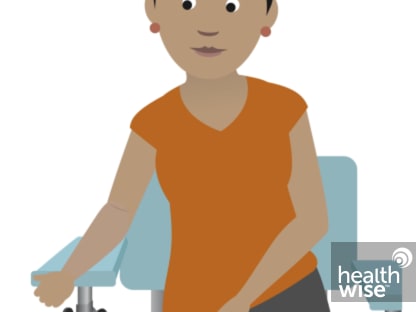
A health professional uses a needle to take a blood sample, usually from the arm.
Watch
How It Feels
When a blood sample is taken, you may feel nothing at all from the needle. Or you might feel a quick sting or pinch.
Risks
There is very little chance of having a problem from this test. When a blood sample is taken, a small bruise may form at the site.
Results
Normal
Each lab has a different range for what's normal. Your lab report should show the range that your lab uses for each test. The normal range is just a guide. Your doctor will also look at your results based on your age, health, and other factors. A value that isn't in the normal range may still be normal for you.
High values
High levels of ammonia in the blood may be caused by:
High ammonia values in a baby may be present when the blood types of the baby and the parent who gave birth do not match (hemolytic disease of the newborn).
Credits
Current as of: September 25, 2025
Current as of: September 25, 2025