
Unleashing Your Power to Transform
How to take a holistic approach for lasting behavior change.

Behavioral change: Just saying it, much less doing it, can seem daunting. The idea of having to alter your ingrained habits and adopt healthier practices can seem challenging, if not overwhelming.
But there’s reason for optimism, according to Jessica Coleman, an integrative oncology health and wellness coach for University of Vermont Medical Center and The Osher Center for Integrative Health at the University of Vermont. By shifting your focus to a holistic approach that considers the entirety of your wellbeing—beyond conventional health markers like pulse, blood pressure, and blood tests—you invite opportunities for transformative change.
These six steps make behavior change not only doable and fun but, most important, lasting.
Step 1: Think Whole-Person Health
Whole-person health means considering not only things like nutrition, activity and sleep when thinking about our well-being, but also things like environment, relationships, personal development, spirituality and work-life balance, says Coleman. These factors all impact a person’s wellbeing and provide avenues for developing healthy habits. Does the space where you work make you happy? When was the last time you saw your childhood friend? A little effort can go a long way to inspiring a healthier lifestyle.
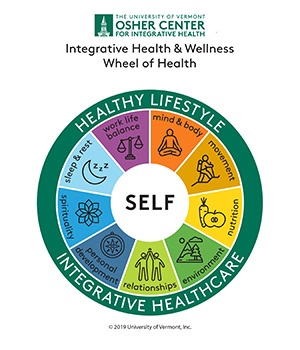

Step 2: Deepen Self-Awareness
“It’s important to ask yourself, ’What do these areas of my life look like now?’ and, ‘What do I want them to look like in the future?’” says Coleman. Such self-reflection deepens self-awareness and allows us to see our areas of strength and to identify areas that need more attention, she says. “Developing self-awareness also helps uncover meaning in our lives,” Coleman adds. Asking questions like, “What do I want good health for?” and, “What brings meaning to my life?” provide opportunities to connect with what matters to you. “This can help uncover personal motivation,” says Coleman, “a powerful force for lasting behavior change.”
Step 3: Create Your Own Wellness Vision
What does your own, personal vision for optimal health look like? What will you be doing and who might be involved? This scene is not the same for everyone, says Coleman, so painting your own picture is a useful way to help define what future change looks like for you.
Step 4: Determine Goals
Once you have an idea of your big-picture “destination,” it’s time to identify the goals that will help you get there. For example, if your vision is to be active and involved with family and friends, you might try to build stamina so you can play with grandchildren, Coleman suggests. Or you might be interested in building stronger relationships with friends. “Creating self-determined goals will help you understand what is needed to get closer to your vision,” she says.
Step 5: Create Small Action Steps
Now it’s time to break those larger goals down into smaller, specific action steps, says Coleman. These are steps that you can take right away, and again, you determine what they are. “After all,” she says, “you know yourself best, and you know what will work for you. But this doesn’t mean you need to do it alone.” Building in systems for accountability and support are critical components for success. So choose a buddy to meet at a specific time each morning for a walk, and pledge not to cancel unless really necessary! Studies have shown that success breeds success, builds confidence, and leads to sustainable change.
Step 6: Explore, Experiment & Revise
Remember, this is a process! “Take an honest look at what’s working and what isn’t, then revise as needed,” says Coleman. After all, by definition, change is dynamic, and making big changes can mean engaging in a series of small experiments that evolve over time.
For Patients of the UVM Cancer Center: Walk Through These Steps with a Health Coach
Health coaches work with individuals to identify personal health goals and create a plan for behavior change. They serve as accountability partners, provide resources, and empower individuals to develop healthy habits. Coaching sessions are tailored to meet individual needs, usually include 4-8 sessions over 2-4 months, and are a free support service offered through the UVM Cancer Center. One-on-one meetings can take place via phone or Zoom.
For more information about this process or to schedule an appointment contact Jessica Coleman, the Osher Center’s Integrative Oncology Health & Wellness Coach, at Jessica.Coleman [at] uvmhealth.org.


