It’s Deeper Than the Dead
It’s not really about zombies. It’s about us.
My path toward writing a novel about zombies started on Saturdays as a kid, watching British “creature features.”
Those movies were scary, but I don’t remember being scared. There was something else happening — some kind of commentary.
I’ve always loved words — writing stories, reading books. But my dad was an intensive care doctor, and that shaped me, too.
So in college, I majored in both English and biology. I taught high school English for a few years, but medical school was on my mind.
Psychiatry brought those two passions together. It’s about stories: Teasing out the subtleties of a person’s experience to understand a problem and how to address it.
And I’ve never stopped writing — articles, academic journals, three books. It’s fun and therapeutic — you learn something about yourself.
My first novel came from messing around: My family was going through a tough time, I couldn’t sleep, and “Night of the Living Dead” was on TV. I wrote a fake medical paper about zombies, put it online and it went viral.
When publishers showed interest, I got serious. I cold-called George Romero — the father of the zombie film. He was so nice and generous.
I feel lucky the book — “The Zombie Autopsies” — was well-received. I got to hang out with amazing artists like Romero and Max Brooks, who wrote “World War Z.” I spoke at conventions and colleges. I still get notes from across the country.
Not everyone loved it. Some said zombies weren’t an appropriate topic for a doctor. And when I did a national radio show portraying the zombie plague as real, a surprising number of people believed it.
But these stories matter. “The Zombie Autopsies” is about biology — it’s been used in neuroscience curriculums. It’s also about human nature. Zombies show us what we’re capable of when we’re forced to confront adversity — for better or for worse.
Zombies are just sick people. For the trope to work, you dehumanize them. It’s easy to do that on screen. But it’s also uncomfortably easy to do it to people in real life.
Where do we draw our lines? The best stories explore how we make those decisions, and what we do afterward.
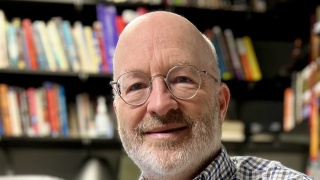
Steven Schlozman, MD, is chief of the Division of Child and Adolescent Psychiatry for UVM Health. He has been with us since 2023.