More Personalized Than Ever
How risk assessment and treatment are changing breast cancer care.

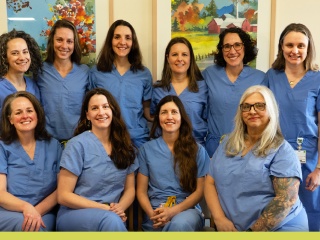
Though breast cancer is common, affecting about one in eight women, specialists at University of Vermont Health’s Cancer Genetics and Prevention Program and the High-Risk Breast Program know that each patient’s story is unique.
Understanding Your Risk
For some patients, risk begins with a family history of cancer. In fact, about 15-20% of breast cancer is linked to inherited factors. Genetic counselor Wendy McKinnon helps patients determine whether they carry an inherited change in one of the 13 genes linked to an increased risk of breast cancer. About 5% to 10% of patients have an identifiable gene mutation linked to cancer risk. When genetic testing is done before a diagnosis, the results can help guide screening and prevention care.
“It's a risk factor. It does not mean that that person will ever develop cancer,” says McKinnon. “But because of that risk, we add extra screening so that if something does come up, we're going to catch it early and there is going to be a better outcome.”
Risk Factors Beyond Genetics
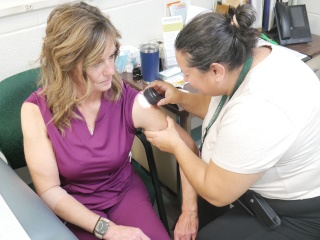
Genetics are only one factor that can influence breast cancer risk, and it’s recommended that women undergo a risk assessment done by age 25, years before routine mammogram screening begins, to better understand their individual risk.
We know that we're achieving better and better outcomes, and largely the improved survival rates that we're seeing are attributed to advancements in targeted drug therapies.
Age, family history, inherited genetic mutations, breast density and a personal history of breast cancer or certain breast conditions can all increase risk. Lifestyle factors such as alcohol use, physical inactivity and excess body weight can also play a role.
But even people with multiple risk factors may never develop breast cancer.
“Having one or more risk factors does not mean an individual will develop breast cancer,” says Michelle Machesky, a physician assistant with the High-Risk Breast Program. "In fact, many people diagnosed with breast cancer have no identifiable risk factors beyond age and sex,” says Machesky.
More Personalized Treatment Than Ever Before
Treatment has also changed dramatically over the past 20 years.
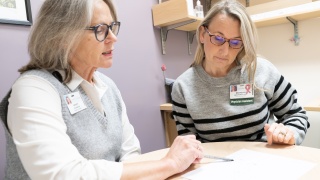
“We’re achieving better and better outcomes, and the improved survival rates are largely because of advancements in targeted drug therapies,” says oncologist Kara Landry, MD.
One of the biggest changes is that breast cancer treatment is no longer one-size-fits-all. Today’s tests can help medical professionals learn more about a patient’s specific cancer and choose the treatments most likely to be effective.
“Today, most patients can avoid chemotherapy, thanks in part to genomic tests that help us tailor treatment to each individual,” says Dr. Landry. For some patents with early-stage hormone associated breast cancer, specialized testing can help predict whether chemotherapy is likely to provide additional benefit. Dr. Landry says that for most of these cases, chemotherapy can be safely avoided, and treatments such as hormone therapy may work best.
For other types of breast cancer, testing can identify specific features of a tumor and help doctors select targeted therapies designed to treat that cancer more precisely.
From screenings through treatment, breast cancer care continues to evolve.
“Know that if you are diagnosed with breast cancer, there are lots of really effective treatments, and more are being discovered all the time," says Dr. Landry. “We help women get through these treatments all the time safely, and with good outcomes.”