


Program Director

Amanda Kallen, MD
Associate Professor, Larner College of Medicine
Interim Program Director, Reproductive Endocrinology & Infertility
Amanda N. Kallen, MD is an Associate Professor and Chief of the Division of Reproductive Endocrinology and Infertility at the University of Vermont Larner College of Medicine and UVM Medical Center. Dr. Kallen provides comprehensive reproductive endocrinology and infertility care, with clinical expertise spanning IVF, fertility preservation, reproductive aging, menopause, primary ovarian insufficiency, endometriosis, and inclusive family-building care for LGBTQ+ patients and families. She is especially committed to expanding fertility preservation options and advocating for insurance coverage of reproductive health as an essential component of cancer survivorship care, and she is deeply interested in the emotional, mental, and physical health dimensions of infertility and reproductive care.
Dr. Kallen has contributed extensively to national and international scholarship in reproductive medicine, co-authoring clinical guidelines, textbooks, and chapters on primary ovarian insufficiency, endometriosis, enhanced recovery after surgery, infertility, and reproductive health. She has held prominent leadership roles across the field, including prior service on the Executive Board of the American College of Obstetricians and Gynecologists and current positions on the Executive Boards of the Society for Reproductive Investigation and the Society for Assisted Reproductive Technology.
Following her Ob/Gyn residency and REI fellowship at Yale, Dr. Kallen spent ten years on Yale’s faculty before joining UVM. At UVM, she enjoys building cross-departmental collaborations that bring together diverse expertise and perspectives from colleagues across specialties. Having benefited tremendously from mentorship, sponsorship, and people who opened doors and lifted her up throughout her own career, she is deeply committed to doing the same for others. She loves watching trainees discover their scientific curiosity and pride, whether through spirited debates about the literature, the excitement of a new research idea, the joy of a first successful embryo transfer or research award, or the moment when a clinical problem becomes a question they are determined to solve. She is equally committed to helping trainees build sustainable careers in medicine, teaching that work-life balance is less about keeping every ball in the air and more about knowing which are glass, which are rubber, and which can be set down for a season.
Outside of work, Dr. Kallen can often be found sailing, skiing, traveling, exploring grocery stores in other countries, or practicing increasingly gentle forms of yoga (the kind where lying down is a major feature). She and her husband, Josh, have two young boys, four cats, one dog, and an au pair, which means their home life offers daily opportunities to practice triage, negotiation, and chaos management. She is a former Division I fencer, once spoke Japanese fluently while living in Okinawa, and has since dabbled in French, Spanish, Italian, and Latin. Her reading habits range from serious nonfiction to Stephen King, though she remains unconvinced by the hype around Project Hail Mary. She also enjoys good-naturedly keeping her UVM Interventional Radiology colleagues on their toes, a task made easier by being married to one of them. She is happiest when an adventure involves family, food, the outdoors, or preferably all three.
Faculty

Ira Bernstein, MD
Professor, Larner College of Medicine
Ira M. Bernstein MD is Professor and University Scholar in the Department of Obstetrics, Gynecology and Reproductive Sciences at UVM. He graduated magna cum laude from Union College in NY with a degree in Psychobiology (1978) and is an Alpha Omega Alpha medical honor society graduate from the University of Vermont College of Medicine (1983). He has served as director of maternal fetal medicine (MFM) and MFM fellowship training as well as Senior Associate Dean for Research at the UVM College of Medicine and most recently as chair of the Department of Obstetrics, Gynecology and Reproductive Sciences.
Dr. Bernstein’s primary research interest is the investigation of human integrative physiology and its pathophysiologic variations during the course of pregnancy. He has been funded as a PI from NIH for a series of projects examining pre-pregnancy determinants of preeclampsia as well as mechanisms of thrombosis during pregnancy. He has served as a collaborating Co-I with Drs Higgins and Heil examining mechanisms to facilitate smoking cessation during pregnancy and their effects. Dr. Bernstein has served on, or chaired, several study sections at NIH and the Gates Foundation including 2 years as the chair of the NIH Pregnancy and Neonatology standing study section. He is past president of the New England Perinatal Research Society and the International Perinatal Research Society. He was a member of the American College of Obstetrics and Gynecology Task Force on Hypertension and has served as a member of multiple NIH workshops examining perinatal complications. Dr Bernstein was recognized with the Distinguished Academic Achievement Award from the UVM College of Medicine in 2002 and as a University Scholar in 2016. He has received research awards from the New England Perinatal Society, the Society for Maternal Fetal Medicine and the Society for Reproductive Investigation. He currently serves as chair of the medical advisory board and ex-offico on the executive board for the Preeclampsia Foundation and is a member of the executive boards of the Cardiovascular Research Institute of Vermont and the Vermont Oxford Neonatal Network.
With regard to mentorship experience from 2004-10 I directed the fellowship training program in Maternal Fetal Medicine at the University of Vermont (UVM) Medical Center. In that position, and as a faculty member, I have been the primary mentor for 17 MD and/or PhD investigators for their fellowship or postdoctoral research projects. Of the 15 MD trainees, 5 remain in academic practices with a research component and 10 are in clinical practice. Of 2 PhD mentees, 1 is in an academic position and one works in Pharma. From 2005-2012 I served on the Internal Advisory Committee (IAC) for the UVM K-30 Clinical Research Training Grant. From 2009-2015 I chaired the IAC and then served as PI for the UVM Women’s Reproductive Health Research (K-12) mentored training program. I currently serve as a senior project mentor on the UVM COBRE on Cardiovascular and Brain Health, and mentor trainees at the undergraduate, medical school, resident, fellow and junior faculty levels. I believe that the best mentored relationships identify the strength and interests of a mentee and build on those to create collaborative productive experiences.

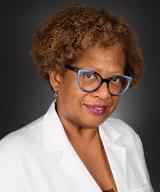
Elizabeth A. Bonney, MD, MPH
Professor, Larner College of Medicine
Dr. Bonney is a senior member of the Vermont Collaborative for Immunity and Host-Microbe Interactions (CIHMI), past President of the Preterm Birth International collaborative, past Chair of the Board of Scientific Councilors of the National Institute of Child Health and Human Development and past Chair of the Career Development and Diversity Committee of the Society for Reproductive Investigation. She is also an attending physician in our Generalist Division and the University of Vermont Medical Center for Pelvic Medicine and Reconstructive Surgery. She is the recipient of several awards for leadership, mentorship, gender equity and reproductive science.
Her NIH-funded laboratory uses mouse models to study the homeostasis of maternal T cells in response to fetal and environmental antigens. Her group further investigates the role played by this process in the regulation of infertility, maternal cardiovascular biology, responses to viral infection, and the metabolic and other factors leading to preterm birth. She feels that this work may also reveal clues about how the maternal immune system “educates” that of the developing fetus. Her recent work interests also include mechanisms of aging in the fetal membranes and in other reproductive tissues, such as the ovary. In her work she has published over 125 manuscripts, abstracts, book chapters and scientific commentaries.
She strongly supports the wise and innovative approaches to use both mouse and novel non- animal models for research, representation in science and medicine and the building of research capacity through teaching, mentorship and sponsorship.
In her free time, Dr. Bonney loves her garden, walking and traveling.
Research Interests: using developing mouse models to investigate pregnancy’s influence on T-cell regulation; role of infection and innate immunity in preterm birth.
Expertise: Gynecologic Infectious Disease, Gynecology, Obstetrics, Sexually Transmittable Infections in Women, Vulvar Pain Syndromes


Shanmugasundaram Nallasamy, MD
Assistant Professor, Larner College of Medicine
Shanmugasundaram Nallasamy received his Veterinary Medicine degree in India and his PhD from the University of Illinois at Urbana-Champaign. He continued his post-doctoral research at the University of Texas Southwestern Medical Center in Dallas. In 2019, He started his independent faculty position at the University of Vermont, where he currently holds a primary appointment in the Department of Obstetrics, Gynecology, and Reproductive Sciences at the Larner College of Medicine.
His research interests are always centered around reproductive biology. Throughout his career, he has investigated various reproductive processes, such as ovarian follicular development, in vitro embryo development, embryo implantation, endometrial decidualization, cervical remodeling, myometrial function, and steroid hormone regulation. The current focus of his laboratory is to understand the structure and function of the extracellular matrix in the uterus during pregnancy and parturition. His laboratory utilizes physiologically relevant, genetically engineered mouse models, as well as genomic, proteomic, tissue biomechanical, and imaging techniques to address various research questions.
Areas of interest/expertise: Reproductive biology, Parturition, Preterm birth, Myometrial biology, Extracellular matrix

Jeffrey Peipert, MD, PhD
John Van Sicklen Maeck Chair of the Department of OBGYN at UVM
In addition to OBGYN training, Dr. Peipert has expertise in public health, epidemiology, and health services research. Previous NIH-funded grant/project experience include: 1) NICHD-funded randomized trial of a computer-based intervention to encourage dual method contraceptive use to prevent unplanned pregnancy and sexually transmitted infections (STIs); 2) Contraceptive CHOICE Project, a large prospective cohort study, the which recruited close to 10,000 women and followed them for 2-3 years for contraceptive effectiveness, satisfaction, and continuation rates; and 3) FACT (Fertility after Contraceptive Termination) Study. Dr. Peipert continues to be interested in conception, STIs, and infertility, and specifically the effect of Mycoplasma genitalium on fertility.
Areas of interest/expertise: contraception, sexually transmitted infection, infertility, epidemiology, public health
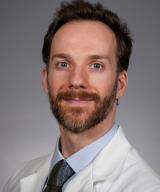
Jason Stumpff, MD
Assistant Professor, Larner College of Medicine