
Health Library
Healthy eating for teens
You must carefully read the "Consumer Information Use and Disclaimer" below in order to understand and correctly use this information
Why do teens need a healthy diet?
The teen years, also called "adolescence," are a time of major growth and development. Choosing healthy foods is important because it provides the calories and nutrition to support this growth.
Having healthy eating patterns can help teens with their mood, energy level, and performance in school and sports. Teens' eating habits also affect their health later in life. Healthy eating can lower the risk of problems like heart disease, diabetes, high blood pressure, and some types of cancer.
Teens who are very underweight sometimes have slower growth or go through puberty later. Restricting eating can also cause changes in the menstrual cycle (monthly periods), weak bones, and other health problems.
How do eating patterns change in the teen years?
During adolescence, teens take on more responsibility for their own eating habits. Mass media, social media, and peer pressure can have negative effects on body image and how and what teens eat.
Common teen eating habits that can affect overall health include:
Skipping meals – Teens often skip meals. This can happen because of busy schedules, activities, or work. Sometimes, teens think it might help them lose weight. But it's generally healthier not to skip meals, especially breakfast. This is because:
Skipping meals can affect performance in school or sports.
Teens who skip meals can miss some important nutrients, such as fiber, iron, calcium, and certain vitamins.
Skipping meals does not help with weight control and might actually cause weight gain.
Snacking – Sometimes, snacks can be an important source of energy and nutrition. Other times, snacks have a lot of calories but not a lot of nutrition. Snacking can also cause teens to eat less of healthier foods at meals. It can help to:
Choose water or low-sugar drinks instead of sugary soda, sports drinks, juices, or sweet coffee drinks.
Choose snacks that are lower in saturated fat and sugars, and high in nutrients such as protein or vitamins. For example, choose an apple and a low-fat cheese stick.
Try not to have snacks before meals or instead of meals.
Eating fast food – Many teens eat fast food as a part of socializing with friends or when they are away from home at mealtimes. Fast food can be convenient and affordable. But it can also lead teens to make less healthy choices. It can help for teens to learn that:
Many types of fast food are high in calories, saturated fat, and salt, and low in nutrients. These foods tend to cause weight gain and are less healthy. They can affect a person's long-term health.
There are often ways to choose healthier options from fast food restaurants. Choose foods that contain fruits and vegetables or are made with whole grains.
Dieting or changing eating patterns because of self-image – Teens often feel negative about their body weight. Sometimes, they feel pressure to lose weight. They might try "dieting" by skipping meals, eating very little, or only eating a very narrow range of foods. This type of eating can cause problems:
Diets that strictly avoid many types of food or drastically reduce calories do not give the nutrients needed.
Teens who diet frequently are at a higher risk of developing an eating disorder. Also, using diet pills or supplements can be dangerous.
Instead of dieting, teens should focus on choosing a variety of foods, having regular balanced meals, and getting plenty of exercise. Over time, this often leads to better self-image and health.
Some other types of diets can be healthy if they include a wide variety of foods and enough calories. Examples include vegetarian, vegan, or "Mediterranean" diets. If a teen wants to follow one of these diets, it's a good idea to talk to a doctor or dietitian. This way, they can make sure they are getting all the nutrients they need.
How can parents and other adults encourage healthy eating?
Parents and other adults can:
Try to keep a variety of healthy foods in the home for meals and snacks. This includes vegetables, fruits, dairy products, and other lean proteins. Having healthy foods available makes it easier for everyone in the home to make healthy food choices when they are hungry.
Limit foods in the home that are high in saturated fat or sugar. These include things like chips, cookies, pastries, and many other snack foods. If these foods are usually available in the house, everyone is more likely to eat them instead of healthier choices. It's OK for a teen to eat these foods once in a while.
Set a good example by choosing healthier foods themselves and being active.
Eat together at mealtimes when possible. Try to keep mealtimes pleasant and free of distractions like TV.
Include teens in planning, shopping, and preparing meals and snacks. Talk about serving sizes and ingredients. This can help teens make better choices about what and how much to eat.
Avoid criticizing the teen's weight or how they look, or if they make less healthy food choices. Criticism can make a teen feel more anxious about their body and make them more likely to have unhealthy eating patterns or develop an eating disorder. Instead, parents and family should talk with teens about things like social pressure, body image, and how healthy and beautiful bodies come in many shapes and sizes.
If the teen is worried about their weight or is a very picky eater, they should talk with a doctor or a dietitian. With advice and support, teens can learn to make healthy food choices, have a positive self-image, and avoid unhealthy dieting.
What is a healthy diet for a teen?
A teen's nutritional needs are based on their age, sex, and how active they are. To get the nutrients they need, teens can choose a wide variety of foods (figure 1).
For suggestions on how to plan a healthy meal, see the www.myplate.gov website from the US Department of Agriculture. The MyPlate plan (www.myplate.gov/myplate-plan) is based on a person's age, body size, and physical activity level.
Images
figure 1: Healthy diet
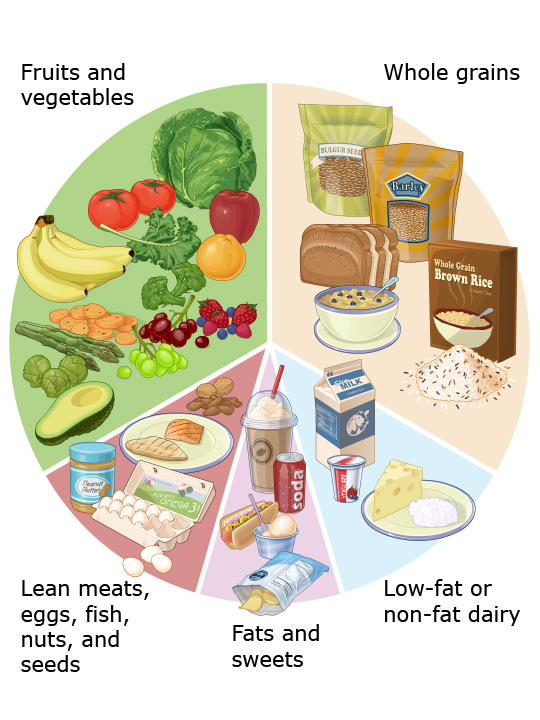
A healthy diet includes:
Fruits and vegetables – Examples include leafy greens, tomatoes, bananas, broccoli, carrots, avocado, grapes, and berries.
Whole grains – Examples include whole-grain bread and cereals, brown rice, bulgur, and barley.
Dairy products – Examples include low-fat or non-fat milk, yogurt, cheese, and cottage cheese.
Proteins – Examples include lean meats, fish eggs, nuts, and nut butter.
Limit or avoid fats and sweets. Examples include things like hot dogs, chips, soda, sweetened coffee beverages, and ice cream.
Graphic 139213 Version 2.0
Give to a Healthier Future
Help us elevate and expand our care, make breakthroughs in biomedical science and improve community health and wellness.
Healthier communities. Healthiest lives. Together.