
Health Library
Healthy eating for children 2 to 12 years old
You must carefully read the "Consumer Information Use and Disclaimer" below in order to understand and correctly use this information
Why do children need a healthy diet?
A healthy diet gives a child the nutrients they need to grow and develop.
A healthy diet can also help a child stay healthy later in life. It can lower the risk of problems like heart disease, diabetes, high blood pressure, osteoporosis, and some types of cancer.
What is the adult's role in a child's healthy diet?
It is normal for children to resist trying new foods and have few favorite foods. Adults are responsible for:
Providing a variety of healthy foods
Deciding when and where meals and snacks are eaten
Providing the child with healthy food when they are hungry, and letting them stop eating when they are full
Setting an example for healthy eating
Adults should not try to control a child's eating by:
Pressuring or bribing a child to eat or try a food
Restricting foods
Requiring a "clean plate"
Commenting on a child's eating based on their body size
What is the child's role in eating a healthy diet?
As they grow, children are responsible for choosing what and how much of the food offered to them to eat.
Young children:
Become more independent in eating and feeding themselves
Learn to sit at the table for short periods of time
Start to make food choices for themselves and form preferences
Start to recognize signs of hunger or fullness
Older children can help:
Shop for food
Plan meals
Prepare meals
Do mealtime chores like setting the table or doing dishes
What is a healthy diet for a child?
A child's nutritional needs are based on their age, sex, and how active they are. Offer children a wide variety of foods (figure 1), and gently encourage them to try new foods. This helps them get the nutrients they need. It also helps them develop healthy eating habits.
Grains – Offer whole-grain, high-fiber foods each day. Try to make at least half of their grains whole grains. This includes whole-grain breads, cereals, brown rice, and pasta.
Fruits and vegetables – Offer a colorful variety of vegetables and fruits, which can be fresh (raw or cooked), frozen, or canned. Try to limit fruit juice to 100% fruit juice and 1 serving per day.
Avoid or limit products with added sugar or salt. Fruit "gummy"-type snacks usually do not contain fruit.
Dairy – Offer low-fat (1 percent), skim, or fat-free milk and other dairy products. If you want to offer a plant-based milk, make sure it is fortified with calcium and vitamin D. Soy milk is a good choice because it is higher in protein than other plant-based milks.
Avoid or limit whole milk and products made with whole milk.
Meats, poultry, seafood, and other proteins – Offer low-fat or lean meats, fish or shellfish, or plant-based protein foods (such as tofu or seitan). Try to offer fish or shellfish 1 to 2 times a week. Beans, lentils, and split peas are also high in protein and fiber.
Avoid or limit processed meat such as hot dogs, bologna, or sausage. Avoid or limit fish with high levels of mercury. You can find a list of mercury levels in fish here: www.fda.gov/food/consumers/advice-about-eating-fish.
Fats and oils – There are different types of fats. Some types are better for health than others. "Healthy" fats are monounsaturated or polyunsaturated fats. These are found in things like olive oil, canola oil, and sesame oil. They are also found in nuts, seeds, avocados, and nut butters.
Avoid or limit "unhealthy" fats. These are saturated fats (found in animal meat or butter, coconut oil, and palm oil) and trans fats (found in some margarines or processed foods). To reduce unhealthy types of fats, offer red meat less often, try to bake or broil meats, and remove the skin from chicken and turkey.
For suggestions on how to plan a healthy meal, see the www.myplate.gov website from the US Department of Agriculture. The MyPlate plan (www.myplate.gov/myplate-plan) is based on a person's age, body size, and physical activity level.
If your child has food allergies or sensitivities, talk to their doctor or a dietitian about how to make sure they get the nutrients they need.
What else should I know?
Most children can determine how much food they need to grow. Help them learn to listen to their body.
Try to keep mealtimes pleasant and free of distractions like TV. Try to eat together at mealtimes.
You might have to offer a new food several times (as many as 8 to 10) before a child accepts it in their diet.
Talk to children about how food helps their bodies. For example, you can say things like:
"Eat the rainbow. Choosing a variety of colors of foods gives you different vitamins and minerals. These are good for your eyesight and will help you grow big and strong."
"Eating whole grains gives you energy to move and play."
Talk about how healthy and beautiful bodies come in many shapes and sizes. Do not criticize them for eating too much or too little.
Ask a doctor or dietitian for suggestions if your child is a picky eater.
Do not use sweets or candy as a reward for good behavior.
Images
figure 1: Healthy diet
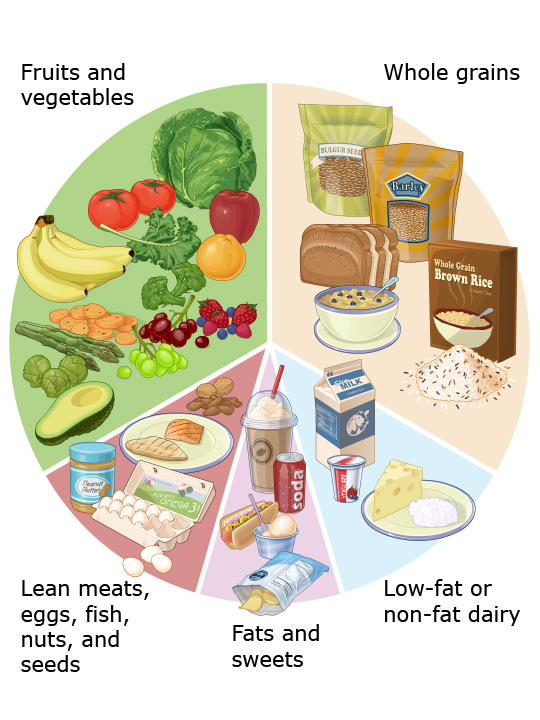
A healthy diet includes:
Fruits and vegetables – Examples include leafy greens, tomatoes, bananas, broccoli, carrots, avocado, grapes, and berries.
Whole grains – Examples include whole-grain bread and cereals, brown rice, bulgur, and barley.
Dairy products – Examples include low-fat or non-fat milk, yogurt, cheese, and cottage cheese.
Proteins – Examples include lean meats, fish eggs, nuts, and nut butter.
Limit or avoid fats and sweets. Examples include things like hot dogs, chips, soda, sweetened coffee beverages, and ice cream.
Graphic 139213 Version 2.0
Give to a Healthier Future
Help us elevate and expand our care, make breakthroughs in biomedical science and improve community health and wellness.
Healthier communities. Healthiest lives. Together.