
Health Library
Cell-free DNA prenatal screening
You must carefully read the "Consumer Information Use and Disclaimer" below in order to understand and correctly use this information
What is cell-free DNA prenatal screening?
Cell-free DNA prenatal screening, or "cfDNA screening," is a blood test done during pregnancy. It is a way to check, or "screen," the DNA of the fetus (developing baby) for certain disorders.
Your baby's DNA enters your blood through the placenta. (The placenta is an organ that forms between you and your baby during pregnancy.) The fetus's DNA and your DNA mix in your bloodstream while you are pregnant.
Doctors use a cfDNA screening to help figure out if a fetus has an increased risk of having a problem with their chromosomes. Chromosomes are tiny parts of cells that carry the plans that make our bodies the way they are. Some chromosome disorders that this test can identify include:
Down syndrome – This is a condition that happens when a person is born with an extra chromosome.
Trisomy 18, also called "Edwards syndrome," and trisomy 13, also called "Patau syndrome" – These are less common than Down syndrome.
Sex chromosome disorders – Most people have 2 chromosomes that determine their sex (male or female). Some people are born with more or fewer sex chromosomes. The most common sex chromosome disorder is called "Klinefelter syndrome."
Some cfDNA tests can also check for other disorders. The test also shows the sex of the fetus. But you can choose not to find this out.
Why might I get cfDNA screening?
Your doctor might order this test if you want to know how likely your fetus is to have certain disorders, such as Down syndrome, Edwards syndrome, and Klinefelter syndrome. Sometimes, people already know their fetus is at increased risk for a chromosome disorder, and this test helps their doctor learn more about the risk.
cfDNA screening is usually done at 10 weeks of pregnancy or later.
How do I prepare for cfDNA screening?
You need to get a "blood draw." Your doctor or nurse will tell you where to go for this.
It might help to wear a short-sleeve shirt to your blood draw appointment. This makes it easier for the person drawing your blood to get to your arm.
What happens during a blood draw?
A needle is used to take a small amount of blood from your arm (figure 1). Collecting the blood only takes a few minutes. The blood is then tested in a lab.
Tell the person who takes your blood:
If you take "blood thinner" medicines or if you have a bleeding problem – They will make sure your bleeding is under control before you leave.
If you have a latex allergy – Some of the supplies used for blood draws might contain latex.
If you have a preferred arm to use
Most of the time, getting blood taken does not cause problems. You might have a little soreness or bruising where the needle went in.
What do my results mean?
Your doctor or nurse will tell you when to expect your results, and will contact you with the results. Or if you use an online "patient portal," you might get an alert there when your results are ready.
If your cfDNA screening shows any abnormal results, your doctor or nurse will talk to you about what to do next. It might also help to talk with an expert called a "genetic counselor." If the test results show your fetus has a high chance of having a disorder, you can choose to have a "diagnostic" test to find out for sure.
Rarely, the lab cannot read your results. This happens when there is not enough cfDNA from your fetus and placenta in the sample. If this happens, your doctor will help you figure out if you want to do more tests, and which ones.
Images
figure 1: Blood draw
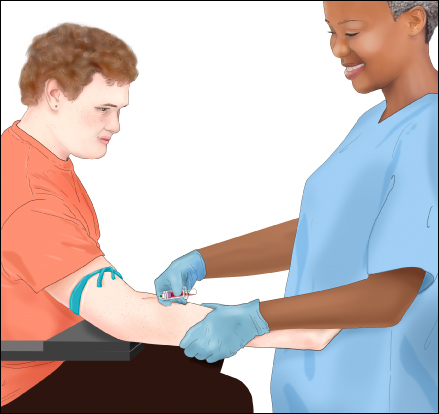
During a blood draw, a small sample of your blood is taken from a vein in your arm.
First, the person taking your blood cleans your skin. Then, they put a band called a "tourniquet" around your upper arm. This makes it easier to find your vein. Next, they insert a needle with a tube attached to it into your vein. Blood collects in the tube. They remove the tourniquet and needle, put pressure on the area with a piece of gauze, and bandage your arm.
Graphic 138490 Version 3.0
Give to a Healthier Future
Help us elevate and expand our care, make breakthroughs in biomedical science and improve community health and wellness.
Healthier communities. Healthiest lives. Together.