
Health Library
Asthma in adults – Discharge instructions
You must carefully read the "Consumer Information Use and Disclaimer" below in order to understand and correctly use this information
What are discharge instructions?
Discharge instructions are information about how to take care of yourself after getting medical care for a health problem.
What is asthma?
This is a condition that can make it hard to breathe. The symptoms can be mild or severe. They can come and go. An asthma "attack" is when symptoms start suddenly. This happens when the airways in the lungs become more narrow and inflamed (figure 1).
Asthma can run in families.
How do I care for myself at home?
Ask the doctor or nurse what you should do when you go home. Make sure you understand exactly how to care for yourself. Ask questions if there is anything you do not understand.
You should also:
Take all your medicines as instructed – The doctor might prescribe:
Quick-relief medicines – These open the airway quickly to stop symptoms of an asthma attack in 5 to 15 minutes. Everyone with asthma should have a quick-relief inhaler to use during an asthma attack. Most people need these medicines 1 or 2 times a week, or less often. But when asthma symptoms get worse, more doses might be needed.
Long-term controller medicines – These reduce inflammation in the long term to help prevent asthma symptoms from happening. If you need controller medicines, take them every day, even if you have no symptoms. Your doctor might tell you to use a controller medicine if, for example, you have asthma symptoms more than 2 times a week. When these medicines are working well, your asthma symptoms are controlled, and you should not need quick-relief medicines very often.
When these medicines are put into inhalers, many people have 1 inhaler for quick relief and 1 for long-term control. But a person might use 1 inhaler for both.
Quit smoking, if you smoke – This is the most important thing you can do for your health. Your doctor or nurse can help you quit. Also, do not let other people smoke near you. Smoke can stay on clothes and furniture and cause breathing problems.
Avoid "triggers" – These are things that make your symptoms worse. Common triggers include smoke, air pollution, dust, mold, pollen, strong chemicals or smells, and very cold or dry air. For some people, being around certain animals can trigger symptoms. Exercise and stress can also be triggers. But do not avoid exercising to avoid triggering your asthma. This is because exercise is important to stay healthy. Plus, regular exercise and better fitness can actually help reduce asthma symptoms.
If you can't avoid certain triggers, talk with your doctor about what you can do. For example, you might need to take an extra dose of your quick-relief inhaler medicine before exercising or being around things you are allergic to.
Lower your risk of getting sick – Some infections can make asthma symptoms worse. These include colds, the flu, and COVID-19.
It's important to get the COVID-19 vaccine. This lowers the risk of severe illness if you do get COVID-19. You should also get a flu shot every year. Plus, some people need to get a vaccine to help prevent pneumonia.
Follow your "asthma action plan," if you have one (form 1) – This is a list of instructions that tell you:
Which medicines to use each day at home
Which medicines to take if your symptoms get worse
When to get help or call for an ambulance
As part of your action plan, you might need to use a "peak flow meter." Breathing into this device shows how your lungs are working. Your doctor will show you how to use it.
What follow-up care do I need?
Your doctor or nurse will tell you if you need to make a follow-up appointment. If you need to take asthma medicine every day, see your doctor or nurse at least every 6 months. At these appointments, they will ask about your symptoms, check how well your lungs are working, and talk about your treatment plan.
When should I call the doctor?
Call for emergency help right away (in the US and Canada, call 9-1-1) if you have severe symptoms like:
You have so much trouble breathing you cannot talk.
Your lips or fingernails turn gray or blue.
Call for advice if you:
Have an asthma attack and your symptoms do not improve, or get worse, after using a quick-relief medicine
Need to use your quick-relief medicine more than 2 times a week
Cannot do your normal activities because of your asthma symptoms
Have any questions about your medicines
Teach back
The "teach-back method" is a way to make sure you understand the information you received. This means being able to explain what you learned in your own words.
After reading the information above, think about how you would answer these questions:
What is my condition or health problem?
How do I care for myself, and why is this important?
What problems should I watch for, and when should I call the doctor?
Images
figure 1: Asthma
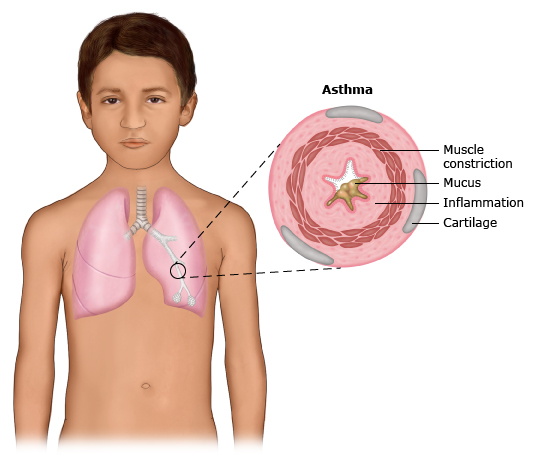
During an asthma attack or flare-up, the muscles around the airways tighten (constrict), and the lining of the airways gets inflamed. Then, mucus builds up. All of this makes it hard to breathe.
Graphic 65956 Version 11.0
form 1: Asthma action plan (adult)
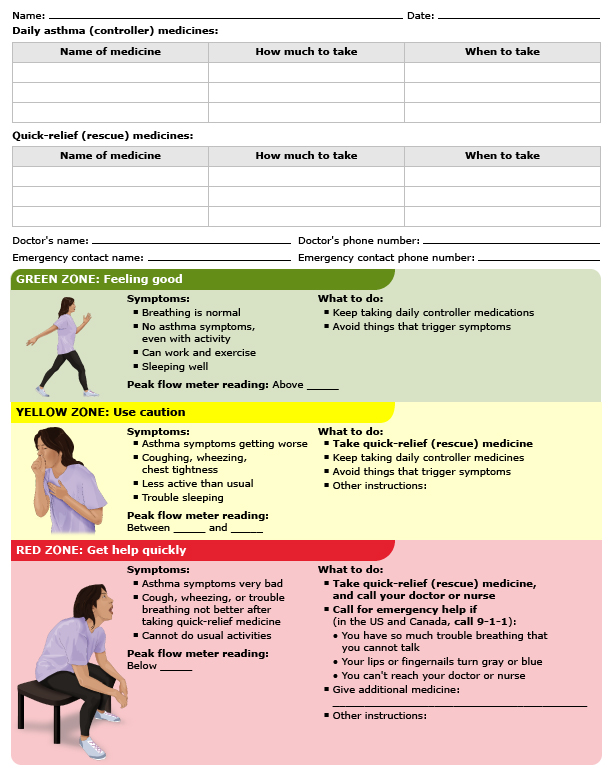
An asthma action plan is a list of instructions that tell you:
What medicines to take at home each day, if any
What symptoms to watch for
What other medicines to take if your symptoms get worse
When to call the doctor or get emergency help
Graphic 140838 Version 2.0
Give to a Healthier Future
Help us elevate and expand our care, make breakthroughs in biomedical science and improve community health and wellness.
Healthier communities. Healthiest lives. Together.