
Health Library
Diabetes – Insulin pumps
You must carefully read the "Consumer Information Use and Disclaimer" below in order to understand and correctly use this information
What is an insulin pump?
This is a device that delivers insulin to the body. If a person with diabetes needs several doses or more of insulin each day, they might choose to use an insulin pump instead of giving themselves shots of insulin.
An insulin pump is smaller than most cell phones. If you get a pump, you need to wear or carry it on your body all the time.
People of all ages can use an insulin pump. Most often, insulin pumps are used by people with type 1 diabetes. Some people decide to use a pump as soon as they are diagnosed with diabetes. Others choose to switch to a pump after giving themselves insulin shots for a time.
How does an insulin pump work?
The pump attaches to the body and delivers insulin under the skin.
There are many different kinds of insulin pumps. For example:
Some pumps are connected to a tube you insert under your skin, usually in the belly area (figure 1). This involves using a small needle (or a device that has a small needle). The pump containing insulin can be attached to your clothing or carried in your pocket. You change the needle and tubing every 2 to 3 days. You also need to refill the pump with insulin every few days.
Another type of pump is a "pod" that sticks directly to your skin (figure 2). You use a syringe to fill it with insulin. Then, when you press a button, the device inserts a small tube into your skin to deliver the insulin. The pod is left in place for 2 to 3 days. After this, you need to replace the pump with a new one in a different area of your body.
Only "short-acting" (regular) or "rapid-acting" insulins are used with a pump. Most people use rapid-acting insulin with a pump.
If you use a pump:
You will get some insulin continuously, all day and night. This is called a "basal rate." For some insulin pumps, you set the dose of basal insulin. Your doctor or nurse will help you figure out the dose. Other pumps can automatically change your basal rate based on your sugar levels.
Then, before meals, you program the pump to give an extra, higher dose of insulin. This is called a "bolus." This amount depends on what you plan to eat and your blood sugar level.
Do I still need to check my sugar every day?
Yes. Just like people who use insulin shots, people with an insulin pump need to check their sugar level several times each day.
Most people who use an insulin pump wear a device that measures their sugar level all the time. This is called "continuous glucose monitoring," or "CGM." With CGM:
You wear a special sensor that attaches to your skin with a sticky patch. It measures the sugar in the fluid under your skin. Then, it sends the information to your smartphone or to a small box that can attach to your clothing or go in a bag.
You might still need to check your blood sugar by pricking your skin. This is especially important when your sugar levels are low or changing quickly, or if you think your monitor might not be working correctly. When and how often to do this depends on which device you use.
Many insulin pumps can communicate with a CGM device. Some systems adjust the basal rate automatically based on your blood sugar level. This is called a "closed-loop system." If you use this, you still need to "tell" the insulin pump when you are eating a meal. For most systems, you also need to choose your bolus dose before meals.
What are the benefits of an insulin pump?
Compared with insulin shots, an insulin pump has these benefits:
You do not have to get several shots every day.
Insulin can be delivered in smaller amounts with a pump. This is helpful for people who are very sensitive to insulin.
You have more choices about when and what to eat. You do not always have to plan your meals in advance. You can just give yourself a bolus dose to cover the food you plan to eat and the activities you plan to do. This is possible with insulin shots, too, but some people feel they have more flexibility with a pump.
Using a pump, especially a closed-loop system, might help you manage your blood sugar level better. This means fewer episodes of low blood sugar.
What are the downsides of an insulin pump?
The downsides include:
It takes time to learn how to program and use an insulin pump.
For some pumps, if the tube slips out of your skin or gets a kink in it, you will not get any insulin. Then, your blood sugar level can get too high, which can lead to serious problems.
Insulin pumps usually cost more than insulin shots.
Wearing or carrying an insulin pump all the time can be bothersome.
The area where the pump goes into your skin can get infected.
How do I wear or carry the pump?
Insulin pumps can be used on any part of the body where insulin shots are given (figure 3). You can wear or carry the pump in different ways:
If you have a pump that is connected to a tube, you can put it in your waistband, shorts, underwear, or bra. You can also keep it in your pocket or clip it to a belt. At night, you can put the pump in your pajamas or clip it to a blanket, sheet, or pillow.
Most people can disconnect the pump and take it off for short periods of time, usually up to about 1 hour. This lets them remove it to shower, bathe, swim, or have sex. Some types of insulin pumps can be worn in the water.
If you have a pump that sticks to your skin (a "pod"), you need to carry your smartphone or a separate "controller" with you. The pods are waterproof and can be worn for showering, bathing, or swimming.
Should I switch to an insulin pump?
If you use insulin shots to manage your diabetes, you might be interested in switching to a pump. Your doctor or diabetes team can help you decide whether an insulin pump is right for you. They can talk to you about the benefits and downsides of using a pump, the different options that are available, and your individual situation.
Images
figure 1: Traditional insulin pump
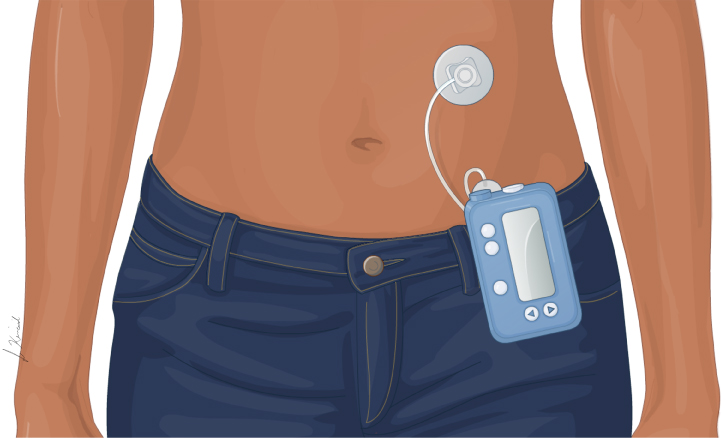
This insulin pump is connected to a tube that is inserted under the skin. The pump containing insulin can be attached to your clothing or carried in your pocket.
Graphic 84008 Version 5.0
figure 2: Insulin patch pump
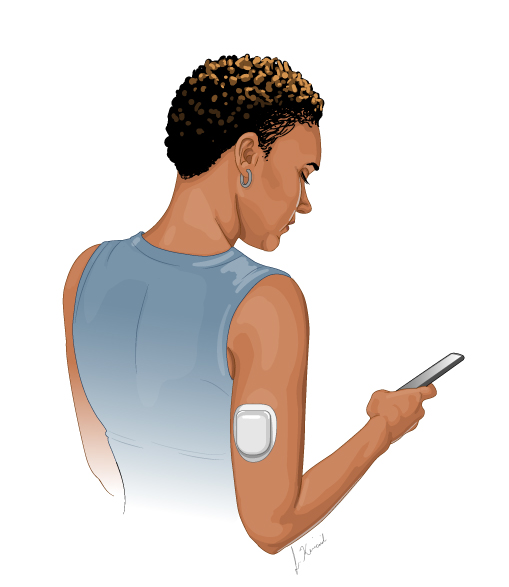
This type of insulin pump sticks directly to the skin and does not use tubing. You use a wireless device to control it.
Graphic 129388 Version 2.0
figure 3: Where to give an insulin shot
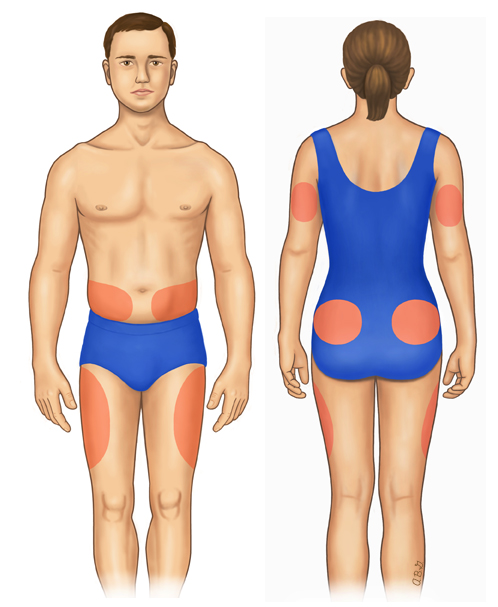
The shaded areas can be used for insulin shots. You should change areas so that you do not use the same area each time. Insulin gets into the blood more quickly when injected into the belly, as compared with the arms or legs.
Graphic 74635 Version 4.0
Give to a Healthier Future
Help us elevate and expand our care, make breakthroughs in biomedical science and improve community health and wellness.
Healthier communities. Healthiest lives. Together.