
Health Library
Diabetes and infections
You must carefully read the "Consumer Information Use and Disclaimer" below in order to understand and correctly use this information
Do people with diabetes have a higher chance of getting infections?
Yes. Doctors think this is likely due to:
High blood sugar – Blood sugar levels that are too high can prevent the infection-fighting system (called the "immune system") from working as well as it should.
Nerve damage – Over time, diabetes can cause nerve damage. This can lead to problems. For example, nerve damage can make people unable to feel pain in their feet. So if they get a cut on their foot or step on a nail or other sharp object that pierces the skin, they might not know it. If a wound isn't treated right away, it can become an open sore and get infected.
Blood vessel problems – Over time, diabetes can damage blood vessels. Then, blood can't flow as well to help heal an infection.
If you have diabetes, tell your doctor or nurse right away if you think you have an infection.
What kinds of infections do people with diabetes commonly get?
They commonly get:
Skin infections
Vaginal yeast infections
Bladder or kidney infections
Infections on the feet
Yeast infections in the mouth (called "thrush")
Lung infections
Infections after surgery, around the cut ("incision") from surgery
When should I call my doctor or nurse?
Certain symptoms might mean you have an infection. Call your doctor or nurse if you have diabetes and get any of these symptoms:
Fever, aches, or chills
Redness, swelling, warmth, or increased pain around a cut, scrape, or ulcer
Pus draining from a cut, scrape, or ulcer
Feeling the need to urinate a lot, pain when urinating, or cloudy or bad-smelling urine
Vaginal itching or discharge
White patches in the mouth or on the tongue
How can I help prevent infections?
One of the most important things you can do is manage your blood sugar level. This can help reduce nerve and blood vessel damage from diabetes.
Another important thing is to take good care of your feet. This can help prevent foot infections. To protect and take care of your feet, you should:
Wear shoes or slippers all the time.
Trim your toenails carefully. Cut straight across, and file the nail (figure 1). Do not cut cuticles or pop blisters.
Wash your feet with warm water and soap every day, and pat them dry. Put a moisturizing cream or lotion on them.
Check both feet every day (figure 2). Look for cuts, blisters, swelling, and redness. Check all over your feet, including the bottoms and in between your toes. If you can't see well or if you have trouble seeing the bottoms of your feet, ask someone to help check your feet.
Wear socks that are not too tight. Change them every day.
Wear shoes that fit well and are not too tight.
Check inside your shoes before you put them on. Make sure there is nothing sharp inside.
Have your doctor check your feet at each visit.
To help prevent infections in other parts of your body, you should:
Take care of your skin by keeping it clean and dry. Wear gloves when you use harsh cleaning chemicals or other products that could harm your skin. If you get a cut or scrape, wash it right away with soap and water. If it doesn't heal or gets worse, see your doctor or nurse.
Take care of your gums and teeth. Brush your teeth twice a day, floss every day, and see your dentist for regular check-ups.
Eat a healthy diet that includes protein, vegetables, and fruits. Drink plenty of fluids.
Get the COVID-19 vaccine, the pneumonia vaccine, the flu vaccine (every year), and any other vaccines your doctor recommends.
Wash your hands often, especially if you are around people who are sick.
Avoid holding in your urine for very long periods of time.
Quit smoking, if you smoke. Smoking makes blood vessel problems worse. Your doctor or nurse can help you quit.
If you do get an infection and your doctor prescribes antibiotic medicines, take them exactly as instructed. It is very important you finish all the medicine, even if you start to feel better.
Images
figure 1: Trimming toenails
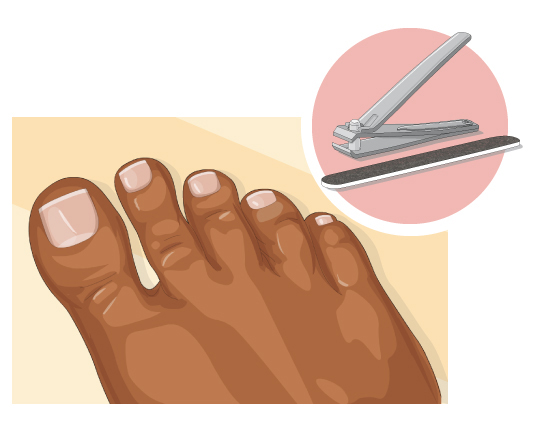
Trim your toenails straight across, and smooth them with a nail file.
Graphic 80053 Version 3.0
figure 2: Foot check for people with diabetes
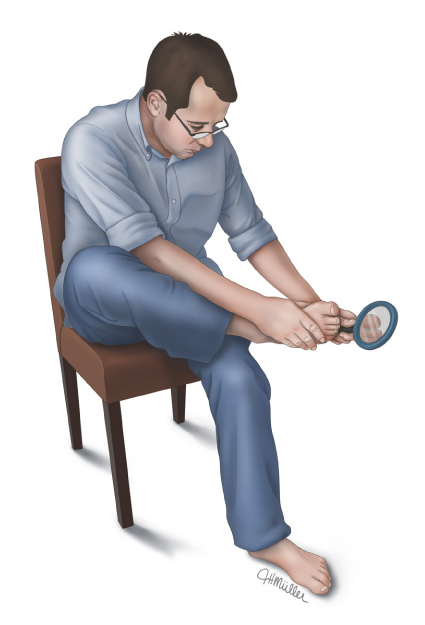
People with diabetes should check both of their feet every day.
It is important to check your feet all over, including in between your toes. If you can't see the bottom of your foot, use a mirror or ask another person to check for you. Tell your doctor or nurse if you see any:
Redness
Cuts or cracks in the skin
Blisters
Swelling
Graphic 77032 Version 5.0
Give to a Healthier Future
Help us elevate and expand our care, make breakthroughs in biomedical science and improve community health and wellness.
Healthier communities. Healthiest lives. Together.