
Health Library
Hypoparathyroidism
You must carefully read the "Consumer Information Use and Disclaimer" below in order to understand and correctly use this information
What is hypoparathyroidism?
This is a rare condition of the parathyroid glands in the neck (figure 1). These glands make a hormone called "parathyroid hormone," or "PTH." It helps control the amount of calcium in the blood. Hypoparathyroidism is when the body has too little PTH. This causes calcium levels in the blood to get too low.
Neck surgery on the thyroid or parathyroid glands or major surgery for head and neck cancer are the most common causes of hypoparathyroidism. After these surgeries, some people get hypoparathyroidism only a short time. Others have hypoparathyroidism for the rest of their lives, but this is less common. Other conditions can also cause hypoparathyroidism.
What are the symptoms of hypoparathyroidism?
When hypoparathyroidism develops suddenly after neck surgery, the symptoms are caused by low calcium levels.
If your calcium level is only a little bit low, you might not have any symptoms. But if your calcium level is very low, or if it drops suddenly, it can cause:
Tingling in the hands or feet, or around the mouth
Unusual muscle movements, such as jerking, twitching, or spasms
Muscle cramps
Feeling tired, irritable, anxious, or depressed
People with long-lasting hypoparathyroidism can have different symptoms, including:
Eye problems, especially cataracts
Dry, thick skin
Coarse hair that breaks easily and can fall out, causing bald spots
Fingernails that break easily, with ridges that go from left to right
Is there a test for hypoparathyroidism?
Yes. Your doctor or nurse should be able to tell if you have hypoparathyroidism by doing blood tests to measure your calcium and PTH levels. They might also test the levels of other minerals and vitamin D in your blood. You might get tests to measure calcium levels in your urine.
How is hypoparathyroidism treated?
Taking calcium and vitamin D supplements is the main treatment for hypoparathyroidism. Your doctor or nurse might also give you medicines, such as diuretics (water pills) to prevent too much calcium from leaving your body in your urine.
When you start taking supplements, your doctor or nurse will test your blood and urine every week. The tests will show if your calcium level is rising back to normal. Your doctor or nurse can also make sure the supplements are not causing other health problems. When your calcium level is normal again, you only need blood and urine tests every 3 to 6 months.
If your parathyroid glands stop working for a short time, such as after surgery, you might only need treatment until your glands start working again.
If you have permanent hypoparathyroidism, you need to take supplements for life. If the supplements are not enough to keep your calcium levels up, your doctor or nurse might also give you parathyroid hormone medicine. This is given as a shot once or twice each day. It is very expensive.
What if I want to get pregnant?
Talk to your doctor, nurse, or midwife about your hypoparathyroidism. They will measure your levels of calcium, PTH, and vitamin D while you are pregnant and after you give birth. Testing is especially important in the later months of pregnancy and during breastfeeding.
Your doctor, nurse, or midwife can help you get the right supplements and any medicines you need to have a healthy pregnancy.
What will my life be like?
Most people with hypoparathyroidism can live normal lives. Take all your medicines exactly as instructed. Make sure you get any tests you need on time.
If you have questions, ask your doctor or nurse. They will watch for problems and treat them if they happen.
Images
figure 1: Thyroid and parathyroid glands
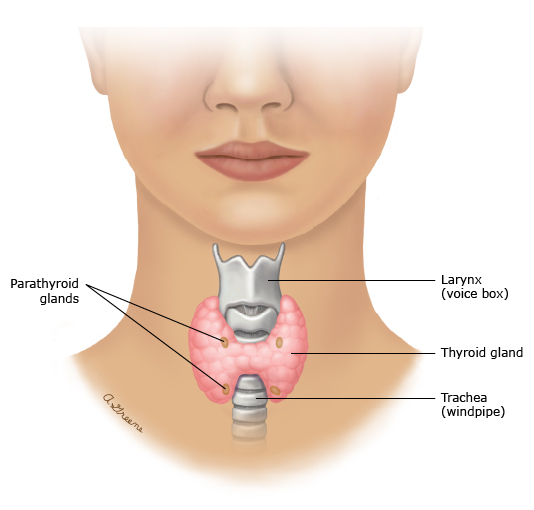
The thyroid gland is a butterfly-shaped gland in the middle of the neck, just below the larynx (voice box). It makes 2 hormones called T3 (also called "triiodothyronine") and T4 (also called "thyroxine"). These control how the body uses and stores energy.
The parathyroid glands are 4 small glands behind the thyroid. They make a hormone called parathyroid hormone. This helps control the amount of calcium in the blood.
Graphic 66834 Version 11.0
Give to a Healthier Future
Help us elevate and expand our care, make breakthroughs in biomedical science and improve community health and wellness.
Healthier communities. Healthiest lives. Together.