
Health Library
High blood pressure emergencies
You must carefully read the "Consumer Information Use and Disclaimer" below in order to understand and correctly use this information
What is a high blood pressure emergency?
This is a serious condition that can happen when a person's blood pressure gets much higher than normal. When this happens, it can lead to problems in 1 or more of these organs:
Eyes – Problems can include bleeding in the back of the eye, or swelling of the nerve that runs from the eye to the brain.
Brain – Problems can include swelling or bleeding in the brain, or a stroke. A stroke is when a part of the brain is damaged because of a problem with blood flow.
Kidneys – Very high blood pressure can lead to kidney failure, which is when the kidneys stop working.
Heart – Problems can include a heart attack, heart failure, or damage to a major blood vessel.
Without treatment right away, these problems can lead to death.
When your doctor or nurse tells you your blood pressure, they say 2 numbers. For example, they might say your blood pressure is "140 over 90." When people have a high blood pressure emergency, their blood pressure is usually "180 over 120" or higher.
A high blood pressure emergency is also called a "hypertensive emergency" or "malignant hypertension."
Sometimes, a person's blood pressure is much higher than normal, but it has not damaged any organs. This is called "hypertensive urgency." It is not usually treated the same as a high blood pressure emergency.
What are the symptoms of a high blood pressure emergency?
The symptoms depend on the organ or organs affected. They can include:
Blurry vision or other vision changes
Headache
Nausea or vomiting
Confusion
Passing out or seizures – Seizures are waves of abnormal electrical activity in the brain that can make people move or behave strangely.
Weakness or numbness on 1 side of the body, or in 1 arm or leg
Difficulty talking
Trouble breathing
Chest pain
Pain in the upper back or between the shoulders
Brown or bloody urine
Pain in the lower back or 1 the side of the body
Will I need tests?
Yes. Your doctor or nurse will ask about your symptoms, do an exam, and check your blood pressure. They might use a special light to look in the back of your eyes.
They will also do tests to check how serious your condition is. Tests can include:
Blood tests
Urine tests
Chest X-ray
CT scan or other imaging test of your brain or chest – These create pictures of the inside of the body.
Electrocardiogram ("ECG") – This measures the electrical activity in your heart (figure 1).
How is a high blood pressure emergency treated?
It is treated in the hospital. Your doctor will give you medicines to lower your blood pressure quickly. These are usually given through a thin tube that goes into your vein, called an "IV."
Your doctor will also treat any problems caused by your very high blood pressure, if possible.
People who have a high blood pressure emergency usually need long-term treatment to keep their blood pressure under control. This usually includes:
Taking medicines
Following a low-salt ("low-sodium") diet that includes a lot of fruits and vegetables
Losing weight (if they have excess body weight)
Getting regular exercise
When should I call the doctor?
Call your doctor or nurse right away if you have the symptoms listed above, especially if you know you have high blood pressure.
Some people check their blood pressure at home using a home blood pressure monitor. If you do this, call your doctor if you have 2 or more readings higher than 180 over 120. You should call even if you don't have any other symptoms.
Images
figure 1: ECG
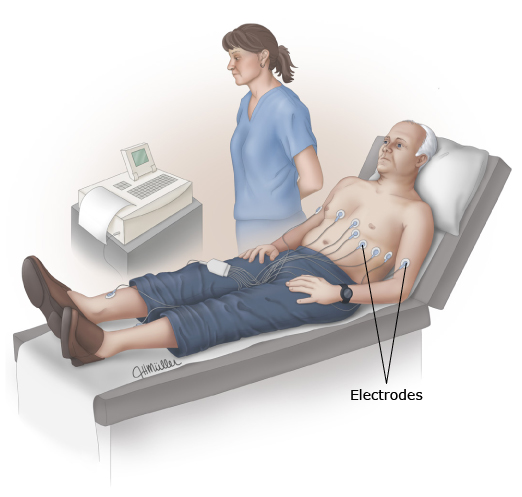
This drawing shows a person having an electrocardiogram ("ECG"). Patches called "electrodes" are stuck onto the chest, arms, and legs. Wires run from the electrodes to a machine that records the electrical activity of the heart.
Graphic 53145 Version 4.0
Give to a Healthier Future
Help us elevate and expand our care, make breakthroughs in biomedical science and improve community health and wellness.
Healthier communities. Healthiest lives. Together.