
Health Library
Healthy eating for adults
You must carefully read the "Consumer Information Use and Disclaimer" below in order to understand and correctly use this information
Why is it important to eat a healthy diet?
It's important to eat a healthy diet because eating the right foods can keep you healthy now and later in life. It can lower your risk of problems like heart disease, diabetes, high blood pressure, and some types of cancer. It can also help you live longer and improve your quality of life.
What kind of diet is best?
There is no 1 specific diet experts recommend for everyone. People choose what foods to eat for many different reasons. These include personal preference, culture, religion, allergies or intolerances, and nutritional goals. People also need to consider the cost and availability of different foods.
In general, experts recommend a diet that:
Includes lots of vegetables, fruits, beans, nuts, and whole grains
Limits red and processed meats, unhealthy fats, sugar, salt, and alcohol
What is a dietary pattern?
This means generally eating certain types of foods while limiting others. Some people need to follow a specific dietary pattern because of their health. For example, if you have high blood pressure, your doctor might recommend a diet low in salt.
If you are trying to improve your health in general, choosing a healthy dietary pattern can help. This does not have to mean being very strict about what you eat or avoid. The goal is to think about getting plenty of healthy foods while limiting less healthy foods (figure 1).
Examples of dietary patterns include:
Mediterranean diet – This involves eating a lot of fruits, vegetables, nuts, and whole grains, and uses olive oil instead of other fats. It also includes some fish, poultry, and dairy products, but not a lot of red meat. Following this diet can help your overall health, and might even lower your risk of having a stroke.
Plant-based diets – These focus on vegetables, fruits, grains, beans, and nuts. They limit or avoid food that comes from animals, such as meat and dairy. There are different types of plant-based diets, including vegetarian and vegan.
Low-fat diet – This involves limiting calories from fat. It might help some people keep weight off if that is their goal, but it does not have many other health benefits. If you choose to follow a low-fat diet, it is also important to focus on getting lots of whole grains, legumes, fruits, and vegetables. Limit refined grains and sugar.
Low-cholesterol diet – Cholesterol is found in foods with a lot of saturated fat, like red meat, butter, and cheese. A low-cholesterol diet focuses on limiting how much cholesterol you eat. This can also help lower how many unhealthy fats you eat.
Which foods are especially healthy?
Foods that are especially healthy include:
Fruits and vegetables – Eating a diet with lots of fruits and vegetables can help prevent heart disease and stroke. It might also help prevent certain cancers. Try to eat fruits and vegetables at each meal and also for snacks. If you don't have fresh fruits and vegetables available, you can eat frozen or canned ones instead. Doctors recommend eating at least 5 servings of fruits or vegetables each day.
Whole grains – These include 100 percent whole-wheat bread, steel cut oats, and whole-grain pasta. These are healthier than foods made with "refined" grains, like white bread and white rice. Eating lots of whole grains instead of refined grains has been shown to help with weight control. It can also lower the risk of several health problems, including colon cancer, heart disease, and diabetes. Doctors recommend most people try to eat 5 to 8 servings of whole-grain, high-fiber foods each day.
Foods with fiber – Eating foods with a lot of fiber can help prevent heart disease and stroke. If you have type 2 diabetes, it can also help manage your blood sugar. Foods with a lot of fiber include vegetables, fruits, beans, nuts, oatmeal, and whole-grain breads and cereals. The nutrition label tells you how much fiber is in a food (figure 2). Doctors recommend most people eat about 25 to 34 grams of fiber each day.
Foods with calcium and vitamin D – Babies, children, and adults need calcium and vitamin D to help keep their bones strong. Adults also need calcium and vitamin D to help prevent osteoporosis. This is a condition that causes bones to get "thin" and break more easily. Different foods and drinks have calcium and vitamin D in them (figure 3). People who don't get enough calcium and vitamin D in their diet might need to take a supplement. Doctors recommend most people have 2 to 3 servings of foods with calcium and vitamin D each day.
Foods with protein – Protein helps your muscles and bones stay strong. Healthy foods with a lot of protein include chicken, fish, eggs, beans, nuts, and soy products. Red meat also has a lot of protein, but it also contains fats, which can be unhealthy. Doctors recommend most people try to eat about 5 servings of protein each day.
Healthy fats – There are different types of fats. Some are better for your body than others. Healthy fats are "monounsaturated" or "polyunsaturated" fats. These are found in fatty fish, nuts and nut butters, and avocados. Use plant-based oils when cooking. Examples include olive, canola, safflower, sunflower, and corn oil. Eating foods with healthy fats, while avoiding or limiting foods with unhealthy fats, might lower your risk of heart disease.
Foods with folate (also called "folic acid") – Folate is a vitamin that is important for pregnant people, since it helps prevent certain birth defects. Anyone who could get pregnant should get at least 400 micrograms of folic acid daily, whether or not they are actively trying to get pregnant. Folate is found in many breakfast cereals, oranges, orange juice, and green leafy vegetables.
What foods should I avoid or limit?
To eat a healthy diet, there are some things that you should avoid or limit. They include:
Unhealthy fats – "Trans" fats are especially unhealthy. They are found in margarines, many fast foods, and some store-bought baked goods. "Saturated" fats are found in animal products like meats, egg yolks, butter, cheese, and full-fat milk products. Unhealthy fats can raise your cholesterol level and increase your chance of getting heart disease.
Sugar – To have a healthy diet, it's important to limit or avoid added sugar, sweets, and refined grains. Refined grains are found in white bread, white rice, most pastas, and most packaged "snack" foods.
Avoiding sugar-sweetened beverages, like soda and sports drinks, can also help improve your health.
Avoid canned fruits in "heavy" syrup.
Red and processed meats – Studies have shown that eating a lot of red meat can increase your risk of certain health problems, including heart disease and cancer. Limit how much red meat you eat. This is also true for processed meats like sausage, hot dogs, and bacon.
Can I drink alcohol as part of a healthy diet?
Not drinking alcohol at all is the healthiest choice. Regular drinking can raise a person's chances of getting liver disease and certain types of cancers. In females, even 1 drink a day can increase the risk of getting breast cancer.
If you do choose to drink, most doctors recommend limiting alcohol to no more than:
1 drink a day for females
2 drinks a day for males
The limits are different because, generally, the female body takes longer to break down alcohol.
How many calories do I need each day?
Calories give your body energy. The number of calories you need each day depends on your weight, height, age, sex, and how active you are.
Your doctor or nurse can tell you about how many calories you should eat each day. You can also work with a dietitian (nutrition expert) to learn more about your dietary needs and options.
What if I am having trouble improving my diet?
It can be hard to change how you eat. But even small changes can improve your health.
Start by making healthy choices when you shop. Some tips that might help:
Plan meals and snacks ahead of time, and make a list. Think about shopping after a meal. You are more likely to make less healthy choices if you shop when hungry.
Shop the edges of the grocery store. This is where you will find vegetables, fruits, whole grains, fish, lean meats, and dairy products. Head to the center aisles for healthy staples like canned or frozen fruits and vegetables, canned fish or chicken packed in water, beans, nut butters, nuts, and seeds.
Learn to read the nutrition facts on food labels. This helps you know what is in each food.
Some other tips that might help:
Try to make fruits and vegetables part of every meal. If you don't have fresh fruits and vegetables, frozen or canned are good options. Look for products without added salt or sugar.
Keep a bowl of fruit out for snacking.
When you can, choose whole grains instead of refined grains. Choose chicken, fish, and beans instead of red meat and cheese.
Try to eat prepared and processed foods less often.
Try flavored seltzer or water instead of soda or juice.
When eating at fast food restaurants, look for healthier items, like broiled chicken or salad.
If you have questions about what foods to eat or avoid, ask your doctor, nurse, or dietitian. The right diet for you depends, in part, on your health and any medical conditions you have.
For suggestions on how to plan a healthy meal, see the www.myplate.gov website from the US Department of Agriculture. The MyPlate plan (www.myplate.gov/myplate-plan) is based on a person's age, body size, and physical activity level.
Images
figure 1: Healthy diet
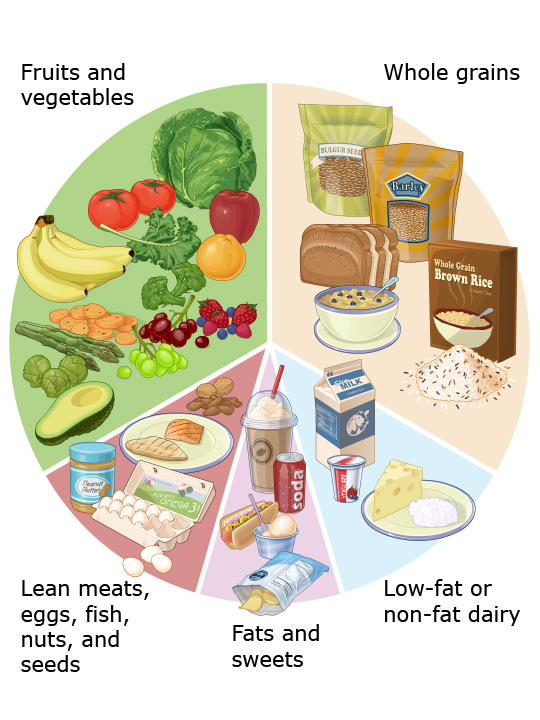
A healthy diet includes:
Fruits and vegetables – Examples include leafy greens, tomatoes, bananas, broccoli, carrots, avocado, grapes, and berries.
Whole grains – Examples include whole-grain bread and cereals, brown rice, bulgur, and barley.
Dairy products – Examples include low-fat or non-fat milk, yogurt, cheese, and cottage cheese.
Proteins – Examples include lean meats, fish eggs, nuts, and nut butter.
Limit or avoid fats and sweets. Examples include things like hot dogs, chips, soda, sweetened coffee beverages, and ice cream.
Graphic 139213 Version 2.0
figure 2: Nutrition label – Fiber
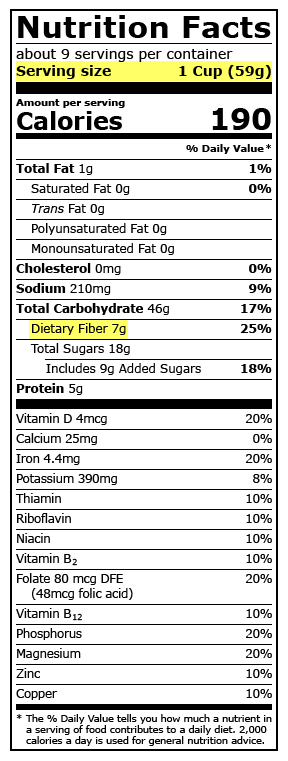
This is an example of a nutrition label. To figure out how much fiber is in a food, look for the line that says "Dietary Fiber." It's also important to look at the serving size. This food has 7 grams of fiber in each serving, and each serving is 1 cup.
Graphic 51585 Version 8.0
figure 3: Foods and drinks with calcium and vitamin D
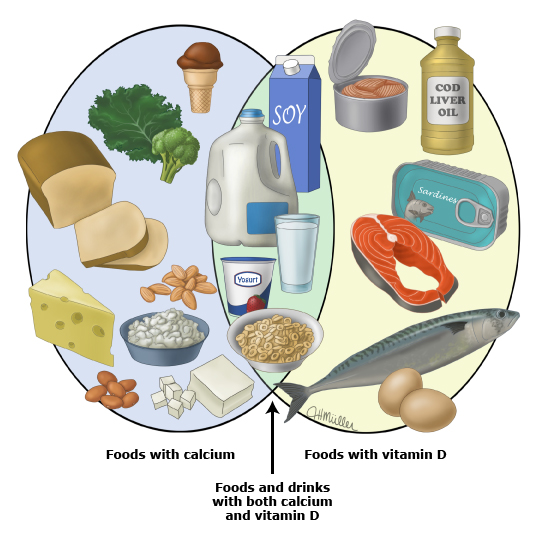
Some foods and drinks are rich in both calcium and vitamin D. These usually have calcium or vitamin D added. Examples include milk, yogurt, ready-to-eat cereals, and plant-based "milks" (such as soy and almond milk).
Foods that are only rich in calcium include ice cream, breads, kale, broccoli, cheese, cottage cheese, almonds, beans, and tofu. These have less calcium per serving than the foods above that have both calcium and vitamin D.
Foods that are only rich in vitamin D include many types of fish (such as tuna fish, salmon, sardines, and mackerel), cod liver oil, and eggs.
Graphic 79375 Version 5.0
Give to a Healthier Future
Help us elevate and expand our care, make breakthroughs in biomedical science and improve community health and wellness.
Healthier communities. Healthiest lives. Together.