
Health Library
Controlling your blood pressure through lifestyle
You must carefully read the "Consumer Information Use and Disclaimer" below in order to understand and correctly use this information
What does my lifestyle have to do with my blood pressure?
What you do and what you eat have a big effect on your blood pressure and your overall health. Following the right lifestyle can:
Lower your blood pressure, or keep you from getting high blood pressure in the first place
Reduce your need for blood pressure medicines
Make medicines for high blood pressure work better, if you take them
Lower the chances you'll have a heart attack or stroke, or get kidney disease
Which lifestyle choices will help lower my blood pressure?
You should:
Eat a diet rich in fruits, vegetables, and low-fat dairy products, and low in meats, sweets, and refined grains.
Eat less salt (sodium).
Do something active for at least 30 minutes a day on most days of the week.
Lose weight (if you have excess body weight).
Limit or avoid alcohol.
If you have high blood pressure, it's also very important to quit smoking (if you smoke). Quitting smoking might not bring your blood pressure down. But it will lower the chances you'll have a heart attack or stroke, and it will help you feel better and live longer.
Start low, and go slow
The changes listed above might sound like a lot, but don't worry. You do not have to change everything at once. The key to improving your lifestyle is to "start low, and go slow." Choose 1 small, specific thing to change, and try doing it for a while. If it works for you, keep doing it until it becomes a habit. If it doesn't, don't give up. Choose something else to change, and see how that goes.
Let's say, for example, you want to improve your diet. If you're the type of person who eats cheeseburgers and French fries often, it can be very difficult to switch to just eating salads every day. When people try to make changes like that, they often fail. Then, they feel frustrated and tend to give up. So instead of trying to change everything about your diet in 1 day, change 1 or 2 small things and give yourself time to get used to those changes. For instance, keep the cheeseburger but substitute a salad for the French fries. Or eat the same things, but cut your portions in half.
As you find things you can change and stick with, keep adding new changes. In time, you will see you can actually change a lot. You just have to get used to the changes slowly.
Improve your diet
There is no single diet that is right for everyone. But in general, a healthy diet can include:
Lots of fruits, vegetables, and whole grains
Some beans, peas, lentils, chickpeas, and similar foods
Some nuts, such as walnuts, almonds, and peanuts
Fat-free or low-fat milk and milk products
Some fish
To have a healthy diet, it's also important to limit or avoid sugar, sweets, meats, and refined grains. (Refined grains are found in white bread, white rice, most forms of pasta, and most packaged "snack" foods.)
Reduce salt
Many people think eating a low-sodium diet means avoiding the salt shaker and not adding salt when cooking. But not adding salt at the table or when you cook only helps a little. Almost all the sodium you eat is already in the food you buy at the grocery store or at restaurants (figure 1).
The most important thing you can do to cut down on sodium is to eat less processed food. This means avoiding most foods sold in cans, boxes, jars, and bags. You should also eat in restaurants less often.
To reduce how much sodium you eat, buy fresh or fresh-frozen fruits, vegetables, and meats. (Fresh-frozen foods have nothing added to them before freezing.) Then, you can make meals at home, from scratch, with these ingredients.
As with the other changes, do not try to cut out salt all at once. Instead, choose 1 or 2 foods that have a lot of sodium and replace them with low-sodium choices. When you get used to those low-sodium options, find another food or 2 to change. Then, keep going, until all the foods you eat are sodium free or low in sodium.
Become more active
If you want to be more active, you do not have to go to the gym or get all sweaty. It is possible to increase your activity level while doing everyday things you enjoy. You might try walking, gardening, and dancing. As with all the other changes, the key is not to do too much too fast. If you don't do any activity now, start by walking for just a few minutes every other day. Do that for a few weeks. If you stick with it, try doing it for longer. But if you find you don't like walking, try a different activity.
Lose weight
If you have excess body weight and would like to lose weight, start by talking to your doctor or nurse. They can help you make a plan to do this in a healthy way.
The best weight loss plans help you have a healthy view of eating and exercise. With a good weight loss plan, many people can lose weight and keep it off.
In some situations, doctors recommend prescription medicine or surgery. Even with these options, doctors also recommend making lifestyle changes. Talk to your doctor about which options are best for you.
Limit or avoid alcohol
If you are female, do not have more than 1 "standard drink" of alcohol a day. If you are male, do not have more than 2.
A "standard drink" is:
A can or bottle of 12 ounces of beer
A glass of 5 ounces of wine
A shot of 1.5 ounces of hard alcohol or liquor
Where should I start?
If you want to improve your lifestyle, start by making the changes you think would be easiest for you. If you used to exercise and just got out of the habit, maybe it would be easy for you to start exercising again. Or if you enjoy cooking meals from scratch, maybe the first thing you try is eating home-cooked meals that are low in sodium.
Whatever you try first, choose specific, realistic goals, and give yourself a deadline. For example, do not decide you are going to "exercise more." Instead, decide you are going to walk for 10 minutes on Monday, Wednesday, and Friday, and you are going to do this for the next 2 weeks.
When lifestyle changes are too general, people have a hard time following through.
Now go. You can do it!
Images
figure 1: Sources of sodium in your diet
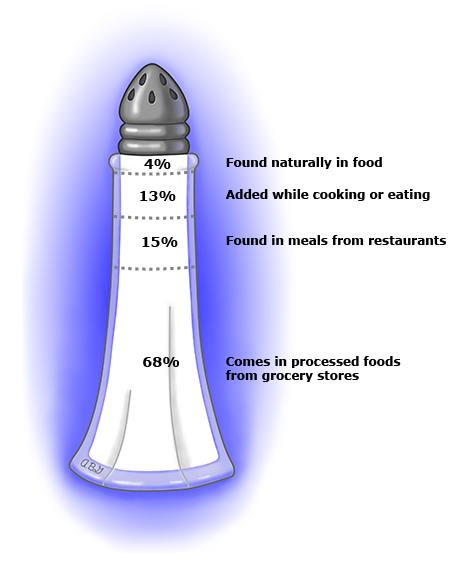
Most of the sodium (salt) in your diet comes from foods you buy at grocery stores or at restaurants.
Original data from: He FJ, MacGregor GA. Reducing population salt intake worldwide: from evidence to implementation. Prog Cardiovasc Dis 2010; 52:363.
Graphic 60316 Version 3.0
Give to a Healthier Future
Help us elevate and expand our care, make breakthroughs in biomedical science and improve community health and wellness.
Healthier communities. Healthiest lives. Together.