
Health Library
Weaning from breastfeeding
You must carefully read the "Consumer Information Use and Disclaimer" below in order to understand and correctly use this information
What is weaning?
This is when you stop breastfeeding your baby. After babies are weaned, they no longer drink breast milk.
How long should I breastfeed before weaning?
Expert groups, including the American Academy of Pediatrics and the World Health Organization, recommend exclusive breastfeeding for the first 6 months. "Exclusive" means your baby only drinks breast milk, and no formula or water.
For the first 6 months of life, breast milk is the only food babies need. Most babies start eating other foods, in addition to breast milk, when they are 4 to 6 months old. These foods include infant cereal and mashed up vegetables, fruits, and meats. Experts recommend continuing to breastfeed after your baby starts eating solid foods, for as long as you can. Some people continue to breastfeed for 2 years or longer.
Doctors recommend waiting until your baby is at least 1 year old before switching from breast milk or formula to cow's milk or another type of milk. If needed, you might be able to switch your baby to cow's milk after they are 8 or 9 months old. If you do this, give them plenty of solid foods that are high in iron, like meats and iron-fortified baby cereals.
When should I wean?
People choose to stop breastfeeding at different times and for different reasons. Usually, you can choose when to wean. But sometimes, weaning happens because a baby no longer wants to breastfeed.
Some babies wean quickly. Others can take months to wean.
What if I want to stop breastfeeding but keep giving my baby breast milk?
You can use a breast pump. This lets you remove milk from your breasts so your baby can drink it from a bottle.
You might choose to start pumping if you return to work after having your baby. You might also pump if you need to be away from your baby for another reason, or just so another person can help with feedings. Pumping is a great way to keep giving your baby breast milk if you are not yet ready to wean.
How do I wean?
When you decide to wean, do not stop breastfeeding all at once. Instead, try to reduce your breastfeeding slowly.
To do this, you can:
Drop 1 breastfeeding session every 2 to 5 days.
Shorten each breastfeeding session.
Increase the time between breastfeeding sessions.
Some people start to wean by stopping the daytime feedings first. They might still breastfeed at night or before bedtime. The night or bedtime feedings are usually the last feedings to be stopped.
Other people want to continue to breastfeed during the day but wean their baby from nighttime feedings. As your baby gets older and starts eating solid foods, they will be able to go longer between feedings. They will also be able to sleep for longer stretches and stop waking up as often to eat. Talk to your doctor about whether your baby is ready to start weaning from night feedings. They can give you advice on how to do this. For example, it might help to offer more feedings later in the day, then shorten the overnight feedings gradually.
Should I give my baby a bottle or cup when I wean?
You can. Most babies younger than 6 months old are weaned to a bottle. Most babies older than 1 year are weaned to a cup. Babies between 6 months and 1 year old can be weaned to a bottle or a cup.
To help your baby's first bottle or cup feedings go well, you can:
Have someone else give your baby the bottle or cup.
Give the bottle or cup before your baby gets too hungry.
Put breast milk in the bottle or cup.
Use a cup with 2 handles and a snap-on lid (if you use a cup).
What breast problems can happen with weaning?
Different breast problems can happen with weaning. These include:
Engorgement, which is when the breasts become too full of milk – This can cause the breasts to be swollen, hard, warm, and painful.
Ductal narrowing – This is when swelling in part of the breast makes the milk ducts narrower. This can cause a painful breast lump (picture 1). The skin over the lump might be red.
Mastitis – This is inflammation in the breast. It can happen if ductal narrowing does not get better and continues to prevent milk from flowing. If milk flow is blocked for more than a day or 2, mastitis can lead to bacterial infection in the breast. This can cause additional symptoms like fever, aches, or feeling very tired. The infection is treated with antibiotics.
These problems are especially likely to happen if you stop breastfeeding all at once. If you need to wean all at once, there are things you can do to prevent these problems. For example, you can use a breast pump or your hand to release some milk from your breasts (figure 1). You can do this a few times a day for a few days until your breasts stop hurting. If you do use a pump, use it for just a few minutes at a time. If you pump for longer, your body will continue to make more milk.
Breast problems from weaning are treated in different ways, depending on the problem. If you have any of the above symptoms or problems, tell your doctor or nurse.
How might my breasts change after weaning?
Your breasts might feel emptier and get smaller after weaning. You might also get stretch marks on your breasts. But they usually fade over time.
After you stop breastfeeding, your breasts will stop making milk. But it can be normal to still have some milk in your breasts for months or years after weaning.
What if I feel sad or guilty when I wean?
It is normal to feel sad or guilty when you wean. Try to be gentle with yourself. No matter when you wean, remember you have given your baby many important benefits through breastfeeding.
Weaning can also be hard for babies. It can help to give your baby extra love and attention during this time.
What if I have questions?
If you have any questions about breastfeeding or weaning, ask your doctor or nurse. You can also talk to a breastfeeding expert, called a "lactation consultant."
Images
picture 1: Ductal narrowing ("blocked" milk duct)
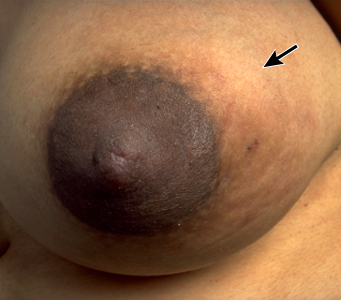
"Ductal narrowing" is when swelling in part of the breast makes the milk ducts narrower. When the ducts are narrowed, milk cannot flow as easily. This is sometimes called a "blocked" duct. This can also stretch the nearby breast tissue and cause a painful breast lump (arrow).
Graphic 70540 Version 7.0
figure 1: Hand method to release breast milk
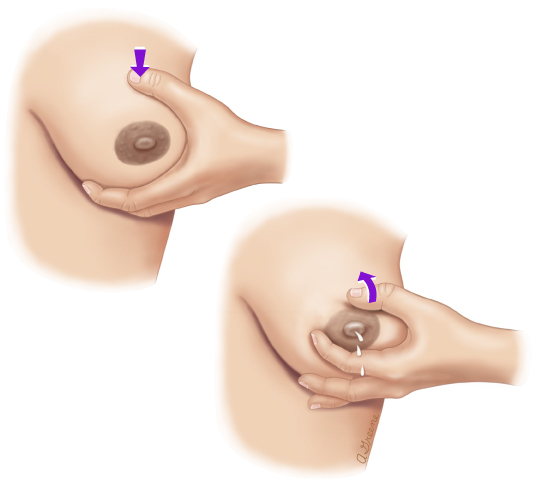
Hold your hand in a c-shape, with your thumb on top. Press your thumb gently on your breast straight back into the chest. Then, roll your thumb and fingers toward the nipple. Breast milk should come out of the nipple. Keep doing this as you move your hand around the whole breast.
Graphic 73810 Version 6.0
Give to a Healthier Future
Help us elevate and expand our care, make breakthroughs in biomedical science and improve community health and wellness.
Healthier communities. Healthiest lives. Together.