
Health Library
Diabetes and nerve damage
You must carefully read the "Consumer Information Use and Disclaimer" below in order to understand and correctly use this information
How can diabetes cause nerve damage?
If blood sugar is too high over time, it can cause problems, including nerve damage. This is called "diabetic neuropathy." If you have diabetes, it is important to keep your blood sugar well managed.
People with diabetes can get different types of nerve damage. This article is about the most common type of nerve damage caused by diabetes, called "polyneuropathy."
What are the symptoms of nerve damage caused by diabetes?
Nerve damage usually affects the toes and feet first. Some people do not have any symptoms.
When symptoms do happen, they can include:
Numbness or loss of feeling
Burning or pain, which is often worse at rest or at night
Tingling
Feeling light touches as bothersome or painful
As nerve damage gets worse, symptoms can move from the feet up the legs. Some people might also start to feel symptoms in their hands.
Can nerve damage cause other problems?
Yes. Nerve damage can lead to problems because it can make people unable to feel pain in their feet.
Normally, people feel pain when they get a cut on their foot. The pain tells them they need to treat their cut so it can heal. But people with nerve damage might not feel any pain when their feet get hurt. They might not even know they have a cut, so they might not treat it. Problems that are not treated right away can get much worse. For example, an untreated cut can get infected and turn into an open sore.
Nerve damage can also lead to problems with the bones, muscles, and joints in the feet. Over time, this can cause the foot to have an abnormal shape.
Is there a test for nerve damage caused by diabetes?
Yes. Your doctor can usually tell if you have nerve damage by asking about your symptoms and doing an exam.
They might do tests to check how well your nerves are working. These might include a "nerve conduction study" or "electromyography" ("EMG").
How can I protect my feet and manage my condition?
You should:
Manage your blood sugar – Symptoms of pain and burning sometimes get better when you manage your blood sugar levels. To better manage your blood sugar, your doctor might prescribe another diabetes medicine or recommend you take your diabetes medicine more often.
Take special care of your feet – Taking care of your feet can prevent future problems. It can also prevent a small problem from turning into a serious one. To protect and take care of your feet, you should:
Wear shoes or slippers all the time, even at home. Never go barefoot.
Trim your toe nails carefully (figure 1). Cut straight across, and file the nail. Do not cut cuticles or pop blisters. Ask your doctor to do any procedures that could involve cutting the skin, such as removing an ingrown toenail.
Wash your feet with warm water and soap every day, and pat them dry. Put a moisturizing cream or lotion on the tops and bottoms of your feet.
Check both feet every day (figure 2). Look for cuts, blisters, swelling, and redness. Check all over your feet, including in between your toes. If you cannot see the bottoms of your feet, use a mirror or ask another person to check.
Wear socks that are not too tight, and change them every day. Wear shoes that fit well, but are not too tight (figure 3).
Check inside your shoes before you put them on. Make sure there is nothing sharp inside.
Prevent falls – Numbness or pain in the feet can cause trouble with balance or walking. This can lead to falls. To lower the risk of falling, make your home as safe as possible. Get rid of loose electrical cords, clutter, and slippery rugs. Also, wear sturdy, non-slip shoes, and make sure your walkways are clear and well lit.
What other treatment might I have?
Some people might have other treatment for symptoms or problems caused by nerve damage. They might have treatment for:
Pain – Doctors can prescribe different medicines to treat pain that is caused by nerve damage.
Foot problems – Doctors can treat foot problems with different treatments, depending on how serious the problem is. For example, a doctor might do 1 or more of these to treat an open sore:
Clean the sore, and remove any dead skin around it.
Prescribe antibiotic medicines.
Do surgery to remove a toe or part of the foot.
How often should my doctor check my feet?
Your doctor should do a complete check of your feet once a year. They should also do a quick check of your feet at every visit.
Can nerve damage be prevented?
Maybe, but doctors are not sure. If you have diabetes, some studies suggest you can reduce your risk of getting nerve damage by:
Keeping your blood sugar levels as close to normal as possible
Not smoking, or quitting smoking if you do smoke
Eating a healthy diet, and getting plenty of physical activity
Losing weight, if you have excess body weight
Making sure your high blood pressure and heart disease are treated (if you have these conditions)
When should I call the doctor?
Call your doctor or nurse for advice if you have:
A fever of 100.4°F (38°C) or higher, chills, or a wound that will not heal
Swelling, redness, warmth around a wound, a foul smell coming from a wound, or yellow, green, or bloody discharge
Sores or blisters on your feet that hurt more or less than you would expect
New problems with your feet, such as:
Weakness in 1 or both feet, ankles, or legs
Corns, calluses, blisters, or sores
Very dry, scaly, or cracked skin
Changes in how your foot joints or arch look
Images
figure 1: Trimming toenails
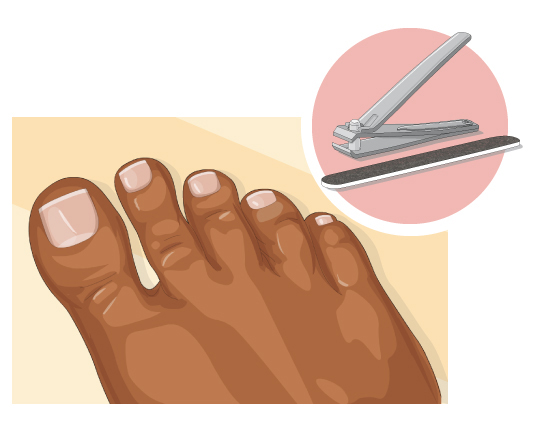
Trim your toenails straight across, and smooth them with a nail file.
Graphic 80053 Version 3.0
figure 2: Foot check for people with diabetes
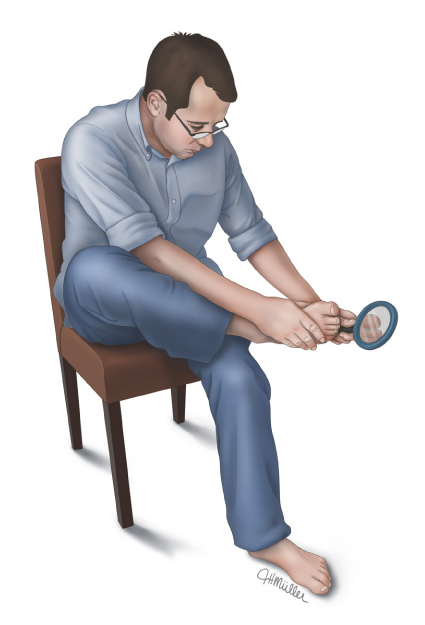
People with diabetes should check both of their feet every day.
It is important to check your feet all over, including in between your toes. If you can't see the bottom of your foot, use a mirror or ask another person to check for you. Tell your doctor or nurse if you see any:
Redness
Cuts or cracks in the skin
Blisters
Swelling
Graphic 77032 Version 5.0
figure 3: Correct shoe shape
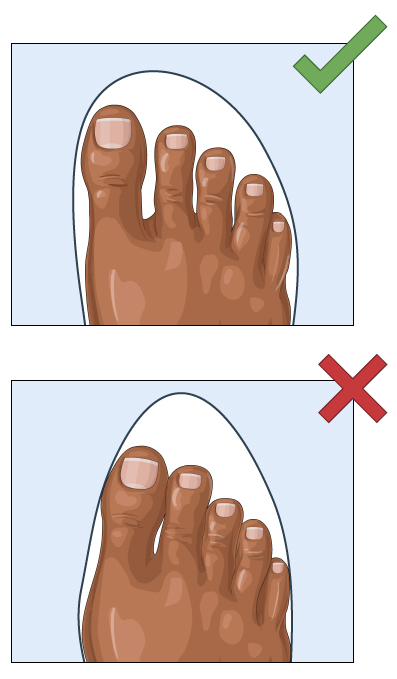
Choose shoes that fit well and are not too tight or too loose. Your shoes should have plenty of room for your toes.
Graphic 79305 Version 3.0
Give to a Healthier Future
Help us elevate and expand our care, make breakthroughs in biomedical science and improve community health and wellness.
Healthier communities. Healthiest lives. Together.