
Health Library
Asthma and pregnancy
You must carefully read the "Consumer Information Use and Disclaimer" below in order to understand and correctly use this information
What is asthma?
This is a lung condition that can make it hard to breathe. It can also cause wheezing (noisy breathing), coughing, or a tight feeling in the chest.
Do asthma symptoms change during pregnancy?
Sometimes. During pregnancy, your asthma symptoms might get better, get worse, or stay the same.
How is asthma treated?
Asthma is treated with different types of medicines. These can be inhalers, liquids, or pills.
There are 2 main types of asthma medicines:
Quick-relief medicines – These open the airway quickly. They are used to treat asthma attacks. They can reduce symptoms in 5 to 15 minutes. Everyone with asthma should have a quick-relief inhaler to use during an asthma attack.
Long-term controller medicines – These help reduce inflammation in the long term. This can help prevent asthma symptoms from happening. Not everyone with asthma needs these. But those who need controller medicines take them 1 or 2 times a day every day, even if they have no symptoms.
Your doctor will work with you to make an asthma action plan (form 1). This is a list of instructions that tells you which medicines to take and when. It also tells you when to get help or call for an ambulance (in the US and Canada, call 9-1-1) for your asthma.
Are asthma medicines safe during pregnancy?
Yes. Most are safe to take during pregnancy. If your medicines are not safe, your doctor will change them.
It's important to take all your asthma medicines exactly as instructed by your doctor. If you skip them, you are more likely to have an asthma attack. Asthma attacks can lead to serious health problems for you and your baby.
Which doctors and nurses will take care of me during pregnancy?
You might need a few different doctors and nurses to take care of you during pregnancy. Usually, 1 doctor will take care of your pregnancy. They might also take care of your asthma. If not, you will see another doctor who will take care of your asthma.
Will I have tests during pregnancy?
Yes. Your doctor or nurse will probably do a breathing test to check how your lungs are working. They might also recommend you use a "peak flow meter" at home. This is a device you breathe into to see how well your lungs are working.
Your doctor will also do tests to check your baby's health. These include blood tests and an imaging test called an "ultrasound." Imaging tests create pictures of the inside of the body.
How else can I prevent asthma symptoms during pregnancy?
You should:
Avoid your asthma triggers – Triggers are things that cause asthma symptoms or make symptoms worse. Common triggers are dust, mold, dogs, cats, pollen, and cigarette smoke.
Avoid smoking – If you smoke, it's very important to try to quit. Your doctor or nurse can help you. Also, avoid being near people who are smoking.
Get the flu and COVID-19 shots – Getting sick can cause asthma symptoms to get worse. These shots can help prevent you from getting the flu and COVID-19.
Will my baby be healthy?
If your asthma is well managed during pregnancy, chances are good your asthma will not hurt your baby.
Can I breastfeed if I have asthma?
The answer is almost always "yes." Asthma medicines from inhalers are safe for breastfeeding babies. If you plan to breastfeed, tell your doctor or nurse. They will make sure all your asthma medicines are safe to take while breastfeeding.
Breastfeeding does not fully prevent asthma in children. But babies who breastfeed have a lower chance of having episodes of wheezing during their first 2 years.
Images
form 1: Asthma action plan (adult)
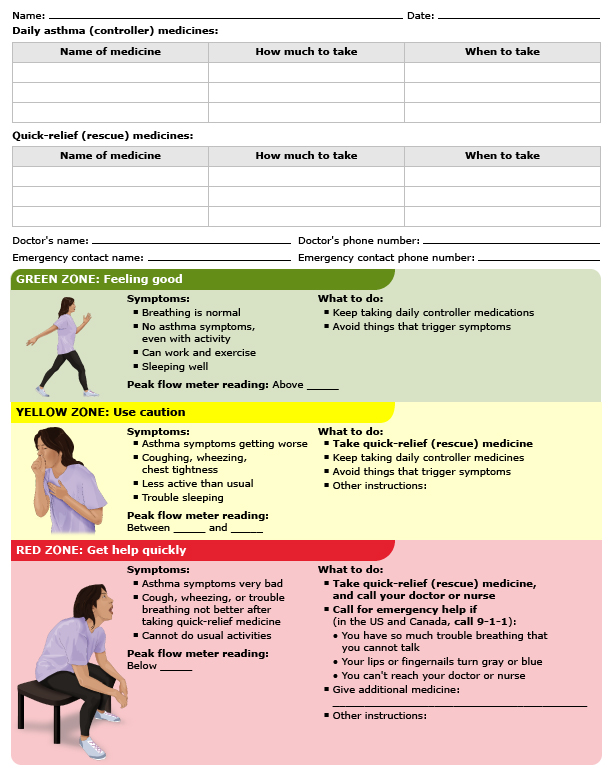
An asthma action plan is a list of instructions that tell you:
What medicines to take at home each day, if any
What symptoms to watch for
What other medicines to take if your symptoms get worse
When to call the doctor or get emergency help
Graphic 140838 Version 2.0
Give to a Healthier Future
Help us elevate and expand our care, make breakthroughs in biomedical science and improve community health and wellness.
Healthier communities. Healthiest lives. Together.