
New Center Offers Expert Support to At-Home Dementia Caregivers
“We’re not re-creating resources that are already out there. Our primary intention is to help people remove barriers.”
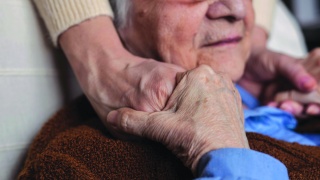
For nearly two decades, Lori McKenna, MSW, a licensed clinical social worker and the clinician lead and manager of University of Vermont Medical Center’s Dementia Family Caregiver Center (DFCC), has been working to tackle a persistent problem: At-home caregivers of dementia patients often struggle to find the support and resources needed to care and advocate for their loved ones and themselves.
In a rural state like Vermont, where the majority of diagnosed dementia patients receive care at home, the Center is a critical connection for caregivers. Organizers also hope their work helps to reduce the number of dementia patients who end up as long-stay patients in acute care hospital settings.
“There are many valuable resources in the state, but there are also tremendous barriers,” says McKenna of the services and resources currently available in Vermont. "Family caregivers already face so many challenges, so they may become discouraged and lose hope – and that starts a process that can really lead to the decline of the caregiver’s well-being."
McKenna and Joan Marsh-Reed, MA, a psychologist at the DFCC, have spent years collecting best practices and participating in international research aimed at improving support for dementia caregivers. Over that time, they’ve implemented evidence-based programs – including the VT CARERS (Coaching, Advocacy, Respite, Education, Relationship and Simulation) Program originally developed by clinicians at Mt. Sinai Hospital’s Reitman Centre in Toronto.
In late 2023, to increase support for families caring at-home for individuals with dementia, the DFCC was established.
“Vermonters caring for a loved one with dementia provided twenty-eight million hours of unpaid care in 2022,” says Megan Polyte, policy director of the Alzheimer’s Association, Vermont Chapter.
"For them to fulfill the role of caregiver and maintain their own health, they need support. UVM Medical Center’s Dementia Family Caregiver Center plays a vital role in building their caregiver skills, helping them prepare for the increased cognitive decline of their family members, supporting their emotional wellbeing, and connecting them to mentors and community resources," says Polyte.
“We’re not re-creating resources that are already out there,” says McKenna. “Our primary intention is to help people remove barriers.”
Reimagining Family Caregiver Support
The DFCC’s collaborative approach to providing evidence-based caregiver support and resources infuses its Peer-to-Peer Mentoring Program, developed by the DFCC team in partnership with Allegra Miller of Burlington. Miller is a retired educator and principal who for years served as a family caregiver to her husband, Bob Rinkema – a technology consultant and business owner diagnosed with Parkinson’s disease and Lewy body dementia.
An enduring memory for Miller is playing the piano with her husband – something she noticed seemed to cut through his cognitive fog and confusion as his condition progressed.
"I can’t tell you how much pleasure we had doing that, as he was nearing the end of his life. It was a way to connect at a time when we couldn’t use our usual ways to communicate," says Miller.
The recollection, for Miller, is a font of bittersweet memories that chronicle the emotional, mental and physical toll dementia ruthlessly enacts on patients and their loved ones – as well as the moments of triumph, joy and heartwarming absurdity that often sustain family caregivers through an experience many describe as incredibly meaningful and deeply isolating.
The program is a free resource available to family caregivers and its focus is strengthening relationships among caregivers and helping those new to caregiving develop meaningful relationships with experienced caregivers. The program matches experienced caregivers, or mentors, with those who are new to the role – providing them support and guidance from someone who understands from experience the challenges many caregivers face.
Miller says she was motivated to help develop the program and serve as a mentor because of her own experience wrestling with what it means to be an at-home caregiver.
"I didn’t realize what I was doing was caregiving. It was just problem-solving and getting on – because your role is ever-changing. Realizing, ‘Oh, I am a caregiver’ – that was the biggest thing for me. It validated what I was going through and helped me work through my grief and share the knowledge that I had," says Miller.
The program, which conducted its initial pilot last year, began its second round of mentoring in May.
Expanding Pathways for Caregivers
In addition to its work connecting family caregivers with existing resources, the Center also offers programs tailored to caregivers’ needs. The VT CARERS Program; and TEACH (Training, Education and Assistance for Caregiving at Home) – provide evidence-based therapeutic groups to help both experienced and new caregivers develop skills to care for their loved ones and maintain their own wellbeing.
CARERS, a collaboration between UVM Medical Center and the Reitman Centre in Toronto, is the only program of its kind in the United States – using simulated patients to create authentic caregiving experiences, foster camaraderie and reduce social isolation among caregivers.
“Many people don’t realize that there are others out there experiencing the same thing,” says Marsh-Reed. "People just have this realization that they are not alone, and it gives them so much more. Sometimes it feels almost like a miracle to see it happen. We’ve had people tell us that it has saved their lives."
Responding to an Aging Population
In addition to its caregiver support-focused programs, the Center is also piloting a program to address the shortage of workers whose focus is serving seniors and families in Vermont.
Called VT BRIDGES (Vermont Broadening Resources in Developing Gerontological Education and Social Work), the program’s goal is to increase the number of Master-level social workers in the field of aging serving Vermont elders and families. The program is a unique collaboration between the EFCC, University of Vermont Center on Aging and University of Vermont’s Department of Social Work.
“Our aging population is growing,” says McKenna. “There are just not enough workers to make support and resources programs efficient.”