
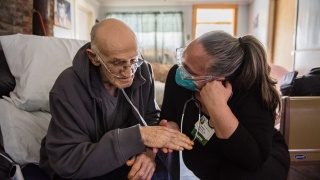
Beginning in the late 1940s and gaining momentum throughout the 1970s and beyond, the modern hospice movement emerged in response to dissatisfaction with how dying patients were treated. Medical care focused on cure rather than comfort, death was not discussed and patients' voices were frequently unheard.
Determined to change this reality, a small group of pioneers championed a more compassionate model of care. Their work laid the foundation for current-day hospice and palliative care, emphasizing dignity, comfort, quality of life and support for families.
Pioneers of Hospice tells the remarkable story of these four visionaries — Dame Cicely Saunders, Florence Wald, Elisabeth Kübler-Ross and Balfour Mount. Through exclusive interviews with these and other experts, this documentary details — in the voices of the pioneers themselves — the transformation of end-of-life care and the profound impact the movement had on health care around the world.
This history remains deeply relevant today. Many of the principles now considered fundamental to hospice and palliative care, including pain and symptom management, patient-centered decision-making, family support and caring for the whole person, began with these pioneers. Their work continues to remind us that healing, compassion and human connection remain possible even when cure is not.
By preserving these stories, Pioneers of Hospice honors the individuals who changed the face of dying and invites future generations to carry forward their vision of compassionate end-of-life care.
Who should watch Pioneers of Hospice?
A deep understanding of the power of compassionate care and prioritizing quality of life, comfort and dignity for those facing the end of life is important for anyone working or volunteering in health care, as well as patients and their loved ones. Physicians, nurses, social workers, bereavement counselors and more — and those in training for these professions — will benefit from the wisdom and vision of the founders of the modern hospice movement.
Home Health & Hospice holds the copyright for this content and allows its duplication, replication and/or broadcast for educational and awareness purposes without restriction, no purchase necessary.
The Madison-Deane Initiative
Pioneers of Hospice was produced by the Madison-Deane Initiative (MDI). Founded by Joan Madison and Estelle Deane in 1997 following the deaths of their husbands, MDI was created as a catalyst to change the culture around death and dying. After 20 years of research and programs educating the public and medical professionals about quality care at the end of life, MDI transitioned to become a hospice education fund within UVM Health – Home Health & Hospice in 2017. Members of MDI traveled across the world to capture the voices and stories of the remarkable pioneers of the hospice movement.
If you’d like to view another film on hospice by the same director, visit: Watch Pioneers of Hospice & The Birth of Modern Hospice Online | Vimeo On Demand on Vimeo.