

Origin & Context
Founded in 2012, OneCare Vermont was a pioneering accountable care organization (ACO) dedicated to improving Vermont’s health care system, playing a key role in advancing health care reform across the state.
OneCare’s formation was enabled by The Affordable Care Act (ACA) of 2010, which made significant changes to the health insurance landscape. One important change was the creation of accountable care organizations (ACOs). An ACO is a group of health care providers, working together, to deliver better care to their patients. ACOs are formed through contracts that aim to financially incentivize better health outcomes, improve patient experience and manage health care cost growth.
Dartmouth Health and University of Vermont Medical Center partnered to establish OneCare Vermont as a shared infrastructure to facilitate and expand ACO participation across the region. Initially, OneCare Vermont participated in the Medicare Shared Savings Program (MSSP) and expanded to contract with Vermont Medicaid and regional commercial insurers over time.
By 2019 OneCare reached peak participation with over 5,000 providers including those working for hospitals, federally qualified health centers, independent primary care practices, specialty practices, area agencies on aging, designated agencies for mental health and substance abuse, home health agencies and skilled nursing facilities. OneCare exited the market at the conclusion of 2025 with a provider network spanning the state of Vermont.
The Vermont All-Payer Model (APM) launched in 2018 as a joint demonstration project between the Centers for Medicare and Medicaid Innovation (CMMI), the Green Mountain Care Board (GMCB) and the State of Vermont. The initiative was designed to champion and expand ACO participation as a strategy to improve health care cost and quality outcomes.
In 2018, OneCare adapted its operational strategies to align with the goals of the APM and became a key player supporting ACO program growth and ongoing ACO operations. OneCare grew provider participation, developed alternative payment models and facilitated quality improvement efforts in the spirit of the goals established by the APM. The All-Payer Model was designed as a 5-year program, but was extended through 2025 due to disruptions from the Covid-19 pandemic.
In November 2024, OneCare Vermont announced it would begin to wind down operations after the 2025 performance year. While OneCare as an organization has closed, its foundational work in value-based care, provider collaboration and health care reform informed the development of federal models and will inform Vermont’s future health care strategy for years to come.
The Vermont Agency of Human Services announced in January 2025 that Vermont signed an agreement with the federal government to join the States Advancing All-Payer Health Equity Approaches and Development (AHEAD) model, participating in Cohort 2 taking effect on January 1, 2027. This program will rely on state government to implement programs and payment reforms.
Purpose
OneCare existed to enhance the care patients receive and improve their health outcomes. However, the OneCare entity did not provide direct patient care. Rather, the role of the organization was to support the provider community with resources and tools so that they could deliver best in class care to their patients. This is facilitated through provision of data highlighting care gaps, periodic reporting to monitor progress over time, workflow support, championing the use of waivers to enhance patient pathways and organizing peer learning opportunities.
OneCare’s work was anchored by a passion for continuous improvement. ACO contracts challenged participating providers to assess current state, determine priorities for focused efforts, set goals and evaluate progress. A challenge to this work is a health care system made up of disparate, unrelated entities. As such, OneCare’s role was to serve as a connecting entity that brought the provider community together to align efforts and foster collaboration. Connecting providers through ACO contracts paves the way for this important work.
Underneath this, OneCare developed initiatives to align desirable health outcomes with the financial models reimbursing providers. Developing financial models that reward providers for quality improvement or cost control creates a synergy between patient, provider and payer goals.
The Work
Organizations like OneCare select strategies to drive success under ACO contracts. These strategies often vary based on factors such as the attributed population, network composition, current state cost and quality outcomes, financial limitations and broader systematic strengths or gaps. For OneCare, the work centered around three themes: Network Performance Management, Data & Analytics Support and Payment Reform.
All participants in an ACO are collectively accountable for the cost and quality results. The role for OneCare was to align focus, develop quality improvement initiatives and support providers to ensure the best possible outcomes for the participants and their patients. Part of this work is determining the cost and quality priorities, but also establishing accountability standards for those participating in the ACO. Through this work, OneCare assesses outcomes and actively engages network participants to support their efforts and improve patient outcomes.
Some ACOs will curate results by selecting network participants who already have excellent outcomes. OneCare took a different approach and generally accepted any participant who was willing to engage in improvement efforts. While this strategy created challenges, it embraced Vermont’s community spirit and gave patients equal opportunity to benefit from ACO supports and strategies.
The use of data to guide health care operations is critical to continuous improvement efforts. OneCare assembled and aggregated data from multiple payers so that participating providers had information to guide operations. This approach enables both practice level evaluation of cost and quality outcomes, but also comparative analyses, regional comparisons and macro-level monitoring. The data were securely stored and made available to participants through self-service analytic tools, practice level reports and regional level reports. Additionally, participants can request ad hoc analyses to evaluate current state or assess a strategy to improve cost and quality outcomes.
Health care practices have information about the care they deliver, but not about the care their patients receive from other providers. Assembling aggregated total cost of care data gives providers important insights they otherwise would not have. Within an ACO where participants are accountable for cost growth, total healthcare cost data for their patients is essential to identify inefficiencies such as readmissions and duplication of services. This represents an important paradigm shift where health care providers aim to deliver care in a full awareness of those costs borne by patients and payers.
As a strategy to operate within the total cost of care limits established in ACO contracts, OneCare facilitated payment reforms on behalf of payers and participating providers. Payment reforms can serve many purposes, but for OneCare, the primary aims were to remove the volume-based incentives inherent in fee-for-service (FFS) reimbursement models and add stability provider revenue streams.
Starting in 2017, OneCare managed a hospital fixed payment arrangement in partnership with the Department of Vermont Health Access (DVHA), who manages Vermont Medicaid. Through this initiative, a lump sum payment was made to OneCare each month, and OneCare distributed the funds to participating hospitals. In 2018, OneCare added a Medicare fixed payment model for participating hospitals and expanded the scope of hospital payment reform rapidly as program participation grew. In 2025, OneCare managed over $500 million in annual hospital fixed payments.
In 2018, OneCare launched an initiative called the Comprehensive Payment Reform (CPR) program. This program was designed to convert primary care reimbursement from fee-for-service to payer-blended monthly fixed payments. Through this, OneCare was also able to enhance the financial resources for participating practices, which enabled enhancements such as care coordination staff and integrated mental health supports.
This program evolved each year based on participant input and strategic priorities, but in 2025 practices received 150% of what they would otherwise receive under FFS on average. This program was awarded the Weitzman Institute Primary Care Impact Award in May 2025.
In addition to the core components of OneCare’s work outlined above, OneCare supported participating providers in many other ways. This included alleviating quality reporting burdens, advocacy, offering funding for pilot initiatives and developing partnerships. As OneCare prepared for closure, a report of these activities was sent to the Agency of Human Services in hope they can recreate some of these important supports.
Quality Highlights
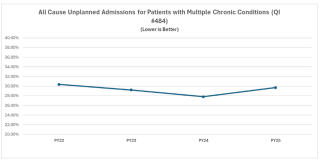
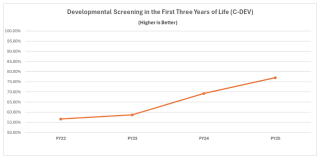
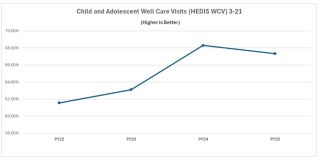
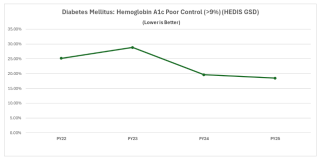
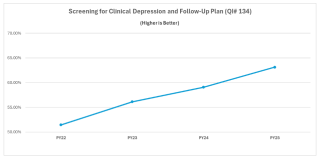
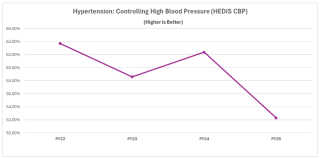
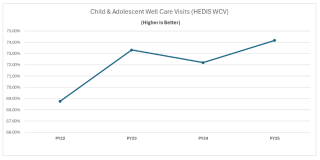
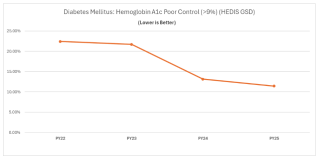
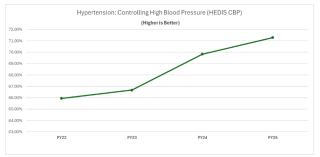
ACO contracts challenge provider participants to improve quality outcomes. To support participants, OneCare developed programs and initiatives designed to target specific quality measures with clear opportunities for improvement. As an ACO with a vast and diverse network of participants, OneCare evaluated programmatic efficacy by looking for signs of steady improvement.
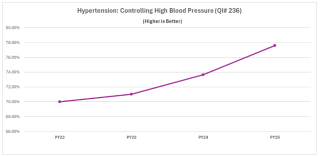
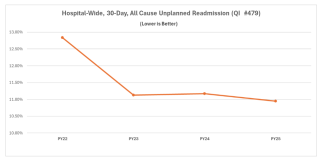
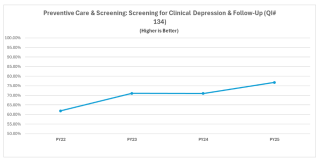
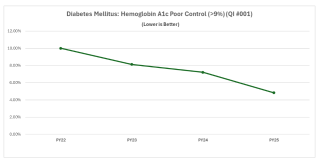
By maintaining focus on a manageable suite of measures over time, OneCare observed encouraging progress, which directly benefited patients served by the provider network. The following summarizes the trends observed in measures OneCare selected as areas of focus.
Financial Outcomes
One of OneCare’s primary strategies was to invest in the activities believed to generate desirable health outcomes. This resulted in significant financial investment in primary care, mental health care, coordination of care and initiatives designed to enhance patient experience.
These investments helped to generate the outcomes described above and enhance the financial stability of provider organizations participating in OneCare programs. Importantly, these investments aren’t necessarily new costs. Rather, OneCare aimed to redistribute existing health care dollars into high-value areas such as primary care.
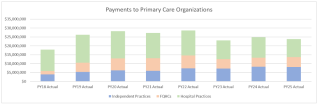
Primary care is at the heart of an ACO, and OneCare's investments prioritized primary care accordingly. Through the All-Payer Model era beginning in 2018, OneCare invested $200 million dollars in Vermont’s primary care providers. These investments scaled over time as participation grew, and the breakdown between organization types is driven by the proportion of patients seen by each. Through time, the mix of base payments and bonus payments evolved to place more emphasis on outcomes.
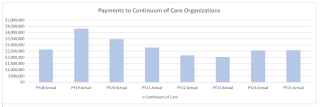
In addition to primary care investments, OneCare facilitated payments to designated agencies, home health and hospice entities and area agencies on aging totaling $22.5 million dollars. These continuum of care organizations are a critical complement to primary care and contributed to results by enhancing the coordination of care, mental health supports and enabling patients to transition to lower cost settings.
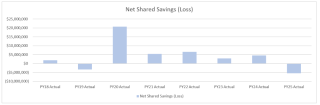
ACO results are often measured by the amount of shared savings received, or shared losses owed. While one should expect to experience both results over an extended time horizon, maintaining a positive cumulative balance is a strong signal that the ACO’s efforts are successful.
Cumulatively, OneCare has earned $33.3 million dollars of shared savings from 2018 through 2025. The amount does not include continuation funding for Blueprint and SASH, which was facilitated through advanced shared savings. OneCare’s risk sharing model distributes or collects funds from the participant network, meaning that the shared savings proceeds were paid out to participants rather than being retained by OneCare.
In addition to shared savings or losses, participating providers had the ability to generate either favorable or unfavorable results under payment reform initiatives. These initiatives converted provider reimbursement from fee-for-service to fixed payments as a strategy to stabilize revenue and provide an incentive to deliver more cost-efficient care.
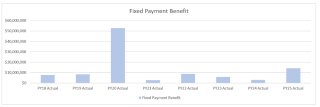
Since 2018, providers benefited from the fixed payment arrangements by $103 million dollars. The most significant benefit from the fixed payment was experienced in 2020 during the Covid-19 pandemic. This was a unique circumstance, but showcased the value of reliable revenue streams.
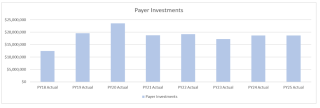
Another financial strategy employed by OneCare was to advocate for investment funding from payers to support provider initiatives. These investments, facilitated as pass-through payments to providers, were critical to delivering the primary care and continuum of care investments discussed above.
Importantly, the payer investment funds were blended with hospital investments, and paid uniformly to participants as a strategy to simplify the financial arrangement and focus efforts. Through program negotiations, OneCare sourced $148 million dollars in payer contributions from 2018 through 2025.
All of these financial results were dependent on an infrastructure capable of managing the ACO programs and the corresponding financial transactions. Whether the funds were generated by OneCare, or OneCare was acting as a pass-through entity, this service was a valuable resource for Vermont. Through 2025, OneCare managed over $3.6 billion dollars in cash flow to provider organizations.
Lastly, a challenge faced by many ACOs is financial sustainability. Resources are necessary to fund infrastructure, tools and incentives. For OneCare, the resources to remain in operation came from participating hospitals. As such, OneCare evaluates financial outcomes through their lens by monitoring their financial contributions to OneCare operations, and the financial results generated from programming. In total, participating hospitals have seen their financial benefits exceed their investments by $61.5 million dollars.
External Assessments
Throughout the All-Payer Model era, numerous evaluations were commissioned to assess progress and impact. While OneCare Vermont is not a party to the APM agreement, its work undeniably contributed to the success of the initiative. Below you will find a list of external evaluations and reports, many of which reference OneCare’s work and contributions.
- Evaluation of All-Payer Model, August 2021 (Summary of findings)
- Evaluation of All-Payer Model, December 2022
- Evaluation of Vermont All-Payer Accountable Care Organization Model, July 2023
- Evaluation of the Vermont All-Payer Accountable Care Organization Model: 2018–2022, July 2024 (Technical Appendices)
- Transformation Toolkit, Case Studies, and Tip Sheet Highlight Value-Based Care Organizations’ Strategies to Improve Care for Medicare Beneficiaries, January 2021
- OneCare Vermont ACO Case Study: Community Care Coordination Program, October 2020
- OneCare Vermont ACO: Innovation Fund, February 2021
- OneCare Vermont’s Comprehensive Payment Reform Program for Independent Primary Care Practices, August 2021
- Model Test Year Two Annual Report, August 2016
- 2023 OneCare Program Evaluation Brief, September 2023
Spotlight: Award for OneCare’s Comprehensive Payment Reform Program
OneCare received the Weitzman Institute Primary Care Impact Award in May 2025 for its Comprehensive Payment Reform program. Shifting health care dollars to primary care was core to our payment reform strategy, supporting primary care practices and driving improved health outcomes.

The Future
OneCare’s closure created an inflection point for health care improvement efforts across the state. This work can — and should — continue but will be led by other entities.
In response to 2025 legislation and to support the evolution of health care initiatives in Vermont, OneCare issued a memo outlining key work it had been performing for providers and patients, highlighting both its components and value. The memo is intended to support stakeholders in sustaining this important work beyond the organization’s wind-down at the end of 2025.

Reflections
January 2026
By Tom Borys, CFO and CEO of OneCare Vermont
OneCare Vermont, as we know it, is now closed. For those who worked with OneCare, and particularly for those who held hope in its promise, this moment invites reflection: an opportunity to learn, heal and celebrate, so that the future is informed by lessons of the past.
Standing at this inflection point, I still think OneCare makes sense. But, that doesn’t mean the decision to close was wrong. The world around us is complex, dynamic and often confusing. OneCare can still make sense, and closing can still be the right decision. With this paradox in mind, please consider the following an honest reflection intended to surface a deeper understanding of the value of OneCare, and not litigation of the decision to close.
This analysis focuses upon the OneCare structure, and not performance or outcomes. The latter are well-documented through the program settlements with payers that determine ACO results. Instead, I will address the strengths of the OneCare structure, its limitations, and provide thoughts for the future. But first, some general background.
OneCare was formed in the wake of the Affordable Care Act (ACA), which injected energy into a concept called value-based care. Simply put, value-based care aims to connect health care “value” with payment. One form of value-based care arrangements is an Accountable Care Organization (ACO). ACOs are provider networks formed through contracts to take accountability for the cost and quality of the care they deliver. These contracts contain cost and quality targets, often established by actuaries, that the ACO is financially incentivized to beat. Over the course of a year, results are measured and either financial bonuses are earned or penalties paid based on a complicated shared savings or loss formula. If your head is spinning already, you’ve stumbled upon a tenet of this piece. Whether you believe in value-based care or not, it’s here and it’s very complex.
The administrative overhead and technical expertise necessary to operate value-based care programs is a significant barrier to entry for many organizations, and particularly those in rural areas with limited resources. OneCare addressed this issue by serving as a “shared infrastructure” with staffing and expertise to facilitate multiple ACOs, for multiple provider organizations. Alternatively, to achieve the same level of ACO participation across the region, each participant in the OneCare network would need their own value-based experts and dedicated staff to manage their initiatives. The shared infrastructure model created significant economies of scale and enabled ACO participation to expand throughout Vermont at an unprecedented rate. Sharing the infrastructure meant that key staff and the tools they needed were consolidated rather than duplicated.
Beyond staffing, a shared infrastructure allows for aggregation of data and shared use of analytic tools. Healthcare data is complex, and if used properly, can be powerful. Sharing infrastructure for data aggregation and analysis addresses two issues. First, more data is better than less.
Incorporating claims data for many providers covering a broad geography allows for more impactful and holistic comparative analyses and progress monitoring. Second, the technological tools needed to warehouse the data and provide analytic insights are expensive. Purchasing the tools once and sharing, with appropriate data access controls, results in more robust data capabilities at less cost.
Another benefit of the shared infrastructure model is clinical alignment. Because ACO entities serve as a link between payers and all participating providers, initiatives can be blended across payers and structured to have similar priorities and focus areas. This means that the entire network of participants has similar goals and can work together to improve results. Over time, and with broad participation, this model helps to organize our system of care, streamline patient flow and improve quality outcomes.
The efficiencies afforded by the shared infrastructure model extended beyond the provider participants. Without a single hub, payers such as Medicaid, Medicare and commercial insurers need to contract individually with each participant entity. The centralized contracting approach through a single shared infrastructure reduces payer contract volume by thousands, further reducing administrative costs within both the public and private sectors. While this creates a significant amount of work for the central entity, it drastically reduces the work required of the other parties.
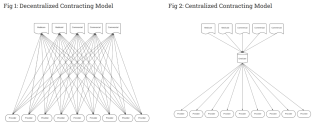
From a financial standpoint, a shared infrastructure enables blending of payments across payers, reallocation of health care dollars between provider types and delegation of accountability for results. A challenge regularly faced by providers is that they have multiple payers for essentially the same work. This is administratively difficult to manage and often lacks alignment. An ACO sitting between the payers and the provider organizations can consolidate and align payment models and incentives so that participants have a more seamless business model between payer lines. This concept can apply to both payment reforms and quality improvement initiatives.
Further, through payment reforms, health care dollars can be redirected to high-value areas of the health care system such as primary care. This is admittedly delicate work, but with appropriate provider engagement and transparency it has proven to be an effective way to support preventive care and other high-value services that either are not reimbursable, or the reimbursement is too low to be sustainable. Lastly, value-based care programs often come with financial risk.
Because the ACO model is centered around primary care, significant financial risk is often a barrier to widespread participation. A central infrastructure can redirect risk to the appropriate portions of the health care system and enable broader primary care participation.
ACOs and value-based care initiatives are technically and operationally complex. But on top of that, the rules, program designs, benefits, risk terms, etc. change constantly. An entity with the expertise to manage the initiatives and remain up-to-speed on the latest developments is incredibly valuable. Relying on the shared infrastructure to monitor and manage the changes relieves participants of significant time and energy. There are also powerful ways to use an ACO, but you need to know how. For example, benefit enhancement waivers and fraud, waste and abuse waivers are incredibly powerful tools to improve the patient experience, streamline care pathways, foster partnerships and control costs. The challenge is knowing how to use them effectively, legally and compliantly. Without a deep understanding of the rules, legal support, compliance support, data monitoring, clear communication or a platform for collaboration, waivers cannot be utilized to their fullest.
Lastly, but not to be underappreciated, installing a central entity between the provider participants and the payers creates an important layer of independence and neutrality. This entity can dispassionately assess the landscape, and select priorities with cost, quality and patient care benefits even if they are difficult to address. Removing individual provider organizations from this process leads to a more objective exercise and pushes focus to challenging areas that needed attention. From a financial standpoint, this independence can enhance equity and fairness in the sense that payment and incentive models need to be as standardized and transparent as possible.
The shared infrastructure model clearly has value. There are, however, some notable challenges. The first is size. Size in an ACO is often a good thing. More attributed lives add stability to financial models, enables the benefits to be spread broadly, can foster regional alignment and can maximize the economies of scale. However, size is a bit more nuanced. Two ACOs with the same attribution could have one provider organization in its network, or have network participation spread out across a region. OneCare’s network was the latter, with participants fanned out across the state of Vermont and a small region of New Hampshire. There is some real value in this structure, but it also created significant operational challenges. One of those challenges is standardization. For a diffuse ACO, programs and initiatives needed to be standardized and structured to work for all organizations in the provider network, which comes at the expense of customization and tailoring to meet specific, and perhaps unique, needs. This resulted in a “one size fits most” suite of programs and left providers to fill the gap between the standardized policies and the tactical strategies necessary to perform at a high level.
Related, a vast and diffuse network stretches ACO resources thin. A focused ACO can employ granular strategies, often down to the individual practice or patient level, to generate positive outcomes. Unless properly resourced, a diffuse ACO will have less capacity to provide ground-level support to each of its participants. This can be solved with more resources, but with so many competing priorities it isn’t always possible.
| Pros | Cons | |
|---|---|---|
| Focused Network |
|
|
| Diffuse Network |
|
|
Another notable challenge for a shared infrastructure ACO, particularly a highly visible one operating under the umbrella of a state initiative, is meeting expectations. A lesser-known truth about ACOs is that just about everything the ACO is expected to accomplish is established in a contract. They are seldom read, and for OneCare it resulted in regulators, state leaders, legislators and casual observers inventing their own expectations. I cannot begin to count the number of times OneCare was criticized for failing to deliver on an expectation that was never discussed, analyzed, negotiated and ultimately established through contract.
Next, and this is likely somewhat specific to Vermont, ACO business is not a topic I suggest for dinner table conversation. Largely because of the regulatory framework in Vermont, OneCare was asked to explain to the public what an ACO is, how total cost of care targets are set, how fixed payment levels are determined, how risk is shared and just about anything else you can imagine.
Pardon the cliché, but if you’re explaining you’re losing. This resulted in the integrity, purpose and value of ACO organizations like OneCare being questioned, which led to years of distraction, further diffusion of scant resources and financial waste. When contemplating whether the shared infrastructure model makes sense, this experience must be considered. A large ACO in the public eye will not succeed under these conditions. Along the way, I often wondered whether many small ACOs would have been a better strategy under the All-Payer Model, if for nothing else to spread the intense regulatory burden. I’m still undecided, but I hope we learn from this experience and avoid the same mistakes.
You might still be wondering, “Why is OneCare closing?” A very reasonable question considering the organization’s financial and clinical results, and the benefits of a shared infrastructure model. In my opinion, there are many reasons contributing to OneCare’s closure, but one rises above all others: ACOs don’t solve the cost shift. ACO cost targets are set based on what health care costs are expected to be, which means they follow industry trends. Because of this, and widespread misunderstanding about what ACOs are and what they can (or cannot) do, OneCare’s was labeled a “crashing plane” and a failure. While clearly political brinksmanship, the discourse ultimately undermined over a decade of promising work in service to our state, providers and patients.
So, what next? The loss of OneCare is a setback, but there are other ways to facilitate this work. The state can take on a greater role in some areas, and provider organizations can develop their own models or partner with other shared infrastructure entities. It will be more fractured, and more expensive, but the work can continue. I do worry though, that any initiatives taken up by the state or other local entitles that do not directly impact the cost shift will be similarly branded a failure.
We have big health care problems that need to be addressed both in Vermont and nationally. But rather than seeing progress, I feel like we’re watching a slow and horrific collision between the public and private sectors. The health care system in this country is largely owned and operated in the private sector, but the public sector is taking significant steps to exert greater control. If we are to learn anything about the OneCare experience, it’s that the intersection between public and private is messy, the government will prevail and there will be casualties. Which approach is right? I don’t know, but I do think we need to pick one. I haven’t seen any evidence to suggest we’re on a pathway to collaboration and collegiality between the two sides. I hope that changes, but the battle between private health care organizations and state government is not serving our state or its citizens.
So, does OneCare make sense? Yes, but…