
A Smarter Way to Predict Heart Attack Risk
Research at UVM Medical Center means safer cardiac treatment.
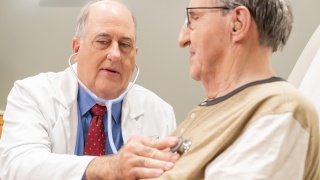
Burlington, VT – Research by cardiologists at University of Vermont Medical Center is giving doctors powerful new insights that may change the way cardiologists treat patients recovering from heart attacks and other serious cardiac events.
Led by David Schneider, MD, chief of cardiology at UVM Medical Center, the research focuses on a specific protein found on platelets — the tiny cells in blood that help form clots. By understanding the prevalence of a specific protein on a patient’s platelets, doctors can determine whether someone is more likely to have a second heart attack – also known as recurrent heart attacks.
Recurrent heart attacks account for about 25% of all heart attacks in the U.S. each year, according to the American Heart Association (AHA). About one in five people who have had a heart attack will be readmitted to the hospital for a second one within five years, according to the AHA.
As part of his research, Dr. Schneider developed a new biomarker test that provides insight into a person’s risk for recurrent heart attacks and whether they are at higher risk of dangerous bleeding from blood-thinning medications. The medications are central to the treatment of many cardiac patients.
Early success led to Prolocor®, a company formed with support from University of Vermont and UVM Health Network. The Prolocor pFCGTM diagnostic testing appears to be a major step forward in precision cardiac care – giving cardiologists insight that helps them deliver the right treatment to the right patient at the right time.
While clotting is vital to stop bleeding, excessive clotting inside arteries can cause heart attacks. Cardiologists using blood-thinning medications to treat patients with heart conditions or following a cardiac event must find the right balance between preventing future heart attacks and limiting patients’ risk of serious bleeding.
“This test gives clinicians critical information we’ve never had before,’ said Dr. Schneider. “We can now more accurately assess a patient’s risk of having another heart attack – and balance that risk with the risk of bleeding from medications. That balance is key to saving lives.”
Initial studies with the pFCG test conducted at UVM Medical Center showed striking results, identifying patients at both high and low risk for recurrent heart attacks. A larger, multi-center trial involving more than 800 patients at 25 hospitals across the country confirmed those findings late last year.
Prolocor intends to seek FDA approval and the Prolocor pFCG testing could become a vital part of routine care for heart patients.
Dr. Schneider’s research is the latest example of UVM Medical Center’s growing impact in cardiovascular science. Over the past decade, UVM Medical Center’s cardiology team has helped pioneer safer methods for pacemaker placement, advanced imaging techniques to study heart failure, and innovative approaches to treating valve disease.
“We’ve built a collaborative, patient-focused research environment here,” said Dr. Schneider. “And that’s a making real difference in how we care for people with heart disease – here and around the world.”