
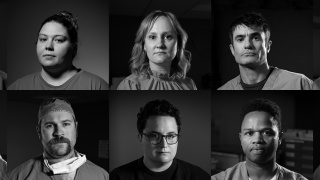
Health care organizations have grappled with rising violence for several years, but the local impact is rarely understood. As reports of violence from our staff increased, we sought ways to amplify their stories.
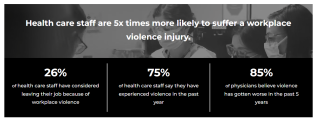
Across the country, health care staff suffer more violent assaults than any other profession. Our staff share their stories, as a national crisis hits home.
The impact is far-reaching.
We chose to end the silence on health care violence to give visibility and voice to members of our frontline staff who have endured acts of physical and verbal violence while doing their jobs. Their stories are difficult to hear as they talk about how this type of violence has impacted them, both professionally and personally.
Vermont Association of Hospitals and Health System health care violence update
While we have many responses in place and in progress across our health system to support our staff and our patients in a welcoming care environment, it is challenging for all of us to recognize that acts of violence against our caregivers is a complex problem, with no easy solutions, and no single answer.
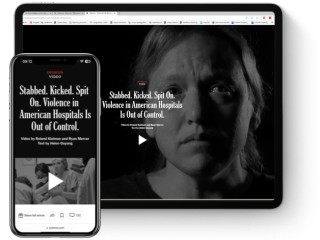
As featured in the New York Times
This project was featured by The New York Times. Editors of the news organization selected our video to be part of the national discussion on topics of importance on their video opinion page.
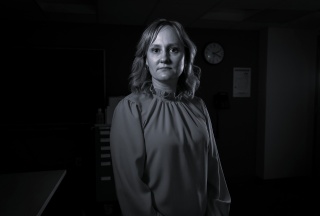
Julie Vieth
Emergency Medicine Medical Director
"Hospitals cannot solve this problem alone. It takes all of us working together, thinking differently..."
Laura Mulvey
Physician
Laura got into emergency medicine to help people, not watch as her colleague was attacked by a patient wielding kitchen shears.
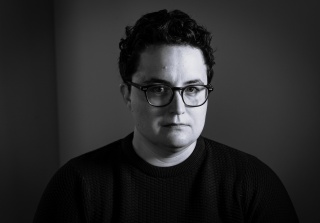
Ali Abdulkadir
Clinical Patient Safety Attendant
Abdul loves to care for people, even though he knows it could mean a punch to the chest.
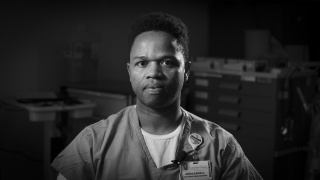
Alex Dees
Technician
Like Alex, many health care staff experience lasting trauma from workplace violence.
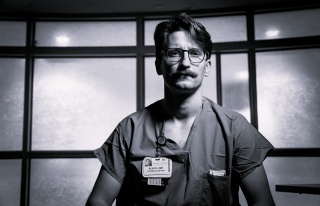
Amal Hussein
Clinical Patient Safety Attendant
Violence isn’t always physical, something Amal knows all too well.
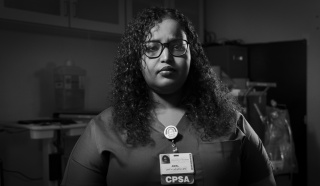
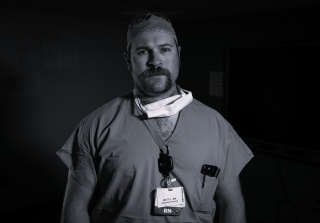
Matt Looft
Charge Nurse
As a nurse in the emergency department, Matt cares for people during the hardest moments in their lives. One of them knocked him unconscious.
About This Work
Health care organizations across the country have grappled with rising violence for several years, but the local impact is rarely well known or understood. As reports of violence from our own staff increased, we began seeking ways to amplify their stories.
The response from our frontline caregivers was immediate, with individuals coming forward to share heartbreaking stories.
There is no single solution to health care violence, and hospitals cannot solve this problem alone. By improving awareness of this challenge, we hope to inspire new conversations that could lead to meaningful action — here in our health system and across the country. It will take the work of many — including governmental, health care and community partners — to address a problem this pervasive and complex.
We chose to raise our voices, so we can end the silence on health care violence, support each other and work toward solutions together.
Sources
- New Source: ViSHWaS (2023). Violence Study of Healthcare Workers and Systems — A Global Survey. ViSHWaS: Violence Study of Healthcare Workers and Systems—a global survey | BMJ Global Health
- US Bureau of Labor Statistics (2021). Number and rate of nonfatal work injuries in detailed private industries. Number and rate of nonfatal work injuries in detailed private industries (bls.gov)
- US Bureau of Labor Statistics (2020). Fact Sheet — Workplace Violence in Healthcare, 2018. Workplace Violence in Healthcare, 2018 : U.S. Bureau of Labor Statistics (bls.gov)