
See a number of questions that are frequently asked by applicants to our program.
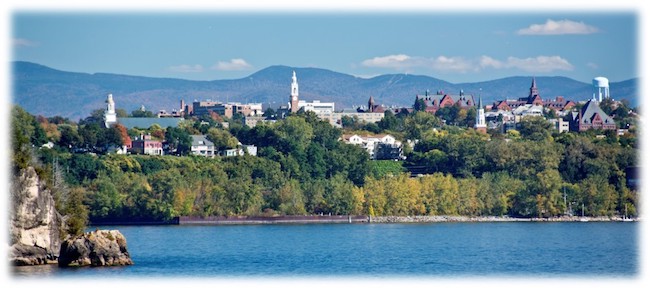
UVM Family Medicine has the “best of both worlds” including inpatient training at our University-Affiliated Academic Health Center in the urban cluster of Burlington, VT, and outpatient training at our resident continuity clinic in rural Milton, VT. This bridge of academics and community Family Medicine lends itself to graduates who are well-qualified to practice comprehensive Family Medicine, including:
- Acute and chronic care
- Addiction medicine
- Care across multiple settings – including home visits and nursing home care
- Inpatient and outpatient care of children and adults
- Obstetrics and comprehensive reproductive health care
- Office-based procedures and ultrasound
- Palliative and end of life care
- Preventative medicine and behavioral health counseling
Our programs real strength lies in our diverse faculty, strong and committed residents, and amazing staff. Family Medicine is highly regarded within the hospital and well represented outside the hospital. Our team works extremely well with other services in the hospital. UVM Medical Center in general has a strong environment of collegiality and support.
The University of Vermont Family Medicine residency has its own inpatient hospital service, and is also integrated with the Internal Medicine hospitalist service. We service any patients from our community who might require hospital admission. Our team is made up of one resident from each year (PGY1, PGY2, PGY3), and a supervising physician. The attending supervisor is split between Family Medicine and Internal Medicine.
Our FMS team works closely with all hospital staff including nurses, physical therapists, consultants, pharmacists, medical students, and our dedicated Family Medicine case manager. Our primary mission for FMS is to provide high quality, patient-centered care.
Some highlights of our integrated service include:
- Admitting window rotates between 0700-1200 or 1200-1630PM daily (rotates with the admitting IM teams)
- Overnight admissions on Wednesday, Thursday, Friday, and Saturday (shared with IM teams and non-teach services)
- The PGY3 resident really runs the service – they lead daily morning rounds, supervise junior residents, teach the 4th year medical student, and arrange teaching rounds
- Dedicated Family Medicine case manager and inpatient pharmacist
The town of Milton has a range of socioeconomic diversity including many socioeconomically underserved residents. Our residents carry a continuity panel that is approximately 18% over age 65, and 8.5% under age 18. Each resident is on a team that provides Medications for Opioid Use Disorder, and they rotate every 4 weeks to care for that patient panel.
Additionally, we work closely with the Community Health Centers (CHC) which serve a large refugee population. Our residents rotate at the main office in Burlington. We also help deliver any CHC patient that presents to Labor and Delivery.
Residents have the option to utilize elective time for additional experience at the CHC locations such as:
- the Safe Harbor Clinic (a medical and dental clinic offering no-cost appointments and walk ins for adults and families experiencing homelessness)
- the Pearl Street Youth Center (provides counseling services for youth and young adults through age 25, and special services for at-risk youth, homeless teens, and young adults as well as the crisis center)
Our residents have a 2-week Rural rotation, where they have the opportunity to rotate at rural Vermont Family Medicine offices or hospitals.
Our average resident will complete approximately 75 deliveries. Those who choose to include OB in their future practice can include OB in their electives and do quite a bit more. All residents are strongly encouraged to have at least three continuity deliveries. For those looking to incorporate OB in the future, we encourage them to follow at least 10 continuity patients.
Our residents complete a total of 3 rotations in OB: 1 rotation of days in the PGY1 year, 1 rotation split 2 weeks of days, 2 weeks of nights in the PGY1 year, and 1 rotation of nights in the PGY2 year. Residents who will practice OB after residency are required to complete at least one additional month of OB.
Our program is a member of the Family Physicians Inquiry Network (FPIN), and requires residents to participate in scholarly activities such as presenting Grand Rounds, facilitating Journal Clubs and Clinical Questions. Residents are also encouraged and supported in publishing work and/or presenting posters, oral presentations, and publications at national conferences.
The Family Medicine department has a research division that is led by one of our faculty. The goal is to help faculty and residents develop, coordinate, implement, analyze, and disseminate projects and project data, and assist with grant writing and project evaluation. Residents work closely with faculty in Milton to provide quality improvement at their continuity practice. The emphasis is on evidence-based practice, personal development, and leadership of health systems.
There is almost no call in the G1 year. Our services have a Night rotation/ Night float system in place, so there is no overnight call on your FMS rotations. Your first OB month will not include any overnight call. In your second OB month, you will take some overnight call (2 Fridays), and also work just overnight shifts.
When rotating on inpatient medicine services, they also employ a night shift system. They have daytime long calls, which go until 7PM, but no overnight calls.
Residents receive both formative (on-the-fly and mid-rotation) feedback as well as summative (end of rotation) feedback. Evaluations are milestone-based with the expectation that residents will build upon their knowledge and skills throughout residency. These milestones were developed by the ACGME around the six core competencies: Patient Care, Medical Knowledge, Practice-Based Learning and Improvement, Systems-Based Practice, Interpersonal and Communication Skills, and Professionalism
Residents meet twice a year for individual evaluation meetings with core program administration (Program Director or Associate Program Director). Residents also have the opportunity to perform a self-evaluation, and are paired with faculty advisors for academic support. All residents create an Individualized Learning Plan (ILP) to personalize their learning goals, and identify areas for growth.
Quarterly, residents will meet with their assigned faculty advisor to discuss physician wellness, residency progress, areas of interest/ elective goals, and career planning.
Residents evaluate the faculty, rotations, and other learning experiences that comprise the program. They also work on committees with faculty members to plan and implement changes.
Over the past 10 years, our residency graduates have a 100% pass rate on the American Board of Family Medicine certification examination. The average score over the past 5 years for our graduates was 599, while the national average was 533.
Approximately half of our graduates remain in Vermont and half practice elsewhere, both in the United States and abroad. About 44% have chosen academic careers and about 20% practice obstetrics. Another 20% of graduates have pursued a fellowship in Addiction Medicine, Clinical Informatics, Emergency Medicine, Geriatrics, Global Health, Hospice and Palliative Medicine, Maternal-Child Health, Obstetrics, and Sports Medicine.
Some of the benefits included are: $1800 meal card allowance per year, free parking, $1800 in education funds, four weeks of vacation per year, and one week of personal/ sick time per year. Residents are members of the CIR-SEIU Union.
Please visit our Benefits and Compensation page for a comprehensive list of benefits offered to residents and fellows.
