
Our residency curriculum is designed to allow comprehensive development of both procedural skills and didactic knowledge, while fostering leadership and research to support a full range of future career opportunities.
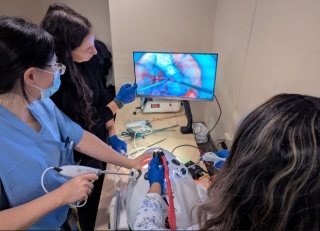
Rotations
PGY1
The first year of residency is focused on foundational skills, and as such time is spent on the most important core rotations and skills.
Obstetrics: Our PGY1 class spends 3 months on the inpatient obstetrics service, focused on intrapartum and postpartum care, vaginal deliveries and cesarean sections. Our first year residents scrub into cesarean sections as primary surgeons on day 1.
Gynecology: Our PGY1 class spends 3 months on the inpatient gynecology service. This rotation is focused on gynecologic surgery, inpatient and emergency room consultations, and management of inpatient and post-operative gynecology patients. First year residents are most often primary surgeons performing laparoscopies and hysteroscopies, and acting as assists for laparoscopic, robotic, vaginal and open hysterectomies.
Ambulatory: Our PGY1 class spends 3 months on the ambulatory rotation, which provides a variety of outpatient experiences designed to provide an introduction to outpatient obstetric and gynecologic care. Opportunities include gynecologic ultrasound, colposcopy, obstetric ultrasound and family planning outpatient procedures.
Medical Intensive Care Unit: Our PGY1 class spends 1 month rotating in the MICU, learning the principles of intensive care and management of critically ill patients under the supervision of senior medical residents and faculty physician subspecialists.
Night Float: Our PGY1 class spends 2 months on the night float rotation, acting as the junior member of the night float team which comprises of a senior, mid-level and junior resident. The first year resident is primarily responsible for management of the obstetrics service, including all low risk vaginal and cesarean deliveries, and overnight coverage of the postpartum service.
PGY2
The second year of residency is focused on development of advanced and subspecialty specific skills, providing a range of exposure to various aspects of the field and expanding the skillset of the resident to participate in more and varied procedures.
Maternal Fetal Medicine: Our PGY2 class spends 3 months on the MFM service, managing the antepartum service and a range of high risk deliveries including operative vaginal births, obstetric complications and complex cesarean deliveries. The resident works directly with the MFM attending physician and fellow to create and enact plans for the antepartum service and any high risk patients admitted to labor and delivery.
Night Float: Our PGY2 class spends 3 months on the night float rotation, covering as the junior resident for the first part of the year, and then the mid-level resident later in the year. The junior resident is responsible for management of the obstetrics service, including all low risk vaginal and cesarean deliveries, and overnight coverage of the postpartum service. The mid-level resident is primarily responsible for overnight coverage of the gynecology service, including all inpatients, consultations and overnight gynecologic surgeries.
Gynecology: Our PGY2 class spends 3 months on the gynecology service. As their skillset expands, they will start to scrub as primary surgeon for robotic and laparoscopic hysterectomies, as well as more complicated laparoscopic and hysteroscopic procedures. They will continue to assist in managing consultations and any inpatients on the service.
Urogynecology: Our PGY2 class spends 1 month rotating with the urogynecology service. They will spend about half the time in outpatient urogynecology clinic, and the other half in the operating room with the urogynecology attendings. They will act as primary surgeon in pelvic floor procedures, and scrub as surgeon or primary assist for vaginal hysterectomies.
Reproductive Endocrinology and Infertility: Our PGY2 class spends 1 month rotating with the REI service, spending most of the time in the outpatient REI clinic, working with faculty and fellows on a range of REI related conditions, including embryo transfers and in-vitro fertilization procedures.
PGY3
The third year of residency is focused on advanced surgical skills and leadership development, in addition to further exposure of subspecialties.
Reproductive Endocrinology and Infertility: Our PGY3 class spends 1 additional month rotating with the REI service, where they do not overlap with the PGY2 resident allowing for more independence and growth of specialty specific skills and knowledge.
Urogynecology: Our PGY3 class spends 1 additional month on the urogynecology service, acting as primary surgeon for vaginal hysterectomies and often double scrubbing those cases with a junior resident on the gynecology service.
Family Planning: Our PGY3 class spends 1 month on the family planning service, where they will participate in more advanced surgical pregnancy terminations, and counsel patients on options in the office and in the pre-op setting. The resident will also rotate at Planned Parenthood for additional surgical and outpatient educational opportunities.
Gynecology: Our PGY3 class spends 4 months on the gynecology service, with 2 of those months acting as chief resident, being primarily responsible for the service and delegation to the mid-level and junior residents. The third year resident acts as primary surgeon for laparoscopic, robotic, vaginal and abdominal hysterectomies, as well as more complex gynecologic procedures. The third year resident will often double scrub with a junior resident to allow them to build their teaching and supervisory skills.
Night Float: Our PGY3 class spends 3 months on the night float service, acting as the chief resident. The third year resident is responsible for the labor and delivery floor, the antepartum and postpartum service, and supervision of the junior and mid-level residents. The third year resident will take on the most complex cases and work in close collaboration with the in-house attending provider to manage the service overnight.
Elective: Our PGY3 class spends 2 months on elective, enabling additional opportunities to advance personal research projects, attend competitive away rotations to advance fellowship opportunities, or experience practice at outside institutions.
PGY4
The fourth year of residency is focused on leadership on the various services, and preparation for independent practice. Residents will be tasked with supervision of mid-level and junior residents, medical students, and will be ultimately responsible for delegation and completion of tasks for patients under the care of the service.
Gynecologic Oncology: Our PGY4 class spends 4 months on the GYN ONC service, working directly with the GYN ONC attending provider to provide care for patients both in the operating room and in the pre- and post-operative phases. The fourth year resident will manage medically and surgically complex cases, and develop advanced surgical skills. They will act as primary or teaching surgeon for robotic, laparoscopic and open hysterectomies in addition to a wide range of GYN ONC specific surgeries.
Gynecology: Our PGY4 class spends 2 months on the gynecology service as the chief resident. The fourth year resident will act as primary or teaching surgeon for robotic, laparoscopic, vaginal and open hysterectomies and advanced gynecologic procedures. They will also dedicate time to education of mid-level and junior residents and medical students on the gynecology service.
Obstetrics: Our PGY4 class spends 4 months on the obstetrics service as chief resident. The fourth year resident is encouraged to act as attending physician, taking consults from private practice or CNM providers and managing labor and delivery in close collaboration with the in-house attending provider. The chief resident will act as primary or teaching surgeon in the most complex surgical cases, operative deliveries and emergency scenarios.
Ambulatory: Our PGY4 class spends 2 months on the ambulatory rotation, designed to give additional exposure to outpatient care of patients in preparation for practice. The fourth year resident will rotate through colposcopy and ultrasound clinics, as well as specific menopause and family planning sessions.
General for All Residents
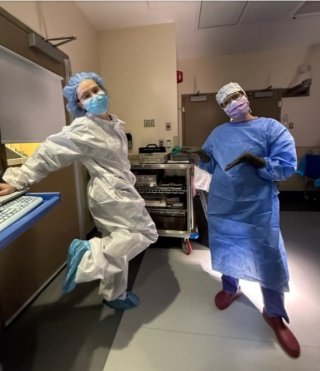
Continuity Clinic: During all 4 years of residency, each resident has their own personal continuity clinic 1 half-day a week, except when on off-service or night float rotations. This provides the opportunity for longitudinal outpatient care of their own patients in collaboration with their peers. The residents have their own clinic titled COGS (Comprehensive Obstetrics and Gynecology Services) to further enable continuity within their independent practice. These clinics are staffed by teaching attendings with high levels of educational experience to provide the best possible learning environment and experience for residents and their patients.
Didactics: Our residents have protected time one half day a week for focused education through didactic sessions. On Tuesday mornings from 0700-1130, they participate in departmental Patient Quality and Safety conference, attend or present at departmental Grand Rounds, and have 3 hours of resident-only teaching sessions. The sessions are designed with active learning techniques in mind, and are focused on topics not otherwise covered in their day-to-day clinical practice. Specific times are carved out for research focused sessions, high fidelity simulation in our state of the art simulation laboratory, and outside speakers on topics like genetics, primary care, rheumatology, sex therapy and wound care.
Research: We have a dedicated resident research team who are dedicated to enabling and encouraging residents to participate in and experience high quality research opportunities. We have crafted a resident research timeline outlining clear expectations and providing mentorship at every step of the process. In addition to this, every 3rd Tuesday, 1-2 hours of resident didactics are focused on a research related topic, including how to craft a research question, study design and manuscript writing. Please see the included Resident Research Plan.
